


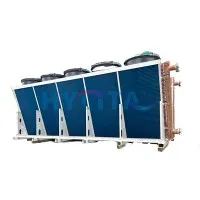
Cooling coils are essential components in various industries, playing a crucial role in temperature regulation and heat exchange processes. As a leading cooling coils supplier, I am excited to share with you how these remarkable devices work and their significance in different applications.
The Basics of Cooling Coils
At its core, a cooling coil is a heat exchanger designed to remove heat from a fluid or gas passing through it. The fundamental principle behind its operation is based on the transfer of thermal energy from a warmer substance to a cooler one. This transfer occurs through a combination of conduction, convection, and sometimes radiation, depending on the specific design and application of the cooling coil.
Components of a Cooling Coil
A typical cooling coil consists of several key components:
- Tubes: These are the primary channels through which the fluid or gas to be cooled flows. Tubes are usually made of materials with high thermal conductivity, such as copper, aluminum, stainless steel, or titanium, to facilitate efficient heat transfer. For instance, our Stainless Steel Coil Cooler is constructed with high - quality stainless steel tubes, which offer excellent corrosion resistance and durability, making it suitable for harsh environments.
- Fins: Fins are thin, extended surfaces attached to the tubes. Their main function is to increase the surface area available for heat transfer. By increasing the surface area, fins enhance the rate of heat exchange between the fluid inside the tubes and the surrounding coolant. Fins can be made of various materials, including aluminum, which is lightweight and has good thermal conductivity.
- Headers: Headers are used to distribute the fluid evenly among the tubes. They ensure that the flow of the fluid is balanced across the entire cooling coil, maximizing the efficiency of the heat transfer process.
How Cooling Coils Work
The working process of a cooling coil can be divided into the following steps:
- Fluid Inlet: The fluid or gas that needs to be cooled enters the cooling coil through the inlet header. The fluid then flows through the tubes, where it comes into contact with the inner surface of the tubes.
- Heat Transfer: As the fluid flows through the tubes, heat is transferred from the fluid to the tube walls by conduction. The high thermal conductivity of the tube material allows the heat to quickly pass through the tube walls. At the same time, a coolant, such as water or refrigerant, flows around the outside of the tubes. The fins on the tubes increase the contact area between the tube surface and the coolant, promoting efficient heat transfer from the tube walls to the coolant by convection.
- Coolant Circulation: The coolant absorbs the heat from the tube walls and carries it away. In some systems, the coolant is continuously circulated through a cooling system, such as a chiller or a cooling tower, to remove the heat and maintain its low temperature. In other cases, the coolant may be a refrigerant that undergoes a phase - change process (evaporation) to absorb heat more effectively.
- Fluid Outlet: After the heat has been transferred to the coolant, the cooled fluid exits the cooling coil through the outlet header. The temperature of the fluid is significantly reduced, and it can then be used in the subsequent processes of the system.
Types of Cooling Coils
There are several types of cooling coils, each with its own unique design and application:
- Shell and Tube Coil Cooler: The Shell and Tube Coil Cooler consists of a shell (a large outer container) and a bundle of tubes inside the shell. The fluid to be cooled flows through the tubes, while the coolant flows through the shell. This type of cooling coil is commonly used in large - scale industrial applications, such as power plants, chemical processing plants, and refrigeration systems, due to its high heat transfer capacity and ability to handle large flow rates.
- Titanium Coil: Our Titanium Coil is made of titanium, a metal known for its excellent corrosion resistance and high strength - to - weight ratio. Titanium coils are often used in applications where the fluid being cooled is highly corrosive, such as in the chemical and marine industries.
Applications of Cooling Coils
Cooling coils have a wide range of applications in various industries:
- HVAC Systems: In heating, ventilation, and air - conditioning (HVAC) systems, cooling coils are used to cool and dehumidify the air. They are an integral part of air handlers and rooftop units, helping to maintain a comfortable indoor environment by removing heat and moisture from the air.
- Industrial Processes: Cooling coils are used in many industrial processes, such as food and beverage processing, pharmaceutical manufacturing, and chemical production. In these industries, cooling coils are used to control the temperature of various fluids and gases, ensuring the quality and efficiency of the production processes.
- Refrigeration Systems: In refrigeration systems, cooling coils are used as evaporators. The refrigerant inside the coils absorbs heat from the surrounding environment, causing it to evaporate. This process cools the space or the product in contact with the coil.
Advantages of Our Cooling Coils
As a cooling coils supplier, we take pride in offering high - quality cooling coils with several advantages:
- Customization: We can customize the design and specifications of our cooling coils to meet the specific requirements of our customers. Whether it is the size, shape, material, or performance parameters, we can tailor the cooling coils to fit your unique application.
- Quality Assurance: Our cooling coils are manufactured using the latest technology and high - quality materials. We have a strict quality control system in place to ensure that each cooling coil meets the highest standards of performance and reliability.
- Energy Efficiency: Our cooling coils are designed to be energy - efficient, helping our customers reduce their energy consumption and operating costs. By optimizing the design of the tubes, fins, and headers, we can maximize the heat transfer efficiency of the cooling coils, resulting in lower energy usage.
Contact Us for Procurement
If you are in the market for high - quality cooling coils, we invite you to contact us for procurement and further discussions. Our team of experts is ready to assist you in selecting the most suitable cooling coils for your application. We can provide detailed technical information, product samples, and competitive pricing. Whether you are a small business or a large industrial enterprise, we have the right cooling coil solution for you.


References
- Incropera, F. P., DeWitt, D. P., Bergman, T. L., & Lavine, A. S. (2007). Fundamentals of Heat and Mass Transfer. Wiley.
- Kakaç, S., & Liu, H. (2002). Heat Exchangers: Selection, Rating, and Thermal Design. CRC Press.