


Shell and Tube Heat Exchanger
Your Professional Shell And Tube Heat Exchanger Supplier
Shenzhen Hylita Heat Exchange Equipment Co., Ltd. was established on July 2, 2015, located in Maluan Chuanggu Industrial Park, Jinlong Avenue, Shahu Community, Biling Street, Pingshan District, Shenzhen. The company focuses on the development and sales of refrigeration and heat exchange equipment technology, and also involves fields such as metal processing and component manufacturing.we have always been guided by meeting customer needs, continuously optimizing products and services, and gradually emerging as a promising enterprise in the field of heat exchange equipment.
Why Choose Us
Product Application
The products of Shenzhen Hylita Heat Exchange Equipment Co., Ltd. have a wide range of applications. In the field of chemical engineering, it is used for heating, cooling, and heat recovery of reaction materials to ensure efficient and stable production. In the energy industry, assisting power plant turbine cooling, waste heat recovery, and improving energy utilization efficiency. In terms of HVAC, regulate indoor temperature and humidity to create a comfortable space. In food processing, it is used for sterilization and cooling processes to ensure food safety. In the pharmaceutical process, precise temperature control is used to meet the stringent requirements of drug production.
Production Market
Our heat exchanger products are popular in multiple regions around the world, particularly in Southeast Asia where they are highly favored by customers in countries such as Indonesia, Malaysia, and Thailand. Due to the vigorous development of industry in Indonesia, the demand for heat exchangers has surged.
Our Service
Shenzhen Hylita Heat Exchange Equipment Co., Ltd. has established a full process service system to provide customers with professional and thoughtful support.
Our Factory
Shenzhen Hylita Heat Exchange Equipment Co., Ltd. is located in Guangdong, China, with a spacious factory of nearly 4000 square meters. There are currently 45 workers, and the annual production equipment requires over 20 million tons of metal materials.
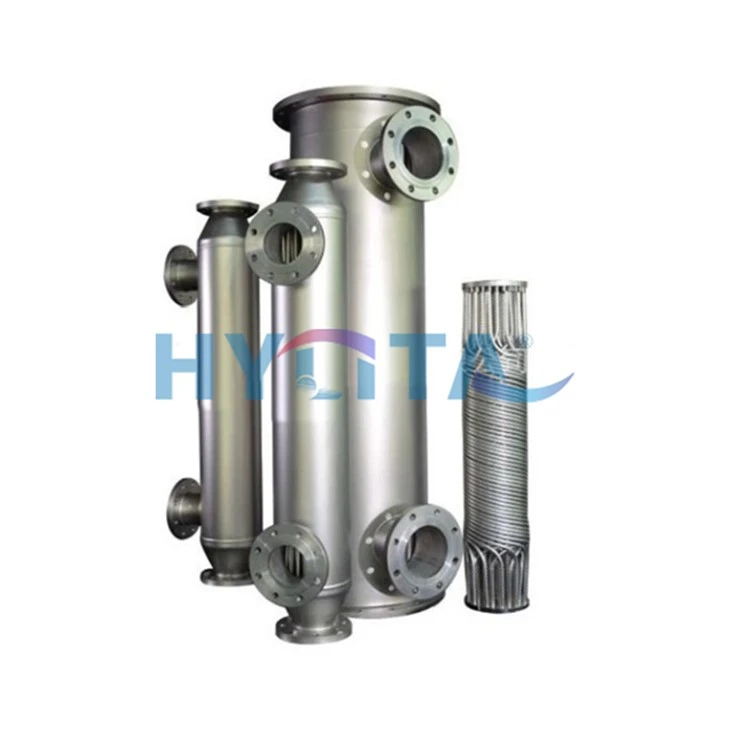
Cheap compared to plate heat exchangers.
Relatively simple design and easy to maintain.
Suitable for higher pressures and temperatures compared to plate heat exchangers.
Pressure drop (delta P/ΔP) is less than a plate heat exchanger.
Easy to find and isolate leaking tubes.
Tubes can be ‘double walled’ to reduce the likelihood of the shell side fluid leaking into the tube side fluid (or vice versa).
Easy to install sacrificial anodes.
Do not foul as easily as plate heat exchangers.
Specification
|
Parameter |
Evaporator |
Condenser |
|
Shell Material |
Carbon steel |
Carbon steel |
|
Tube Material |
Titanium |
Admiralty brass (70/30 Cu-Ni) |
|
Design Pressure |
N/A (dependent on application) |
2.5 MPa |
|
Design Temperature |
N/A (low-temperature focus) |
150°C |
|
Tube Outer Diameter |
N/A |
19 mm |
|
Tube Spacing |
N/A |
25.4 mm |
|
Heat Transfer Area |
N/A |
500–2000 m² |
|
Steam Handling |
N/A |
50–200 kg/s (exhaust steam) |
Types of Shell And Tube Heat Exchanger
01
Class B
These engineers design these heat exchangers for chemical processing applications. They construct them with materials and configurations suitable for handling corrosive substances and demanding chemical processes. Engineers build Class B heat exchangers to withstand the challenges posed by chemical environments.
02
Class C
This category encompasses heat exchangers intended for general commercial applications. These heat exchangers are versatile and can serve various industries with moderate operating conditions. They efficiently exchange heat in common commercial settings by design.
03
Class R
Engineers specifically tailor heat exchangers classified under Class R for petroleum and large-scale applications. They design them to handle the rigorous demands of processing petroleum products, including high temperatures, pressures, and flow rates. Class R heat exchangers are robust and suitable for industrial-scale operations.

Shell
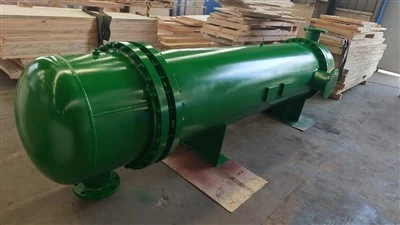
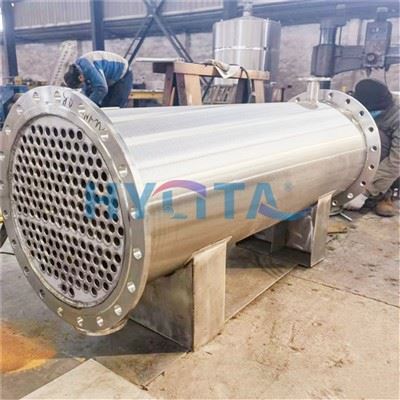
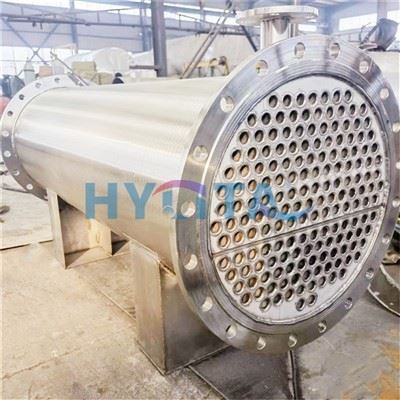
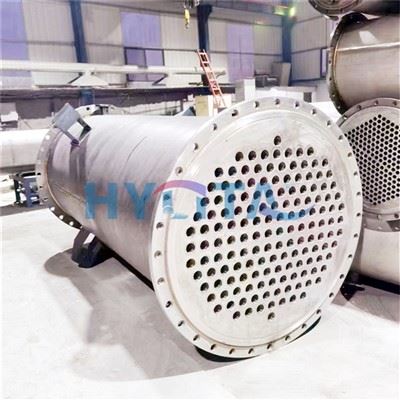
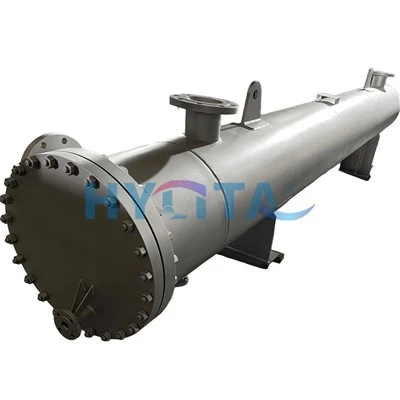
The shell is the heat exchanger’s outermost part which holds the tube bundle. It is commonly a cylindrical container constructed from steel or other appropriate substances
Tubes or Tube Bundle
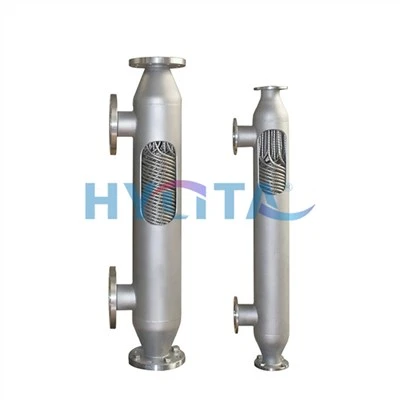
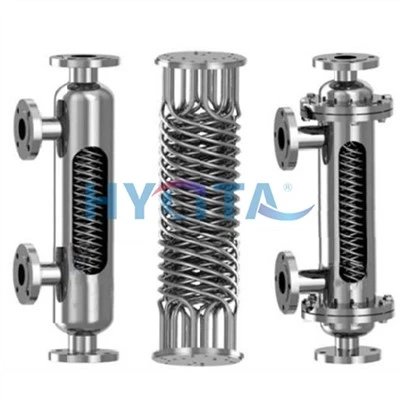
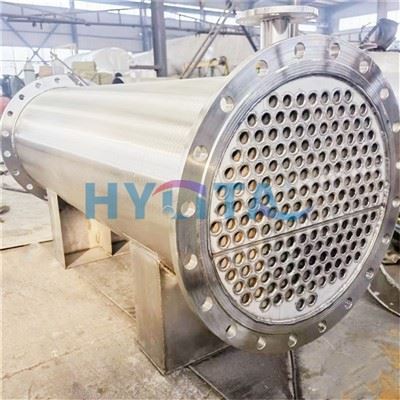
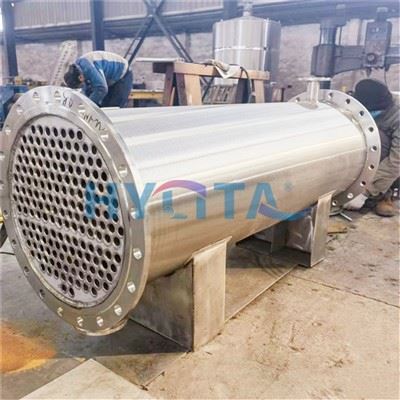
A collection of parallel tubes running along the length of the shell makes up the tube bundle. Depending on the specific use, the tubes can be composed of different materials, such as stainless steel, copper, or titanium. The diameter and thickness of the tubes are also important design parameters.
Tube Sheets
Tube sheets are sturdy sheets that act as a barrier between the tube bundle and the shell. They commonly construct them using steel and fuse them to the shell to ensure a firm and leak-free closure. They insert the tubes through holes in the tube sheets and either expand or weld them in position.
Baffles
Plates or rods called baffles regulate the movement of fluid around the tube bundle when placed inside the shell. They either align longitudinally or transversely and enhance the effectiveness of heat transfer.
Inlet and Outlet Nozzles
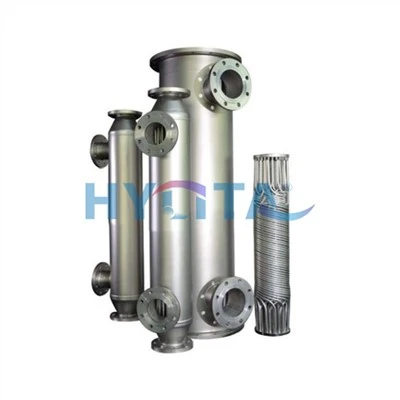
The inlet and outlet nozzles serve as the entry and exit points for fluids in the heat exchanger. Technicians usually place these connections at opposite ends of the shell and attach them to the tubes and the shell using flanges or other types of fittings.
Expansion Joints
Expansion joints are flexible connectors that accommodate the tube bundle’s thermal expansion and contraction. Usually located at the inlet and outlet of the heat exchanger, the engineers construct these joints using metal bellows or other flexible materials.
Support Structures
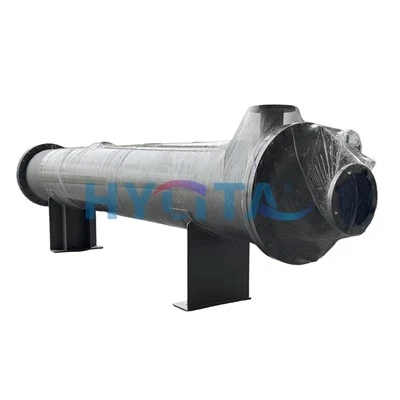
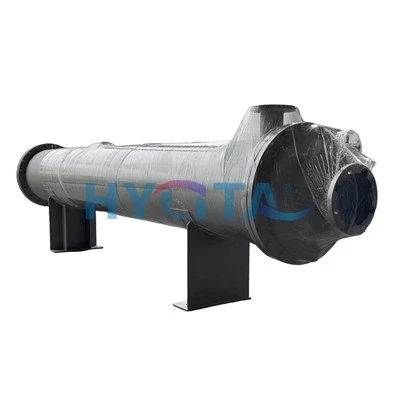
Support structures secure heat exchangers in place, providing a stable foundation. They can be temporary or permanent and made from steel or other materials.
Applications of a Shell And Tube Heat Exchanger
Sanitary applications
Applications destined for the Food Industry with optimized designs to favour a good CIP cleaning (Clean in Place) of the product channel, guaranteeing the best finishes and the drainability.
Pharmaceutical applications
Applications destined for the Pharmaceutical Industry, in which the roughness certification plays a key role, and whose design is specially designed to avoid cross contamination.
Industrial applications
Applications destined for the Chemical and Petrochemical Industry (Oil and Gas), whereby high priority has been given to ensure long life and high reliability.
Packaging & Logistics
Packaging
Protected with anti - scratch and shock - absorbing materials. Plates are separated to prevent damage during transit, and the frame is secured in a sturdy crate.
Delivery Time
7 - 17 working days after order confirmation, depending on customization (e.g., plate quantity, gasket material). Shipped via freight carriers suitable for industrial equipment.
We're professional shell and tube heat exchanger manufacturers and suppliers in China, providing high quality customized products with low price. We warmly welcome you to wholesale shell and tube heat exchanger for sale here from our factory.
heating a swimming pool, Spiral Wound Tubular Heat Exchanger, Tubular Heat Exchanger For Chemical Processes