


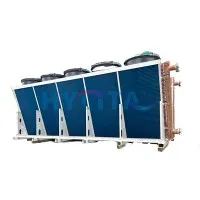
A hot water economizer is a vital component in many industrial and commercial boiler systems, designed to enhance energy efficiency and reduce operational costs. As a supplier of hot water economizers, I have witnessed firsthand how these devices interact with boilers to optimize performance. In this blog, I will delve into the intricacies of this interaction, exploring the working principles, benefits, and considerations when integrating a hot water economizer with a boiler.
Working Principles of a Hot Water Economizer
To understand how a hot water economizer interacts with a boiler, it's essential to grasp its basic working principles. A hot water economizer is a heat exchanger that captures waste heat from the boiler's flue gases and transfers it to the incoming feedwater. This pre - heating process raises the temperature of the feedwater before it enters the boiler, reducing the amount of energy required to convert the water into steam.
The economizer is typically installed in the flue gas path of the boiler, downstream of the combustion chamber. As the hot flue gases flow through the economizer, they pass over a series of tubes or plates that contain the feedwater. Heat is transferred from the flue gases to the water through conduction, convection, and radiation. The pre - heated water then flows into the boiler, where it requires less energy to reach the boiling point.
Interaction with the Boiler
Energy Savings
One of the primary ways a hot water economizer interacts with a boiler is by reducing the energy consumption of the boiler. By pre - heating the feedwater, the boiler doesn't have to work as hard to generate steam. This leads to significant energy savings, as less fuel is required to heat the water to the desired temperature. For example, in a large industrial boiler, a well - designed hot water economizer can reduce fuel consumption by up to 15 - 20%. This not only lowers operating costs but also reduces the carbon footprint of the facility.
Increased Boiler Efficiency
The interaction between the hot water economizer and the boiler also improves the overall efficiency of the boiler system. When the feedwater enters the boiler at a higher temperature, the boiler can operate more efficiently. The reduced energy input per unit of steam produced means that the boiler can achieve a higher steam output with the same amount of fuel. This increased efficiency can lead to a longer lifespan for the boiler, as it experiences less stress during operation.
Steam Quality
Another important aspect of the interaction is the impact on steam quality. By pre - heating the feedwater, the hot water economizer helps to ensure a more stable and consistent steam output. The pre - heated water requires less time to convert into steam, which can result in drier and higher - quality steam. This is particularly important in applications where steam quality is critical, such as in food processing, pharmaceuticals, and power generation.
Types of Hot Water Economizers and Their Interaction
There are different types of hot water economizers, and each type interacts with the boiler in a slightly different way.


Finned Tube Economizers
Finned tube economizers are the most common type. They have tubes with fins attached to increase the surface area for heat transfer. The fins enhance the heat transfer coefficient between the flue gases and the feedwater, allowing for more efficient heat exchange. When integrated with a boiler, finned tube economizers can quickly pre - heat the feedwater, even with relatively low - temperature flue gases. This type of economizer is suitable for a wide range of boiler sizes and applications.
Plate Economizers
Plate economizers consist of a series of plates that are stacked together. The flue gases and the feedwater flow through alternate channels between the plates. Plate economizers offer high heat transfer efficiency and are compact in size. They interact with the boiler by providing a rapid and efficient pre - heating of the feedwater. However, they may be more sensitive to fouling and require more frequent maintenance compared to finned tube economizers.
Considerations for Integration
When integrating a hot water economizer with a boiler, several factors need to be considered.
Flue Gas Temperature and Flow Rate
The temperature and flow rate of the flue gases are crucial. The hot water economizer needs to be sized appropriately to handle the specific flue gas conditions of the boiler. If the flue gas temperature is too low, the economizer may not be able to transfer enough heat to the feedwater. On the other hand, if the flow rate is too high, it may cause excessive pressure drop across the economizer, which can affect the boiler's performance.
Water Quality
The quality of the feedwater is also important. Impurities in the water can cause fouling and corrosion inside the economizer, reducing its efficiency and lifespan. Proper water treatment is essential to ensure that the economizer operates effectively. This may include filtration, softening, and chemical treatment to remove dissolved solids, oxygen, and other contaminants.
System Design
The overall system design, including the piping layout and control systems, plays a significant role in the interaction between the hot water economizer and the boiler. The piping should be designed to minimize pressure drop and ensure a smooth flow of water and flue gases. Control systems are needed to monitor and adjust the operation of the economizer, such as regulating the flow rate of the feedwater based on the boiler's demand.
Related Products and Their Role
In addition to hot water economizers, there are other related products that can enhance the performance of the boiler system. For example, a Vapour Economizer in Boiler can further recover heat from the steam and improve energy efficiency. An Exhaust Heat Exchanger can capture waste heat from other sources in the system, such as engine exhausts, and transfer it to the boiler feedwater or other processes.
Conclusion
The interaction between a hot water economizer and a boiler is a complex but highly beneficial process. By pre - heating the feedwater, the economizer reduces energy consumption, improves boiler efficiency, and enhances steam quality. However, proper integration and consideration of various factors are essential to ensure optimal performance. As a Hot Water Economiser supplier, I am committed to providing high - quality products and expert advice to help our customers achieve the best results in their boiler systems.
If you are interested in learning more about how a hot water economizer can benefit your boiler system or would like to discuss a potential purchase, please feel free to reach out. We are here to assist you in finding the most suitable solution for your specific needs.
References
- ASME Boiler and Pressure Vessel Code
- Perry's Chemical Engineers' Handbook
- Steam Plant Operation by Babcock & Wilcox