


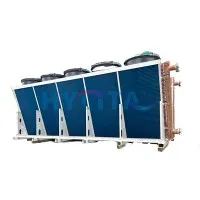
How does the tube material affect the performance of a finned tube?
As a finned tube supplier, I've witnessed firsthand the significant impact that tube material can have on the performance of finned tubes. Finned tubes are widely used in heat exchangers, radiators, and other thermal management systems, and the choice of tube material is crucial in determining their efficiency, durability, and overall effectiveness. In this blog post, I'll delve into the various ways in which tube material affects the performance of finned tubes and provide insights to help you make informed decisions when selecting the right tube material for your applications.
Thermal Conductivity
One of the most important factors affected by tube material is thermal conductivity. Thermal conductivity is a measure of a material's ability to conduct heat, and it plays a critical role in the efficiency of finned tubes. Materials with high thermal conductivity can transfer heat more effectively from the fluid inside the tube to the fins and then to the surrounding environment, resulting in better heat transfer performance.
Copper is a popular choice for finned tubes due to its excellent thermal conductivity. With a thermal conductivity of around 400 W/(m·K), copper can quickly transfer heat from the fluid to the fins, allowing for efficient heat dissipation. This makes copper finned tubes ideal for applications where high heat transfer rates are required, such as in air conditioning systems, refrigeration units, and power generation plants. You can explore our Copper Fin Radiator products for more details.
Aluminum is another commonly used material for finned tubes. Although its thermal conductivity is lower than that of copper, at around 200 - 240 W/(m·K), aluminum is lightweight, corrosion-resistant, and cost-effective. These properties make aluminum finned tubes suitable for a wide range of applications, including automotive radiators, heat exchangers in HVAC systems, and industrial cooling applications. Check out our Aluminum Fin Radiator options for more information.
Steel, on the other hand, has a relatively low thermal conductivity compared to copper and aluminum, typically in the range of 40 - 50 W/(m·K). However, steel is strong, durable, and can withstand high pressures and temperatures. This makes steel finned tubes suitable for applications where mechanical strength and resistance to harsh environments are important, such as in power plants, chemical processing industries, and oil refineries.
Corrosion Resistance
Corrosion is a major concern in many applications where finned tubes are used, as it can significantly reduce the lifespan and performance of the tubes. The choice of tube material can have a significant impact on the corrosion resistance of finned tubes.
Aluminum has excellent corrosion resistance due to the formation of a thin oxide layer on its surface, which protects the underlying metal from further corrosion. This makes aluminum finned tubes suitable for use in environments where corrosion is a concern, such as in marine applications, outdoor HVAC systems, and automotive radiators.
Copper also has good corrosion resistance, especially in neutral and slightly acidic environments. However, copper can be susceptible to corrosion in certain conditions, such as in the presence of ammonia or sulfur compounds. To enhance the corrosion resistance of copper finned tubes, they can be coated with a protective layer, such as zinc or tin.
Steel is prone to corrosion, especially in the presence of moisture and oxygen. To prevent corrosion, steel finned tubes are often coated with a protective layer, such as zinc (galvanization), or painted. In some cases, stainless steel can be used instead of carbon steel, as stainless steel has better corrosion resistance due to the presence of chromium and other alloying elements.
Mechanical Strength
The mechanical strength of the tube material is another important factor to consider, especially in applications where the finned tubes are subjected to high pressures, vibrations, or mechanical stresses.
Steel is known for its high mechanical strength and can withstand high pressures and temperatures. This makes steel finned tubes suitable for use in high-pressure applications, such as in power plants, chemical processing industries, and oil refineries.
Copper is relatively soft and has lower mechanical strength compared to steel. However, copper finned tubes can still be used in applications where moderate pressures and mechanical stresses are involved, such as in air conditioning systems and refrigeration units.
Aluminum has lower mechanical strength compared to steel and copper. However, aluminum finned tubes can be reinforced with additional structures or designed with thicker walls to improve their mechanical strength. Aluminum finned tubes are commonly used in automotive radiators and HVAC systems, where they are subjected to moderate mechanical stresses.
Cost
Cost is always an important consideration when selecting tube materials for finned tubes. The cost of the tube material can vary depending on factors such as the type of material, its availability, and the manufacturing process.
Aluminum is generally the most cost - effective option among the three materials mentioned above. It is lightweight, abundant, and relatively easy to manufacture, which makes it a popular choice for many applications where cost is a major concern.
Copper is more expensive than aluminum due to its higher thermal conductivity and better electrical properties. However, the cost of copper can be justified in applications where high heat transfer rates are required, as copper finned tubes can provide better performance and energy efficiency.
Steel is also relatively cost - effective, especially carbon steel. However, the cost of stainless steel can be significantly higher due to the presence of alloying elements and the more complex manufacturing process.


Compatibility with Fluids
The compatibility of the tube material with the fluid flowing inside the tubes is crucial to ensure the long - term performance and reliability of finned tubes. Different fluids can have different chemical properties, and some fluids may react with certain tube materials, leading to corrosion, fouling, or other problems.
For example, in applications where water is used as the heat transfer fluid, aluminum, copper, and steel can all be used, depending on the quality of the water and the operating conditions. However, in applications where aggressive chemicals or acids are used, special materials may be required to ensure compatibility.
In some cases, a liner or coating can be used to protect the tube material from the corrosive effects of the fluid. For example, in applications where seawater is used as the cooling fluid, a titanium liner can be used inside the steel or aluminum tubes to prevent corrosion.
In conclusion, the choice of tube material has a profound impact on the performance of finned tubes. When selecting the tube material for your finned tube applications, you need to consider factors such as thermal conductivity, corrosion resistance, mechanical strength, cost, and compatibility with fluids. As a finned tube supplier, we offer a wide range of finned tubes made from different materials to meet the diverse needs of our customers. Whether you need Aluminum Fin Radiator, Copper Fin Radiator, or other types of Fin Radiator products, we can provide you with high - quality solutions.
If you are interested in our finned tube products or have any questions about the selection of tube materials, please feel free to contact us for more information and to start a procurement negotiation. We look forward to working with you to meet your thermal management needs.
References
- Incropera, F. P., & DeWitt, D. P. (2002). Fundamentals of Heat and Mass Transfer. John Wiley & Sons.
- Holman, J. P. (2002). Heat Transfer. McGraw - Hill.
- ASM Handbook Committee. (2004). ASM Handbook Volume 13A: Corrosion: Fundamentals, Testing, and Protection. ASM International.