


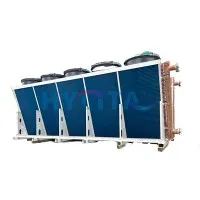
As a reputable supplier of Economizer Tubes, I've witnessed firsthand the pivotal role these components play in enhancing energy efficiency across various industries. Economizer tubes are integral to heat recovery systems, capturing waste heat from exhaust gases and transferring it to the working fluid, thereby reducing energy consumption and operational costs. In this blog post, I'll delve into several strategies to improve the heat transfer efficiency of economizer tubes, drawing on my experience and industry knowledge.
Understanding the Basics of Heat Transfer in Economizer Tubes
Before we explore ways to enhance heat transfer efficiency, it's essential to understand the fundamental principles at play. Heat transfer in economizer tubes occurs primarily through three mechanisms: conduction, convection, and radiation. Conduction involves the transfer of heat through the tube wall, convection refers to the transfer of heat between the fluid and the tube surface, and radiation is the transfer of heat through electromagnetic waves.
The efficiency of heat transfer in economizer tubes is influenced by several factors, including the tube material, tube geometry, fluid properties, and flow conditions. By optimizing these factors, we can significantly improve the heat transfer performance of economizer tubes.
Selecting the Right Tube Material
The choice of tube material is crucial for maximizing heat transfer efficiency. Materials with high thermal conductivity, such as copper and aluminum, are excellent conductors of heat and can facilitate rapid heat transfer. However, these materials may not be suitable for all applications due to their high cost and susceptibility to corrosion.
Stainless steel is a popular choice for economizer tubes due to its excellent corrosion resistance, high strength, and relatively good thermal conductivity. It can withstand high temperatures and harsh operating conditions, making it suitable for a wide range of industrial applications. Additionally, stainless steel tubes can be coated with special materials to further enhance their heat transfer performance.
Optimizing Tube Geometry
The geometry of economizer tubes can have a significant impact on heat transfer efficiency. Tubes with a larger surface area provide more contact between the fluid and the tube wall, allowing for greater heat transfer. One way to increase the surface area is by using finned tubes. Fins are extended surfaces that protrude from the tube wall, increasing the surface area available for heat transfer.


Another important aspect of tube geometry is the tube diameter. Smaller diameter tubes generally have a higher heat transfer coefficient due to the increased fluid velocity and turbulence. However, smaller tubes may also have a higher pressure drop, which can increase the energy consumption of the system. Therefore, it's important to find the optimal tube diameter that balances heat transfer efficiency and pressure drop.
Improving Fluid Properties
The properties of the fluid flowing through the economizer tubes can also affect heat transfer efficiency. Fluids with high thermal conductivity and low viscosity are more efficient at transferring heat. For example, water is a commonly used fluid in economizer systems due to its high thermal conductivity and low cost.
In some cases, additives can be used to improve the fluid properties. For instance, anti-freeze agents can be added to water to prevent freezing in cold climates, while corrosion inhibitors can be added to protect the tubes from corrosion. Additionally, the flow rate of the fluid can be adjusted to optimize heat transfer. Higher flow rates generally result in better heat transfer, but they also increase the pressure drop and energy consumption.
Enhancing Flow Conditions
The flow conditions inside the economizer tubes play a crucial role in heat transfer efficiency. Turbulent flow is more efficient at transferring heat than laminar flow because it promotes better mixing of the fluid and increases the contact between the fluid and the tube wall. One way to induce turbulent flow is by using flow turbulators, such as inserts or baffles, inside the tubes.
Another important factor is the uniformity of the fluid flow. Non-uniform flow can lead to hot spots and reduced heat transfer efficiency. To ensure uniform flow, proper design and installation of the economizer system are essential. This includes using appropriate piping layouts, flow distributors, and flow control devices.
Implementing Effective Maintenance Practices
Regular maintenance is essential for ensuring the long-term performance and efficiency of economizer tubes. Over time, tubes can become fouled with dirt, scale, and other deposits, which can reduce heat transfer efficiency. Cleaning the tubes periodically can remove these deposits and restore the heat transfer performance.
In addition to cleaning, it's important to inspect the tubes for signs of corrosion, erosion, and other damage. Any damaged tubes should be replaced promptly to prevent further deterioration of the system. Regular maintenance also includes checking the fluid levels, pressures, and temperatures to ensure that the system is operating within the design parameters.
Utilizing Advanced Technologies
Advancements in technology have led to the development of new and innovative solutions for improving the heat transfer efficiency of economizer tubes. For example, advanced coating technologies can be used to enhance the thermal conductivity and corrosion resistance of the tubes. Nanocomposite coatings, for instance, have shown great potential in improving heat transfer performance.
Another emerging technology is the use of heat pipes. Heat pipes are highly efficient heat transfer devices that can transfer large amounts of heat with minimal temperature difference. They can be integrated into economizer systems to enhance heat transfer and improve overall system efficiency.
Conclusion
Improving the heat transfer efficiency of economizer tubes is a multi-faceted challenge that requires a comprehensive approach. By selecting the right tube material, optimizing tube geometry, improving fluid properties, enhancing flow conditions, implementing effective maintenance practices, and utilizing advanced technologies, we can significantly enhance the performance and efficiency of economizer systems.
As a supplier of Economizer Tube, I'm committed to providing high-quality products and innovative solutions to help our customers achieve their energy efficiency goals. If you're interested in learning more about our products or have any questions about improving heat transfer efficiency, please don't hesitate to contact us. We'd be happy to discuss your specific requirements and provide you with customized solutions.
In addition to economizer tubes, we also offer a wide range of Exhaust Gas Heat Exchanger and Waste Heat Recovery solutions. These products are designed to capture and utilize waste heat from various industrial processes, reducing energy consumption and environmental impact.
If you're looking to improve the energy efficiency of your industrial processes, consider investing in our high-quality economizer tubes and heat recovery systems. Contact us today to start a conversation about how we can help you achieve your energy efficiency goals.
References
- Incropera, F. P., & DeWitt, D. P. (2002). Fundamentals of Heat and Mass Transfer. John Wiley & Sons.
- Bergman, T. L., Lavine, A. S., Incropera, F. P., & DeWitt, D. P. (2011). Introduction to Heat Transfer. John Wiley & Sons.
- Kakac, S., & Pramuanjaroenkij, A. (2005). Heat Exchangers: Selection, Rating, and Thermal Design. CRC Press.