


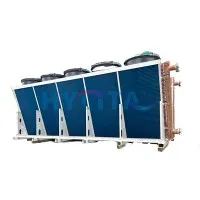
A hot water economiser is an essential device in the realm of energy - efficient systems, especially in industrial and commercial settings. As a supplier of hot water economisers, I am here to share in - depth knowledge about what a hot water economiser is, its working principles, applications, benefits, and why it is a crucial investment for businesses.
What is a Hot Water Economiser?
A hot water economiser is a heat exchanger that recovers heat from hot flue gases produced by boilers, furnaces, or other industrial processes. It uses this waste heat to pre - heat the feedwater going into the boiler. By doing so, it reduces the amount of energy required to heat the water to the desired temperature, thus improving the overall energy efficiency of the system.
The basic concept behind a hot water economiser is simple yet powerful. In many industrial processes, a significant amount of heat is lost through the flue gases. Instead of letting this heat go to waste, a hot water economiser captures it and transfers it to the incoming water. This pre - heated water then requires less additional energy to reach the boiling point or the required operating temperature in the boiler.
Working Principles
The working of a hot water economiser is based on the principles of heat transfer. The hot flue gases flow through one side of the heat exchanger, while the cold feedwater passes through the other side. Heat is transferred from the hot flue gases to the cold water through the heat exchanger surface.
There are different types of hot water economisers, such as shell - and - tube and plate - type economisers. In a shell - and - tube economiser, the flue gases flow through the tubes, and the water flows around the tubes in the shell. In a plate - type economiser, the hot gases and water flow between a series of parallel plates, which provide a large surface area for efficient heat transfer.
The efficiency of a hot water economiser depends on several factors, including the temperature difference between the flue gases and the feedwater, the flow rate of the gases and water, and the design and material of the heat exchanger. A well - designed economiser can achieve high heat transfer rates, resulting in significant energy savings.
Applications
Hot water economisers have a wide range of applications in various industries. In the power generation industry, they are used in coal - fired, gas - fired, and oil - fired power plants. By pre - heating the feedwater, economisers reduce the fuel consumption of the boilers, which in turn lowers the operating costs and reduces greenhouse gas emissions.
In the manufacturing industry, hot water economisers are used in processes such as food processing, chemical manufacturing, and textile production. These industries often require large amounts of hot water for various operations, and economisers can help them save energy and reduce costs.
Commercial buildings, such as hotels, hospitals, and office buildings, also benefit from hot water economisers. They can be installed in the building's heating systems to pre - heat the water used for space heating and domestic hot water supply. This not only reduces the energy bills but also makes the building more environmentally friendly.
Benefits
The benefits of using a hot water economiser are numerous. One of the most significant benefits is energy savings. By recovering waste heat from the flue gases, economisers can reduce the energy consumption of boilers by up to 20%. This translates into substantial cost savings for businesses, especially those with high - energy demands.
Another benefit is the reduction of greenhouse gas emissions. Since less fuel is burned to heat the water, the amount of carbon dioxide and other pollutants released into the atmosphere is reduced. This helps businesses meet environmental regulations and contribute to a more sustainable future.
Hot water economisers also extend the lifespan of boilers. By pre - heating the feedwater, the thermal stress on the boiler tubes is reduced, which can prevent premature failure and reduce maintenance costs.
Comparison with Other Heat Recovery Systems
When it comes to heat recovery, there are other systems available in addition to hot water economisers. For example, Air Preheater and Economiser is another type of heat recovery system that pre - heats the combustion air using waste heat. While air preheaters are effective in improving combustion efficiency, hot water economisers are more focused on pre - heating the feedwater.
Vapour Economizer in Boiler is also a heat recovery device that recovers heat from the steam condensate. However, hot water economisers can recover heat from a wider range of sources, including hot flue gases, which are often rich in waste heat.
Why Choose Our Hot Water Economisers
As a supplier of Hot Water Economiser, we offer high - quality products that are designed for maximum efficiency and reliability. Our economisers are made from high - grade materials that can withstand high temperatures and corrosive environments.
We have a team of experienced engineers who can design and customize economisers to meet the specific needs of our customers. Whether you have a small - scale commercial application or a large - scale industrial project, we can provide you with the right solution.
Our after - sales service is also second to none. We offer installation, maintenance, and repair services to ensure that your economiser operates at its best throughout its lifespan.


Conclusion
In conclusion, a hot water economiser is a valuable investment for businesses looking to improve energy efficiency, reduce costs, and minimize their environmental impact. With its ability to recover waste heat and pre - heat feedwater, it offers significant benefits in terms of energy savings, emission reduction, and equipment longevity.
If you are interested in learning more about our hot water economisers or would like to discuss a potential project, we encourage you to get in touch with us. Our team is ready to assist you in finding the best solution for your energy - saving needs. Contact us today to start your journey towards a more energy - efficient future.
References
- "Heat Exchanger Design Handbook", Wiley
- "Industrial Energy Conservation Handbook", McGraw - Hill
- "Boiler Efficiency and Operation", ASME Press