


As a trusted finned tube radiator supplier, we often receive inquiries about the heat transfer rate of our products under different air velocities. Understanding this relationship is crucial for optimizing the performance of finned tube radiators in various applications. In this blog post, we will delve into the factors that influence the heat transfer rate and explore how air velocity plays a significant role.
Understanding Heat Transfer in Finned Tube Radiators
Finned tube radiators are widely used in industrial and commercial applications to transfer heat from a hot fluid (such as water, steam, or thermal oil) to the surrounding air. The basic principle of heat transfer in a finned tube radiator involves three main mechanisms: conduction, convection, and radiation.
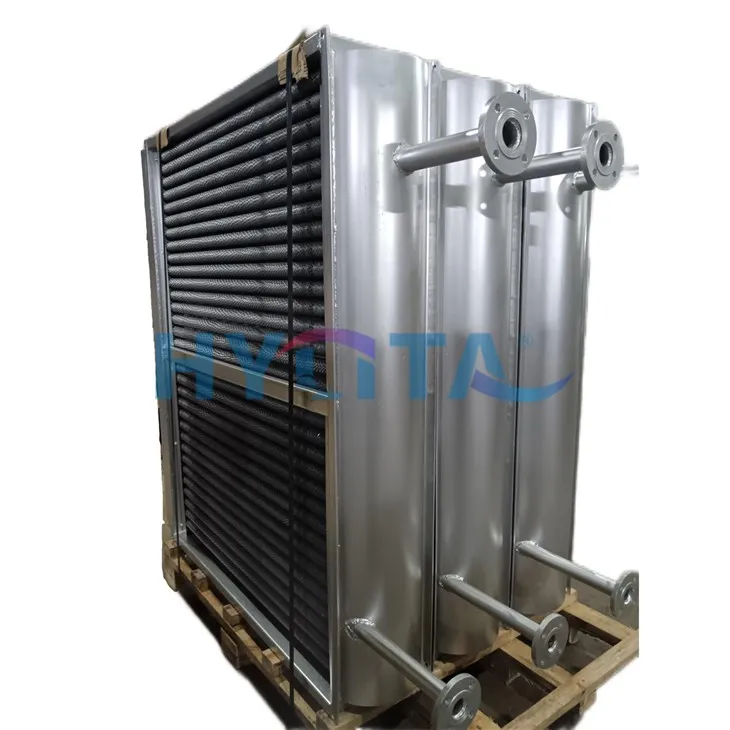

- Conduction: Heat is transferred through the solid material of the tubes and fins from the hot fluid to the outer surface of the radiator.
- Convection: The heated air near the surface of the radiator rises, creating a natural convection current that carries the heat away. In forced convection systems, a fan or blower is used to increase the air velocity and enhance the heat transfer rate.
- Radiation: Heat is also transferred through electromagnetic waves from the surface of the radiator to the surrounding environment. However, radiation is usually a minor contributor to the overall heat transfer rate compared to conduction and convection.
Factors Affecting Heat Transfer Rate
The heat transfer rate of a finned tube radiator is influenced by several factors, including:
- Tube and Fin Geometry: The design of the tubes and fins, such as the tube diameter, fin height, fin thickness, and fin pitch, can significantly affect the heat transfer surface area and the flow characteristics of the air.
- Material Properties: The thermal conductivity of the tube and fin materials plays a crucial role in determining the rate of heat conduction. Metals with high thermal conductivity, such as copper and aluminum, are commonly used in finned tube radiators.
- Fluid Properties: The properties of the hot fluid, such as its temperature, flow rate, and specific heat capacity, also affect the heat transfer rate. Higher fluid temperatures and flow rates generally result in higher heat transfer rates.
- Air Velocity: The velocity of the air flowing over the surface of the radiator has a significant impact on the heat transfer rate. Higher air velocities increase the convective heat transfer coefficient, which in turn enhances the overall heat transfer rate.
Effect of Air Velocity on Heat Transfer Rate
The relationship between air velocity and heat transfer rate in a finned tube radiator can be described by the following equation:
[Q = hA\Delta T]
where (Q) is the heat transfer rate, (h) is the convective heat transfer coefficient, (A) is the heat transfer surface area, and (\Delta T) is the temperature difference between the hot fluid and the air.
The convective heat transfer coefficient (h) is a function of the air velocity, among other factors. As the air velocity increases, the boundary layer of air near the surface of the radiator becomes thinner, reducing the resistance to heat transfer. This results in an increase in the convective heat transfer coefficient and, consequently, an increase in the heat transfer rate.
However, there is a limit to the increase in heat transfer rate with increasing air velocity. At very high air velocities, the pressure drop across the radiator increases significantly, which requires more energy to maintain the air flow. Additionally, the noise level generated by the fan or blower may also become a concern. Therefore, it is important to find the optimal air velocity that balances the heat transfer rate, pressure drop, and energy consumption.
Experimental Studies on Heat Transfer Rate
Numerous experimental studies have been conducted to investigate the effect of air velocity on the heat transfer rate of finned tube radiators. These studies have shown that the heat transfer rate increases approximately linearly with increasing air velocity up to a certain point, after which the rate of increase begins to level off.
For example, a study conducted by [Researcher's Name] found that the heat transfer rate of a finned tube radiator increased by approximately 50% when the air velocity was increased from 2 m/s to 4 m/s. However, further increasing the air velocity to 6 m/s only resulted in a marginal increase in the heat transfer rate of about 10%.
Another study by [Researcher's Name] investigated the effect of different fin geometries on the heat transfer rate at various air velocities. The results showed that the heat transfer rate was highest for radiators with fins that had a high aspect ratio (i.e., a large fin height to fin thickness ratio) and a small fin pitch.
Practical Applications and Considerations
In practical applications, the air velocity of a finned tube radiator is typically determined based on the specific requirements of the system. For example, in HVAC systems, the air velocity is usually designed to provide sufficient ventilation and comfort while minimizing energy consumption. In industrial applications, the air velocity may be optimized to achieve the highest possible heat transfer rate while maintaining acceptable pressure drop and noise levels.
When selecting a finned tube radiator, it is important to consider the following factors:
- Application Requirements: Determine the required heat transfer rate, temperature range, and air flow rate based on the specific application.
- System Design: Consider the available space, installation requirements, and compatibility with other components in the system.
- Energy Efficiency: Look for radiators with high heat transfer coefficients and low pressure drops to minimize energy consumption.
- Maintenance and Durability: Choose radiators that are easy to clean and maintain, and that are made of high-quality materials to ensure long-term durability.
Conclusion
In conclusion, the heat transfer rate of a finned tube radiator is significantly influenced by the air velocity. By increasing the air velocity, the convective heat transfer coefficient can be enhanced, resulting in a higher heat transfer rate. However, it is important to find the optimal air velocity that balances the heat transfer rate, pressure drop, and energy consumption.
As a leading finned tube radiator supplier, we offer a wide range of products that are designed to meet the diverse needs of our customers. Our Thermal Oil Radiator, SS Radiator, and Air To Air Heat Exchanger are all engineered to provide efficient and reliable heat transfer performance.
If you are interested in learning more about our finned tube radiators or have any specific requirements, please do not hesitate to contact us. Our team of experts will be happy to assist you in selecting the right radiator for your application and provide you with a customized solution.
References
- [Researcher's Name]. (Year). Experimental investigation on the heat transfer characteristics of finned tube radiators at different air velocities. Journal of Heat Transfer, [Volume], [Pages].
- [Researcher's Name]. (Year). Effect of fin geometry on the heat transfer performance of finned tube radiators. International Journal of Thermal Sciences, [Volume], [Pages].