


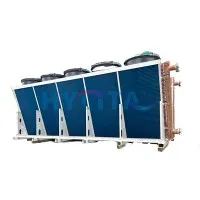
Scale build-up is a common yet often underestimated issue in the operation of hot water economisers. As a supplier of Hot Water Economisers, I have witnessed firsthand the significant impacts that scale can have on these crucial heat recovery devices. In this blog, I will delve into the various aspects of scale build-up and its effects on hot water economisers.
Understanding Scale Build-up in Hot Water Economisers
Hot water economisers are designed to recover heat from exhaust gases and transfer it to water, thereby improving the overall energy efficiency of a system. However, when water contains dissolved minerals such as calcium, magnesium, and silica, these minerals can precipitate out of the water under certain conditions, forming a hard, crusty layer known as scale.
The formation of scale is influenced by several factors, including water temperature, pH level, and the concentration of dissolved minerals. As the water in the economiser is heated, the solubility of these minerals decreases, causing them to crystallize and adhere to the surfaces of the heat exchanger tubes. Over time, this scale layer can become thicker and more extensive, leading to a range of problems.
Impact on Heat Transfer Efficiency
One of the most significant impacts of scale build-up on a hot water economiser is its effect on heat transfer efficiency. Scale acts as an insulating layer between the hot exhaust gases and the water in the tubes, reducing the rate of heat transfer. This means that less heat is transferred from the exhaust gases to the water, resulting in a decrease in the overall efficiency of the economiser.
As the scale layer thickens, the thermal resistance increases, further impeding the heat transfer process. This can lead to a situation where the economiser is unable to achieve the desired water temperature or flow rate, even when operating at full capacity. In some cases, the reduction in heat transfer efficiency can be so severe that the economiser becomes ineffective, requiring additional energy input to compensate for the lost heat.
Increase in Energy Consumption
The decrease in heat transfer efficiency caused by scale build-up directly translates into an increase in energy consumption. To maintain the same level of hot water production, the system must compensate for the reduced heat transfer by burning more fuel or using more electricity. This not only increases operating costs but also has a negative impact on the environment, as it results in higher emissions of greenhouse gases.
In addition to the direct increase in energy consumption, scale build-up can also cause other components of the system to work harder, leading to additional energy losses. For example, the pumps and fans may need to operate at higher speeds to maintain the required water and air flow rates, consuming more energy in the process.
Reduced Lifespan of the Economiser
Scale build-up can also have a detrimental effect on the lifespan of a hot water economiser. The hard, abrasive nature of scale can cause erosion and corrosion of the heat exchanger tubes, reducing their thickness and strength over time. This can lead to leaks and other structural failures, which can be costly to repair or replace.
In addition, the increased energy consumption and operating stress caused by scale build-up can also accelerate the wear and tear of other components of the economiser, such as the pumps, valves, and controls. This can further shorten the lifespan of the equipment and increase the frequency of maintenance and replacement.
Operational Issues and Maintenance Challenges
Scale build-up can also cause a range of operational issues and maintenance challenges for hot water economisers. The presence of scale can restrict the flow of water through the tubes, leading to reduced water flow rates and pressure drops. This can cause problems with the operation of the system, such as uneven heating, water hammer, and cavitation.
In addition, scale build-up can make it more difficult to clean and maintain the economiser. The hard, stubborn nature of scale can make it resistant to traditional cleaning methods, requiring the use of more aggressive chemicals or mechanical cleaning techniques. This can increase the time and cost of maintenance, as well as the risk of damage to the equipment.


Preventive Measures and Solutions
To mitigate the impact of scale build-up on hot water economisers, it is important to implement preventive measures and solutions. One of the most effective ways to prevent scale formation is to treat the water before it enters the economiser. This can involve using water softeners, filters, or chemical additives to remove or reduce the concentration of dissolved minerals in the water.
Regular maintenance and cleaning of the economiser are also essential to prevent scale build-up. This can include flushing the system with water, using chemical cleaners, or performing mechanical cleaning of the heat exchanger tubes. It is important to follow the manufacturer's recommendations for maintenance and cleaning to ensure the proper operation and longevity of the economiser.
In some cases, it may be necessary to install additional equipment or technologies to prevent scale build-up. For example, electronic descaling devices can be used to alter the physical properties of the water, preventing the formation of scale. These devices work by applying an electrical or magnetic field to the water, which disrupts the crystallization process of the dissolved minerals.
Conclusion
In conclusion, scale build-up can have a significant impact on the performance, efficiency, and lifespan of a hot water economiser. As a supplier of Hot Water Economisers, I understand the importance of addressing this issue to ensure the optimal operation of our customers' systems. By implementing preventive measures and solutions, such as water treatment, regular maintenance, and the use of additional equipment, we can help our customers minimize the impact of scale build-up and maximize the benefits of their hot water economisers.
If you are experiencing issues with scale build-up in your hot water economiser or are interested in learning more about our products and services, please [contact us] for a consultation. Our team of experts is dedicated to providing you with the best solutions for your heat recovery needs.
References
- Smith, J. (2018). The Impact of Scale Build-up on Heat Exchanger Performance. Journal of Thermal Science and Engineering Applications, 10(2), 021003.
- Johnson, R. (2019). Preventing Scale Build-up in Industrial Water Systems. Chemical Engineering Progress, 115(3), 42-47.
- Brown, A. (2020). The Effects of Scale on Energy Efficiency in Heating Systems. Energy Efficiency, 13(4), 769-782.
Note: [contact us] is a placeholder. In a real - world scenario, this should be replaced with the actual way to reach out to the company, such as a "Contact Us" link on the company's official website. Also, the links as required are as follows: