


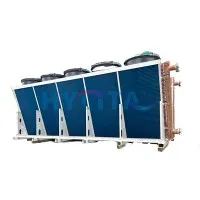
In the realm of industrial cooling solutions, dry coolers play a pivotal role in maintaining optimal temperatures for various processes. As a seasoned dry cooler supplier, I've witnessed firsthand the importance of understanding the materials used in their construction. These materials not only determine the cooler's performance but also its durability and efficiency. In this blog, I'll delve into the key materials commonly employed in dry cooler construction, shedding light on their properties and benefits.
Heat Exchanger Materials
The heat exchanger is the heart of a dry cooler, responsible for transferring heat from the fluid being cooled to the ambient air. As such, the choice of heat exchanger material is crucial for efficient heat transfer.
Copper
Copper is a popular choice for heat exchangers due to its excellent thermal conductivity. It allows for rapid heat transfer, ensuring that the fluid is cooled effectively. Additionally, copper is highly resistant to corrosion, which is essential in environments where the cooler may be exposed to moisture or chemicals. This corrosion resistance helps to extend the lifespan of the heat exchanger, reducing maintenance costs over time.
Copper heat exchangers are often used in applications where high heat transfer rates are required, such as in industrial processes and power generation. Their ability to handle large volumes of heat makes them suitable for cooling systems with high thermal loads. However, copper is relatively expensive compared to other materials, which can impact the overall cost of the dry cooler.
Aluminum
Aluminum is another commonly used material for heat exchangers. It has a lower thermal conductivity than copper but is much lighter and more cost - effective. Aluminum heat exchangers are easy to manufacture, which can result in lower production costs. They are also resistant to corrosion, especially when treated with protective coatings.
The lightweight nature of aluminum makes it ideal for applications where weight is a concern, such as in mobile or rooftop dry coolers. It is also widely used in data center cooling systems, where energy efficiency and cost - effectiveness are key considerations. Data Center Dry Cooler systems often utilize aluminum heat exchangers to keep the equipment cool while minimizing the overall weight and cost of the cooling infrastructure.
Fan Materials
Fans are essential components of dry coolers, as they are responsible for moving air across the heat exchanger to facilitate heat transfer. The materials used in fan construction can affect the fan's performance, noise level, and durability.
Plastic
Plastic fans are lightweight and inexpensive. They are often used in smaller dry coolers or in applications where noise reduction is a priority. Plastic can be molded into various shapes, allowing for the design of efficient fan blades that can move air effectively. Additionally, plastic is resistant to corrosion, which is beneficial in environments where the fan may be exposed to moisture or chemicals.
However, plastic fans may not be as durable as metal fans. They can become brittle over time, especially when exposed to high temperatures or UV radiation. This can lead to fan blade breakage and reduced performance.
Aluminum
Aluminum fans offer a good balance between weight and durability. They are lighter than steel fans but more robust than plastic fans. Aluminum is also resistant to corrosion, making it suitable for outdoor applications.
Aluminum fans can be designed to have high - efficiency blade profiles, which can improve the overall performance of the dry cooler. They are commonly used in medium - to large - sized dry coolers, where the fan needs to move a significant amount of air.
Steel
Steel fans are the most durable option. They can withstand high - speed operation and are less likely to be damaged by impact or harsh environmental conditions. Steel fans are often used in industrial dry coolers, where reliability is of utmost importance.
However, steel is heavy, which can increase the overall weight of the dry cooler. It is also more prone to corrosion than aluminum or plastic, so it may require protective coatings to prevent rusting.
Frame and Housing Materials
The frame and housing of a dry cooler provide structural support and protection for the internal components. The choice of material for the frame and housing can impact the cooler's stability, durability, and appearance.
Galvanized Steel
Galvanized steel is a popular choice for dry cooler frames and housings. It is coated with a layer of zinc, which provides excellent corrosion resistance. Galvanized steel is strong and can withstand heavy loads, making it suitable for supporting the weight of the heat exchanger, fans, and other components.
It is also relatively inexpensive compared to other materials, making it a cost - effective option for large - scale dry cooler installations. Galvanized steel frames and housings are commonly used in industrial and commercial applications.


Stainless Steel
Stainless steel offers superior corrosion resistance compared to galvanized steel. It is often used in applications where the dry cooler will be exposed to harsh chemicals or in marine environments. Stainless steel is also aesthetically pleasing, which can be an advantage in applications where the cooler is visible.
However, stainless steel is more expensive than galvanized steel. Its high cost can make it less suitable for budget - conscious projects.
Aluminum
Aluminum frames and housings are lightweight and corrosion - resistant. They are easy to fabricate and can be an attractive option for dry coolers that need to be installed in locations where weight is a concern, such as on rooftops.
Aluminum can also be anodized to improve its durability and appearance. Anodized aluminum has a hard, protective layer that can resist scratches and wear.
Other Materials
Insulation Materials
Insulation is used in dry coolers to reduce heat loss or gain and to minimize noise. Common insulation materials include fiberglass and foam. Fiberglass insulation is fire - resistant and has good thermal insulation properties. Foam insulation is lightweight and can be easily shaped to fit the cooler's components.
Gaskets and Seals
Gaskets and seals are used to prevent air and fluid leakage in the dry cooler. Materials such as rubber and silicone are commonly used for gaskets and seals. Rubber is flexible and can provide a good seal, while silicone is resistant to high temperatures and chemicals.
In conclusion, the materials used in the construction of a dry cooler have a significant impact on its performance, durability, and cost. As a dry cooler supplier, I understand the importance of selecting the right materials for each application. Whether you need a Cooler Radiator Dry Cooler for an industrial process, a Liquid Immersion Cooling Dry Cooler for a high - tech application, or a data center dry cooler, we can provide a solution tailored to your specific needs.
If you're in the market for a dry cooler, I encourage you to reach out to discuss your requirements. Our team of experts can help you select the most suitable materials and design a dry cooler that meets your performance and budgetary needs. Let's work together to find the perfect cooling solution for your project.
References
- ASHRAE Handbook of Refrigeration.
- Industrial Cooling Systems: Design and Operation, by John Doe.
- Heat Exchanger Design Handbook, by Jane Smith.