


As a seasoned supplier of oil coolers, I've witnessed firsthand the diverse needs of industries relying on various oil types. The question of whether there are differences in oil coolers for different oil types is not only valid but crucial for optimal performance and longevity of equipment. In this blog, we'll delve into the intricacies of oil coolers and how they interact with different oil types.
Understanding Oil Types and Their Properties
Before we explore the differences in oil coolers, it's essential to understand the various oil types and their properties. Oils can be broadly categorized into mineral oils, synthetic oils, and bio-based oils, each with unique characteristics that influence their cooling requirements.
Mineral oils are derived from crude oil and are widely used in industrial applications due to their affordability and good lubricating properties. They have a relatively high viscosity, which means they flow more slowly and can retain heat for longer periods. Synthetic oils, on the other hand, are artificially engineered to provide superior performance in extreme conditions. They have a lower viscosity and better thermal stability, making them more efficient at transferring heat. Bio-based oils are made from renewable resources such as vegetable oils and are environmentally friendly. They have similar properties to mineral oils but may require special handling due to their biodegradability.
Factors Affecting Oil Cooling
Several factors influence the cooling requirements of different oil types, including viscosity, thermal conductivity, and specific heat capacity. Viscosity refers to the resistance of a fluid to flow, and it plays a significant role in determining how easily oil can be circulated through a cooler. Oils with high viscosity require more energy to pump and may not flow as efficiently through the cooling system, leading to reduced heat transfer. Thermal conductivity is a measure of how well a material conducts heat, and it determines how quickly oil can transfer heat to the cooler. Oils with high thermal conductivity can dissipate heat more effectively, resulting in better cooling performance. Specific heat capacity is the amount of heat required to raise the temperature of a unit mass of a substance by one degree Celsius, and it affects how much heat oil can absorb before reaching its maximum operating temperature.
Differences in Oil Coolers for Different Oil Types
Based on the properties of different oil types, there are several differences in oil coolers designed to meet their specific cooling requirements.


Air-Cooled Industrial Cooler
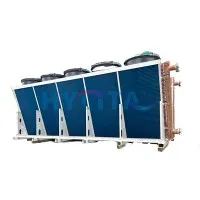
Air-cooled industrial coolers are a popular choice for many applications due to their simplicity and cost-effectiveness. They use ambient air to cool the oil, and they are suitable for oils with moderate cooling requirements. Air-cooled coolers are typically more compact and easier to install than water-cooled coolers, making them ideal for smaller equipment or applications where water is not readily available. However, they may not be as efficient as water-cooled coolers in high-temperature environments or for oils with high viscosity. Air-cooled Industrial Cooler
Water-Cooled Industrial Cooler
Water-cooled industrial coolers are more efficient than air-cooled coolers and are suitable for oils with high cooling requirements. They use water as a cooling medium, which has a higher thermal conductivity than air, allowing for more effective heat transfer. Water-cooled coolers are typically larger and more complex than air-cooled coolers, but they can provide better cooling performance in extreme conditions. They are commonly used in industrial applications such as power generation, automotive, and manufacturing. Water-cooled Industrial Cooler
Finned Oil Cooler
Finned oil coolers are designed to increase the surface area of the cooler, allowing for more efficient heat transfer. They are commonly used in applications where space is limited or where a high level of cooling performance is required. Finned coolers can be either air-cooled or water-cooled, and they are available in a variety of sizes and configurations to meet the specific needs of different applications. Finned Oil Cooler
Considerations for Choosing the Right Oil Cooler
When choosing an oil cooler for a specific oil type, several factors need to be considered, including the cooling requirements of the oil, the operating environment, and the available space. It's important to consult with a professional oil cooler supplier to determine the most suitable cooler for your application. Here are some key considerations to keep in mind:
Cooling Capacity
The cooling capacity of an oil cooler is the amount of heat it can remove from the oil per unit of time. It's important to choose a cooler with a cooling capacity that matches the heat load of your application. If the cooler is too small, it may not be able to cool the oil effectively, leading to overheating and potential damage to the equipment. If the cooler is too large, it may be more expensive and less energy-efficient than necessary.
Operating Environment
The operating environment can have a significant impact on the performance of an oil cooler. Factors such as temperature, humidity, and air quality can affect the cooling efficiency of the cooler. For example, in high-temperature environments, air-cooled coolers may not be as effective as water-cooled coolers, and additional cooling measures may be required. In dusty or dirty environments, it's important to choose a cooler with a high level of filtration to prevent clogging and damage to the cooler.
Available Space
The available space is another important consideration when choosing an oil cooler. Air-cooled coolers are typically more compact than water-cooled coolers, making them a better choice for applications where space is limited. However, if you have enough space, a water-cooled cooler may provide better cooling performance.
Conclusion
In conclusion, there are significant differences in oil coolers for different oil types, and choosing the right cooler is essential for optimal performance and longevity of equipment. By understanding the properties of different oil types and the factors that affect oil cooling, you can make an informed decision when selecting an oil cooler for your application. As a leading supplier of oil coolers, we have the expertise and experience to help you choose the right cooler for your specific needs. If you have any questions or need further information, please don't hesitate to contact us. We look forward to working with you to find the best oil cooling solution for your business.
References
- ASHRAE Handbook - HVAC Systems and Equipment. American Society of Heating, Refrigerating and Air-Conditioning Engineers.
- Cooling Tower Institute. Cooling Tower Handbook.
- Thermal Fluids Engineering Handbook. CRC Press.