


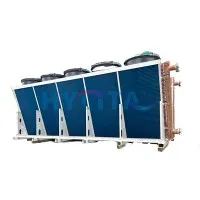
Hey there! As a condenser coil supplier, I've seen firsthand how crucial proper airflow is for the health and performance of condenser coils. In this blog, I'm gonna dig into whether improper airflow can damage a condenser coil and why it matters.
Let's start by understanding what a condenser coil does. It's a key component in refrigeration and air - conditioning systems. Its main job is to release heat from the refrigerant, turning it from a high - pressure gas into a high - pressure liquid. This process is essential for the cooling cycle to work efficiently.
Now, what exactly is improper airflow? Well, it can happen in a few ways. One common issue is blocked airflow. This could be due to debris like leaves, dirt, or even small animals building nests around the condenser unit. Another cause could be a malfunctioning fan. If the fan isn't working properly, it won't be able to pull in enough air or push it out effectively, leading to restricted airflow.
So, can this improper airflow damage a condenser coil? The short answer is yes. When there's not enough airflow across the condenser coil, a bunch of bad things can happen.
First off, the heat transfer process gets messed up. The whole point of the condenser coil is to transfer heat from the refrigerant to the surrounding air. With poor airflow, this heat transfer becomes less efficient. The refrigerant can't release its heat as quickly as it should, which causes the temperature and pressure inside the coil to rise. High pressure can put a lot of stress on the coil, potentially leading to leaks. You see, condenser coils are made of thin metal tubes, and excessive pressure can cause these tubes to crack or develop holes. Once there's a leak, the refrigerant starts to escape, and your cooling system won't work as well.
Another problem is that the coil can overheat. When the heat can't dissipate properly due to improper airflow, the temperature of the coil keeps going up. Overheating can damage the protective coatings on the coil. These coatings are there to prevent corrosion and other forms of damage. When they're damaged, the coil becomes more vulnerable to rust and other issues that can shorten its lifespan.
Improper airflow can also lead to the formation of ice on the coil. When the temperature inside the coil drops too low because of the inefficient heat transfer, moisture in the air can freeze on the coil's surface. Ice buildup can further restrict airflow, creating a vicious cycle. As more ice forms, the airflow gets even worse, and the problems keep compounding. Eventually, the ice can cause physical damage to the coil, bending or breaking the fins that help with heat transfer.
Let's talk about different types of condenser coils and how improper airflow affects them. For example, Marine Condenser Unit are used in harsh marine environments. In these settings, any reduction in airflow can be especially problematic. Saltwater in the air can already cause corrosion, and when the coil is overheating due to poor airflow, the corrosion process can speed up. The combination of high temperatures and saltwater can eat away at the coil much faster than normal.
Condenser and Coil for Data Center Cooling are another important type. Data centers rely on efficient cooling to keep their servers running properly. If the condenser coils in these systems experience improper airflow, it can lead to overheating of the servers. This not only affects the performance of the data center but can also cause costly downtime.
Industrial Condenser Unit are used in large - scale industrial processes. These coils are often bigger and handle a lot more heat. Improper airflow in an industrial setting can lead to significant production losses. For instance, if a manufacturing process depends on a properly functioning cooling system with a condenser coil, and the coil is damaged due to poor airflow, the entire production line might have to shut down.
So, what can you do to prevent improper airflow and protect your condenser coil? Regular maintenance is key. Make sure to clean the area around the condenser unit regularly to remove any debris. Check the fan to ensure it's working correctly. You can also install air filters to prevent dirt and dust from getting into the system.
If you're in the market for a new condenser coil, it's important to choose one that's designed for your specific application. At our company, we offer a wide range of high - quality condenser coils that are built to withstand different operating conditions. We can help you find the right coil for your needs, whether it's a marine condenser unit, a coil for data center cooling, or an industrial condenser unit.
If you're facing issues with your current condenser coil or are thinking about a new purchase, don't hesitate to reach out. We're here to assist you with all your condenser coil needs. Our team of experts can provide you with advice on installation, maintenance, and troubleshooting. We want to make sure your cooling system runs smoothly and efficiently, and that starts with a healthy condenser coil.


In conclusion, improper airflow can definitely damage a condenser coil. It can lead to a range of problems, from leaks and overheating to corrosion and ice buildup. By understanding the importance of proper airflow and taking steps to maintain it, you can extend the lifespan of your condenser coil and keep your cooling system working at its best.
If you have any questions or are interested in learning more about our condenser coils, feel free to contact us. We're looking forward to helping you with your next project.
References
- ASHRAE Handbook of Refrigeration. This handbook provides in - depth information on the principles of refrigeration systems, including the role of condenser coils and the impact of airflow on their performance.
- Manufacturer's guides for condenser coils. These guides often contain specific information about the recommended operating conditions and maintenance procedures for different types of condenser coils.