


Do oil coolers increase fuel efficiency? This is a question that often comes up in discussions among automotive enthusiasts, industrial equipment operators, and those concerned with energy conservation. As a supplier of high - quality oil coolers, I'm here to delve into this topic and provide you with a comprehensive analysis.
The Basics of Oil Coolers
Before we discuss the relationship between oil coolers and fuel efficiency, let's first understand what oil coolers are. Oil coolers are heat exchangers designed to lower the temperature of oil in various systems, such as engines, transmissions, and hydraulic systems. There are different types of oil coolers available in the market, each with its own unique features and applications.
- Water - cooled Industrial Cooler: These coolers use water as a coolant to transfer heat away from the oil. They are highly efficient in removing heat and are commonly used in industrial settings where large amounts of heat need to be dissipated. You can learn more about Water - cooled Industrial Cooler.
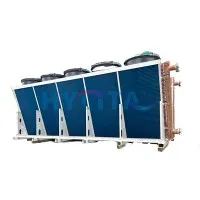
- Air - cooled Industrial Cooler: As the name suggests, air - cooled industrial coolers use air to cool the oil. They are relatively simple in design and are often used in applications where water is not readily available or where a more compact cooling solution is required. Check out our Air - cooled Industrial Cooler for more details.
- Finned Oil Cooler: Finned oil coolers have fins attached to their surface to increase the surface area for heat transfer. This design enhances the cooling efficiency and is commonly used in automotive and small - scale industrial applications. Explore our Finned Oil Cooler for more information.
How Oil Temperature Affects Fuel Efficiency
To understand how oil coolers can potentially increase fuel efficiency, we need to look at how oil temperature impacts the performance of an engine or other oil - lubricated systems.
Viscosity and Friction
Oil viscosity is a measure of its resistance to flow. When the oil temperature is too high, the viscosity of the oil decreases. This can lead to increased friction between moving parts in the engine or system. As a result, more energy is required to overcome this friction, which in turn leads to higher fuel consumption.
On the other hand, if the oil temperature is too low, the viscosity of the oil increases. This can cause the oil to become too thick, making it difficult for the oil to flow through the system and properly lubricate the parts. This also leads to increased friction and reduced efficiency.
An oil cooler helps to maintain the oil at an optimal temperature, which keeps the viscosity within the ideal range. By reducing friction, the engine or system can operate more smoothly, requiring less energy and thus potentially improving fuel efficiency.
Engine Performance and Combustion
In an internal combustion engine, proper lubrication is essential for optimal performance. When the oil is at the right temperature, the engine's components can move freely, and the combustion process can occur more efficiently. This means that the fuel is burned more completely, resulting in better power output and potentially lower fuel consumption.
If the oil overheats, it can break down and form deposits on engine parts. These deposits can interfere with the normal operation of the engine, such as affecting the flow of air and fuel, and reducing the efficiency of the combustion process. An oil cooler helps to prevent oil overheating and the formation of these deposits, thereby maintaining the engine's performance and fuel efficiency.
Real - World Evidence of Improved Fuel Efficiency
There have been numerous studies and real - world applications that suggest oil coolers can have a positive impact on fuel efficiency.
In the automotive industry, many high - performance and racing cars are equipped with oil coolers. These coolers help to keep the engine oil at an optimal temperature during high - speed and high - stress driving conditions. As a result, the engines can operate more efficiently, and the cars can achieve better fuel economy.
In industrial settings, oil - cooled hydraulic systems are often used. By maintaining the hydraulic oil at the right temperature, the system can operate with less energy loss due to friction. This leads to reduced power consumption and lower fuel costs, especially in large - scale industrial operations where hydraulic systems are used extensively.
Factors Affecting the Impact of Oil Coolers on Fuel Efficiency
While oil coolers have the potential to increase fuel efficiency, the actual impact can vary depending on several factors.


System Design and Application
The design of the engine or system and its specific application play a crucial role. For example, in a small, low - power engine that operates under normal conditions, the impact of an oil cooler on fuel efficiency may be relatively small. However, in a large, high - performance engine or an industrial system that operates under heavy loads and high temperatures, an oil cooler can have a more significant impact.
Operating Conditions
The operating conditions also matter. If the engine or system is frequently exposed to high - temperature environments or operates at high speeds for extended periods, an oil cooler is more likely to improve fuel efficiency. On the other hand, if the operating conditions are relatively mild, the benefits of an oil cooler may be less pronounced.
Quality of the Oil Cooler
The quality of the oil cooler itself is also important. A high - quality oil cooler with efficient heat transfer capabilities will be more effective in maintaining the oil temperature and reducing friction. Cheaper or poorly designed oil coolers may not perform as well, and their impact on fuel efficiency may be limited.
Conclusion
In conclusion, oil coolers have the potential to increase fuel efficiency by maintaining the oil at an optimal temperature, reducing friction, and improving the performance of engines and other oil - lubricated systems. While the actual impact may vary depending on factors such as system design, operating conditions, and the quality of the oil cooler, there is clear evidence that oil coolers can play a positive role in energy conservation.
If you're interested in improving the fuel efficiency of your engine or industrial system, consider investing in a high - quality oil cooler. We offer a wide range of oil coolers, including Water - cooled Industrial Cooler, Air - cooled Industrial Cooler, and Finned Oil Cooler. Our team of experts can help you choose the right oil cooler for your specific needs. Contact us to start a procurement discussion and take the first step towards better fuel efficiency and cost savings.
References
- SAE International. "Effect of Oil Temperature on Engine Friction and Fuel Economy."
- Society of Automotive Engineers. "Advanced Cooling Technologies for Engines."
- Industrial Hydraulics Handbook. "Optimizing Hydraulic System Efficiency with Oil Cooling."