


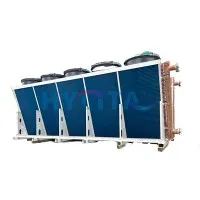
Hey there! As a supplier of cooling coils, I've seen firsthand how these nifty devices play a crucial role in dehumidification systems. So, let's dive right in and explore how cooling coils work in a dehumidification system.
The Basics of Dehumidification
Before we get into the nitty - gritty of cooling coils, let's quickly understand the concept of dehumidification. You know how on a hot and humid day, the air feels sticky and uncomfortable? That's because the air is holding a lot of water vapor. Dehumidification is the process of removing this excess moisture from the air to make it more comfortable and to prevent issues like mold growth, corrosion, and damage to equipment.
How Cooling Coils Fit into the Picture
Cooling coils are at the heart of many dehumidification systems. They work based on the principle of condensation. When warm, moist air comes into contact with a cold surface, the water vapor in the air cools down and changes from a gaseous state to a liquid state. This is the same phenomenon you see when a cold drink glass “sweats” on a hot day.
The Components of a Cooling Coil
A typical cooling coil consists of a series of tubes that are often made from materials like copper, stainless steel, or titanium. The choice of material depends on various factors such as the application, the environment, and the budget. For instance, if you're dealing with a corrosive environment, a Stainless Steel Coil Cooler or a Titanium Coil might be a better option. These materials are resistant to rust and corrosion, which helps in prolonging the life of the cooling coil.
The tubes in the cooling coil are usually arranged in a serpentine or parallel pattern to maximize the surface area in contact with the air. The more surface area there is, the more efficient the heat transfer and dehumidification process will be. In addition to the tubes, there are also fins attached to the tubes. These fins further increase the surface area and improve the heat transfer rate.
The Refrigerant Cycle
Now, let's talk about how the cooling coil gets cold in the first place. It's all about the refrigerant cycle. A refrigerant is a special fluid that can absorb and release heat easily. The refrigerant enters the cooling coil as a low - pressure, low - temperature gas. As the warm, moist air passes over the cooling coil, the refrigerant absorbs the heat from the air. This causes the refrigerant to evaporate and turn into a high - pressure, high - temperature gas.
The high - pressure gas then leaves the cooling coil and enters a compressor. The compressor squeezes the gas, increasing its pressure and temperature even further. From the compressor, the hot, high - pressure gas moves into a condenser. In the condenser, the refrigerant releases the heat it absorbed from the air to the outside environment. As it releases heat, the refrigerant condenses back into a high - pressure liquid.
The high - pressure liquid then passes through an expansion valve. The expansion valve reduces the pressure of the refrigerant, causing it to cool down significantly. This low - pressure, low - temperature refrigerant then re - enters the cooling coil, and the cycle starts all over again.
The Dehumidification Process Step by Step
- Air Intake: The first step in the dehumidification process is the intake of warm, moist air. This air is drawn into the dehumidification system using a fan.
- Contact with the Cooling Coil: Once the air is inside the system, it passes over the cold surface of the cooling coil. As mentioned earlier, when the warm air comes into contact with the cold coil, the water vapor in the air condenses into liquid water. The liquid water then drips down into a collection pan or is drained away through a pipe.
- Cooled and Dehumidified Air: After passing over the cooling coil, the air is now cooler and has less moisture. However, it might be too cold for comfort. So, in some dehumidification systems, there is a reheating process. The cooled air passes over a reheating coil, which warms it up to a more comfortable temperature before it is released back into the room.
Different Types of Cooling Coils for Dehumidification
There are several types of cooling coils that can be used in dehumidification systems. One common type is the Shell and Tube Coil Cooler. In a shell and tube coil cooler, the refrigerant flows through the tubes, while the air passes through the shell. This design allows for efficient heat transfer and is often used in large - scale dehumidification applications.


Another type is the finned - tube coil. As we discussed earlier, finned - tube coils have fins attached to the tubes to increase the surface area. They are widely used in both residential and commercial dehumidification systems because of their high efficiency and relatively low cost.
Factors Affecting the Performance of Cooling Coils in Dehumidification
- Airflow Rate: The rate at which air passes over the cooling coil is crucial. If the airflow is too slow, the dehumidification process will be inefficient because there won't be enough contact between the air and the cold surface of the coil. On the other hand, if the airflow is too fast, the air might not have enough time to cool down and release its moisture.
- Refrigerant Charge: The amount of refrigerant in the system is also important. If there is too little refrigerant, the cooling coil won't get cold enough, and the dehumidification process will be ineffective. If there is too much refrigerant, it can cause problems with the compressor and other components of the system.
- Coil Surface Temperature: The temperature of the cooling coil surface directly affects the amount of moisture that can be removed from the air. A colder coil surface will result in more condensation and better dehumidification. However, if the coil gets too cold, it can lead to frost formation, which can reduce the efficiency of the system.
Why Choose Our Cooling Coils for Your Dehumidification Needs
As a cooling coil supplier, we take pride in offering high - quality products. Our cooling coils are designed and manufactured to meet the highest standards. We use the best materials and the latest manufacturing techniques to ensure that our coils are efficient, durable, and reliable.
Whether you need a small cooling coil for a residential dehumidifier or a large - scale coil for an industrial application, we've got you covered. Our team of experts can help you choose the right type of cooling coil based on your specific requirements.
If you're in the market for cooling coils for your dehumidification system, we'd love to have a chat with you. We can provide you with detailed information about our products, answer any questions you might have, and even offer a custom - made solution if needed. So, don't hesitate to reach out and start a conversation about your cooling coil needs.
References
- ASHRAE Handbook - HVAC Systems and Equipment.
- Refrigeration and Air Conditioning Technology by William C. Whitman, William M. Johnson, and John Tomczyk.