


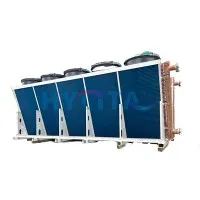
Hey there! As a supplier of heat recovery units, I often get asked about how these nifty devices work, especially in a gymnasium setting. So, I thought I'd take a few minutes to break it down for you.
First off, let's talk about why a gymnasium needs a heat recovery unit. Gyms are pretty unique places. They're full of people working up a sweat, which means there's a lot of heat and moisture being generated. At the same time, you've got to keep the air fresh and comfortable for everyone inside. That's where a heat recovery unit comes in.
So, how does it actually work? Well, it all starts with the ventilation system. In a gym, there are two main airflows: the supply air, which brings fresh air into the building, and the exhaust air, which takes the stale, warm, and moist air out.
The heat recovery unit sits right in the middle of these two airflows. It's got a heat exchanger at its core. This heat exchanger is like a super-efficient middleman that transfers heat from the exhaust air to the supply air without mixing the two air streams.
Let's say it's cold outside. The fresh air coming in is freezing. But as it passes through the heat exchanger, it picks up the heat from the warm exhaust air that's on its way out. So, by the time the fresh air gets into the gym, it's a lot warmer. This not only makes the gym more comfortable but also saves a ton of energy that would otherwise be used to heat the cold outside air.
On the flip side, during hot summer months, the process works in reverse. The warm supply air from outside can be cooled down by the cooler exhaust air from inside the gym. This helps to keep the gym at a comfortable temperature without overworking the air - conditioning system.
Now, let's dig a bit deeper into the types of heat exchangers used in these units. There are a few common ones.
One type is the plate heat exchanger. It's made up of a bunch of thin metal plates stacked on top of each other. The exhaust air and the supply air flow through alternate channels between these plates. Heat is transferred through the plates from the warmer air to the cooler one. Plate heat exchangers are great because they're relatively simple, efficient, and easy to clean. You can learn more about related heat - recovery components like Air Preheater and Economiser.
Another type is the rotary heat exchanger. It has a large rotating wheel made of a heat - absorbing material. As the wheel rotates, it passes through both the exhaust and supply air streams. In the exhaust air stream, it picks up heat, and then as it rotates into the supply air stream, it releases that heat. Rotary heat exchangers are known for their high efficiency, especially when it comes to handling large volumes of air, which is perfect for a big gym.
There's also the heat pipe heat exchanger. Heat pipes are sealed tubes filled with a special fluid. One end of the heat pipe is in the exhaust air, and the other end is in the supply air. When the fluid in the hot end of the heat pipe absorbs heat, it turns into vapor. This vapor then travels to the cooler end of the heat pipe, where it condenses back into a liquid, releasing the heat in the process. Heat pipe heat exchangers are very reliable and can handle different temperature and humidity conditions well. You can find more details about similar heat - recovery equipment like Exhaust Heat Exchanger.
In addition to the heat exchanger, a heat recovery unit also has fans. These fans are responsible for moving the air through the unit. They need to be carefully sized to ensure that there's enough airflow to meet the ventilation requirements of the gym.
The control system of the heat recovery unit is another crucial part. It monitors things like temperature, humidity, and airflow. Based on these readings, it can adjust the operation of the fans and the heat exchanger to optimize performance. For example, if the gym is less crowded and generating less heat, the control system can reduce the airflow or adjust the heat transfer rate to save energy. And if you're interested in more advanced heat - recovery concepts, check out Vapour Economizer in Boiler.
There are also some additional features that can enhance the performance of a heat recovery unit in a gym. For instance, some units come with a humidity control function. Since gyms generate a lot of moisture, it's important to manage the humidity levels. The heat recovery unit can remove excess moisture from the exhaust air and transfer it to the supply air if needed, helping to maintain a healthy and comfortable indoor environment.
Another useful feature is the filtration system. The filters in the unit can trap dust, pollen, and other pollutants from the incoming air. This is especially important in a gym where people are breathing in a lot of air, and clean air is essential for their health.
So, why should a gym owner consider installing a heat recovery unit? Well, the energy savings are a huge plus. By reusing the heat that would otherwise be wasted, the gym can significantly reduce its heating and cooling costs. This means more money in the bank for other important things like new equipment or facility upgrades.
It also improves the indoor air quality. With a proper heat recovery unit, the gym can have a constant supply of fresh, filtered air, which is great for the health and well - being of the members. And let's not forget about the environmental benefits. Using less energy means a lower carbon footprint, which is good for the planet.
If you're a gym owner or someone involved in the management of a gymnasium and you're thinking about getting a heat recovery unit, I'd love to have a chat with you. We can discuss your specific needs, the size of your gym, and the best heat recovery solution for you. Whether it's a small community gym or a large commercial fitness center, we've got the expertise and the right products to make your gym more energy - efficient and comfortable.
In conclusion, a heat recovery unit in a gymnasium is a smart investment. It works by efficiently transferring heat between the exhaust and supply air, using a heat exchanger and other components. With its energy - saving, air - quality - improving, and environmental benefits, it's a win - win for everyone. So, don't hesitate to reach out if you're interested in learning more or making a purchase.
References


- ASHRAE Handbook - HVAC Systems and Equipment.
- Various industry reports on energy - efficient ventilation in commercial buildings.