


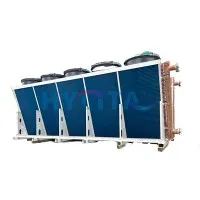
Cooling coils play a pivotal role in ground-source heat pump (GSHP) systems, facilitating efficient heat transfer and temperature regulation. As a leading supplier of cooling coils, I am excited to delve into the intricacies of how these components operate within GSHP systems, exploring their functionality, benefits, and applications.
Understanding Ground-Source Heat Pump Systems
Before delving into the workings of cooling coils, it's essential to grasp the fundamentals of ground-source heat pump systems. GSHPs are highly efficient heating and cooling systems that leverage the stable temperature of the earth to transfer heat. These systems consist of three main components: the ground loop, the heat pump unit, and the distribution system.
The ground loop is a series of pipes buried underground, typically filled with a heat transfer fluid such as water or a water-antifreeze mixture. This loop exchanges heat with the surrounding soil, which maintains a relatively constant temperature throughout the year. The heat pump unit, located indoors, contains a compressor, condenser, evaporator, and expansion valve. It transfers heat between the ground loop and the indoor environment, either extracting heat from the ground to warm the building or removing heat from the building and transferring it to the ground for cooling. The distribution system, which can include ductwork, radiators, or underfloor heating, delivers the conditioned air or water to the various spaces within the building.
The Role of Cooling Coils in GSHP Systems
Cooling coils are an integral part of the heat pump unit, specifically within the evaporator section. Their primary function is to facilitate the transfer of heat between the refrigerant and the air or water passing over them. In a cooling mode, the refrigerant enters the cooling coil as a low-pressure, low-temperature liquid. As the warm air or water from the building passes over the coil, the refrigerant absorbs the heat, causing it to evaporate and change into a vapor. This phase change from liquid to vapor requires energy, which is extracted from the air or water, resulting in a decrease in temperature.
The cooled air or water is then circulated back into the building, providing a comfortable indoor environment. Meanwhile, the refrigerant vapor is drawn into the compressor, where it is compressed to a high-pressure, high-temperature state. The hot refrigerant vapor then flows into the condenser, where it releases the heat it absorbed from the building to the ground loop. The refrigerant condenses back into a liquid and returns to the expansion valve, where its pressure is reduced, and the cycle repeats.
How Cooling Coils Work
Cooling coils operate based on the principles of heat transfer and phase change. The efficiency of a cooling coil depends on several factors, including the design of the coil, the type of refrigerant used, and the flow rate of the air or water passing over it.
Coil Design
The design of a cooling coil can significantly impact its performance. Cooling coils are typically made of copper or aluminum tubes with fins attached to increase the surface area available for heat transfer. The fins enhance the contact between the refrigerant and the air or water, improving the efficiency of heat exchange. The number, shape, and spacing of the fins can vary depending on the specific application and performance requirements.
There are several types of cooling coils available, each with its own advantages and disadvantages. Shell and Tube Coil Cooler are commonly used in industrial applications due to their high heat transfer efficiency and durability. They consist of a series of tubes enclosed within a shell, with the refrigerant flowing through the tubes and the air or water passing over the outside of the tubes. Stainless Steel Coil Cooler are corrosion-resistant and suitable for use in harsh environments. They are often used in food processing, pharmaceutical, and chemical industries. Titanium Coil are lightweight, strong, and highly resistant to corrosion, making them ideal for use in marine and offshore applications.
Refrigerant Selection
The choice of refrigerant is another critical factor in the performance of a cooling coil. Refrigerants are substances that absorb and release heat during the refrigeration cycle. They should have a low boiling point, high latent heat of vaporization, and good thermal conductivity. Common refrigerants used in GSHP systems include R-410A, R-134a, and R-22 (although R-22 is being phased out due to its ozone-depleting properties).
The refrigerant used in a cooling coil must be compatible with the materials of the coil and the other components of the heat pump system. It should also meet environmental and safety standards. The selection of the refrigerant depends on factors such as the operating temperature range, the efficiency requirements, and the regulatory requirements.


Air or Water Flow
The flow rate of the air or water passing over the cooling coil also affects its performance. A higher flow rate can increase the heat transfer rate, but it can also increase the pressure drop across the coil, which can reduce the efficiency of the system. Therefore, it is essential to optimize the flow rate to achieve the best balance between heat transfer and pressure drop.
In air-cooled systems, the air is typically blown over the cooling coil using a fan. The fan speed can be adjusted to control the air flow rate. In water-cooled systems, the water is circulated through the cooling coil using a pump. The pump speed can be adjusted to control the water flow rate.
Benefits of Cooling Coils in GSHP Systems
Cooling coils offer several benefits in GSHP systems, including:
- Energy Efficiency: By facilitating efficient heat transfer, cooling coils help to reduce the energy consumption of GSHP systems. This can result in significant cost savings on energy bills.
- Comfort: Cooling coils help to maintain a comfortable indoor temperature by removing heat from the building. They can also improve indoor air quality by reducing humidity levels.
- Reliability: Cooling coils are designed to be durable and reliable, with a long service life. They require minimal maintenance, which can reduce downtime and maintenance costs.
- Environmental Friendliness: GSHP systems are considered to be environmentally friendly because they use the earth's natural heat as a renewable energy source. Cooling coils play a crucial role in the efficient operation of these systems, further reducing their environmental impact.
Applications of Cooling Coils in GSHP Systems
Cooling coils are used in a wide range of applications in GSHP systems, including:
- Residential Buildings: Cooling coils are commonly used in residential GSHP systems to provide heating and cooling for homes. They can be installed in ducted or ductless systems, depending on the specific requirements of the building.
- Commercial Buildings: Cooling coils are also used in commercial GSHP systems, such as offices, hotels, and hospitals. They can help to reduce energy costs and improve the comfort of the occupants.
- Industrial Applications: Cooling coils are used in industrial GSHP systems for various applications, such as process cooling, refrigeration, and air conditioning. They can help to improve the efficiency of industrial processes and reduce energy consumption.
Conclusion
Cooling coils are an essential component of ground-source heat pump systems, playing a crucial role in facilitating efficient heat transfer and temperature regulation. By understanding how cooling coils work, their benefits, and applications, you can make informed decisions when selecting and installing a GSHP system. As a leading supplier of cooling coils, we offer a wide range of high-quality products to meet the diverse needs of our customers. Whether you are looking for a Shell and Tube Coil Cooler, Stainless Steel Coil Cooler, or Titanium Coil, we have the expertise and experience to provide you with the right solution. If you are interested in learning more about our cooling coils or discussing your specific requirements, please do not hesitate to contact us. We look forward to working with you to achieve your heating and cooling goals.
References
- ASHRAE Handbook of Fundamentals. American Society of Heating, Refrigerating and Air-Conditioning Engineers.
- Ground-Source Heat Pumps: Design of Geothermal Systems for Commercial and Institutional Buildings. John W. Krarti.
- Refrigeration and Air Conditioning. R. C. Arora.