


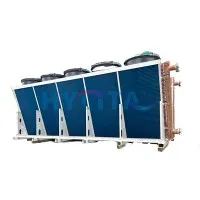
Hey there! As a heating coils supplier, I get asked a lot about how to select the right heating coil for a specific wattage requirement. It's not as complicated as it might seem at first, but there are definitely some key factors you need to consider. In this blog post, I'll walk you through the process step by step, so you can make an informed decision when it comes to choosing the perfect heating coil for your needs.
First things first, let's talk about what wattage actually means. Wattage is a measure of the rate at which electrical energy is converted into heat. In simpler terms, it tells you how much heat a heating coil can produce. The higher the wattage, the more heat the coil can generate. So, when you're looking for a heating coil, you need to know how much heat you actually need to achieve your desired temperature.
To determine the wattage requirement for your application, you'll need to consider a few different factors. The first factor is the size of the space you're trying to heat. A larger space will obviously require a higher wattage heating coil than a smaller one. You'll also need to think about the insulation of the space. If the space is well-insulated, you won't need as much wattage to maintain a comfortable temperature. On the other hand, if the space is poorly insulated, you'll need a higher wattage coil to compensate for the heat loss.
Another important factor to consider is the temperature you want to achieve. Different applications require different temperatures, so you'll need to choose a heating coil that can reach and maintain the desired temperature. For example, if you're using the heating coil in a laboratory setting, you might need a coil that can reach very high temperatures. In this case, you'll need a high-wattage coil that can provide the necessary heat.
Once you've determined the wattage requirement for your application, the next step is to choose the right type of heating coil. There are several different types of heating coils available on the market, each with its own advantages and disadvantages. The most common types of heating coils include tubular heating coils, cartridge heating coils, and finned heating coils.
Tubular heating coils are the most versatile type of heating coil. They can be used in a wide range of applications, from industrial heating to domestic heating. Tubular heating coils are made by winding a heating element around a ceramic or metal core and then encasing it in a metal tube. The tube provides protection for the heating element and helps to distribute the heat evenly.
Cartridge heating coils are designed to be inserted into a hole or a cavity. They are commonly used in applications where space is limited, such as in small appliances or electronic devices. Cartridge heating coils are very efficient and can provide a high amount of heat in a small space.
Finned heating coils are designed to increase the surface area of the heating element, which helps to improve the heat transfer efficiency. They are commonly used in applications where a large amount of heat needs to be transferred quickly, such as in air heating systems. Finned heating coils are available in a variety of shapes and sizes, so you can choose the one that best suits your needs.
When choosing a heating coil, it's also important to consider the material of the heating element. The most common materials used for heating elements include nickel-chromium (NiCr), iron-chromium-aluminum (FeCrAl), and copper. Each material has its own advantages and disadvantages, so you'll need to choose the one that best suits your application.
Nickel-chromium (NiCr) heating elements are the most commonly used type of heating element. They are very durable and can withstand high temperatures. NiCr heating elements are also resistant to oxidation and corrosion, which makes them ideal for use in harsh environments.
Iron-chromium-aluminum (FeCrAl) heating elements are similar to NiCr heating elements, but they have a higher resistance to oxidation and corrosion. FeCrAl heating elements are also more efficient than NiCr heating elements, which means they can produce more heat with less energy.
Copper heating elements are the least expensive type of heating element. They are also very efficient and can provide a high amount of heat in a short period of time. However, copper heating elements are not as durable as NiCr or FeCrAl heating elements, and they are more prone to oxidation and corrosion.
In addition to the wattage requirement, type of heating coil, and material of the heating element, there are a few other factors you need to consider when choosing a heating coil. These factors include the voltage, the amperage, and the length of the heating coil.
The voltage of the heating coil is the amount of electrical potential difference between the two ends of the coil. The voltage of the heating coil needs to match the voltage of the power source. If the voltage of the heating coil is too high, it can cause the coil to overheat and burn out. If the voltage of the heating coil is too low, it won't produce enough heat.
The amperage of the heating coil is the amount of electrical current that flows through the coil. The amperage of the heating coil needs to be within the safe operating range of the power source. If the amperage of the heating coil is too high, it can cause the power source to overload and trip the circuit breaker.
The length of the heating coil is also an important factor to consider. The length of the heating coil needs to be long enough to provide the necessary amount of heat, but not too long that it becomes difficult to install or use.
Now that you know how to select a heating coil for a specific wattage requirement, let's talk about some of the benefits of working with a professional heating coils supplier. As a heating coils supplier, we have the expertise and experience to help you choose the right heating coil for your needs. We can also provide you with custom heating coils that are designed to meet your specific requirements.
One of the biggest benefits of working with a professional heating coils supplier is that we can offer you a wide range of heating coils to choose from. We have a large inventory of heating coils in different sizes, shapes, and wattages, so you can find the perfect coil for your application. We also offer custom heating coils that can be designed to meet your specific requirements.
Another benefit of working with a professional heating coils supplier is that we can provide you with technical support and advice. Our team of experts can help you choose the right heating coil for your needs, and they can also provide you with installation and maintenance instructions. We can also help you troubleshoot any problems you might have with your heating coil.

Finally, working with a professional heating coils supplier can save you time and money. We can offer you competitive prices on our heating coils, and we can also provide you with fast and reliable shipping. We understand that time is money, so we strive to get your heating coils to you as quickly as possible.
If you're in the market for a heating coil, I encourage you to contact us today. We'd be happy to help you choose the right heating coil for your needs, and we can also provide you with a free quote. Whether you're looking for a standard heating coil or a custom heating coil, we have the expertise and experience to help you find the perfect solution.
In conclusion, selecting a heating coil for a specific wattage requirement is not as complicated as it might seem. By considering the factors I've outlined in this blog post, you can make an informed decision when it comes to choosing the right heating coil for your needs. And if you need any help or advice along the way, don't hesitate to contact us. We're here to help!
References
- ASHRAE Handbook of Fundamentals
- Electric Heating Coil Design and Application Guide
- Stainless Heat Exchanger Coil