


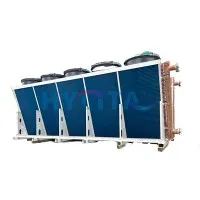
Hey there! As a supplier of cooling coils, I'm super stoked to dive into how these nifty components work in a HVAC system. So, let's get right into it!
The Basics of a HVAC System
First off, let's quickly chat about what a HVAC system is. HVAC stands for Heating, Ventilation, and Air Conditioning. It's the system in your home, office, or any building that keeps the indoor environment comfortable. It controls the temperature, humidity, and air quality. And that's where cooling coils come in real handy.
What Are Cooling Coils?
Cooling coils are a key part of the HVAC system. They're basically heat exchangers. You can think of them as the workhorses that cool down the air. They come in different shapes, sizes, and materials. For example, we offer Stainless Steel Coil Cooler, Titanium Coil, and Shell and Tube Coil Cooler. Each type has its own advantages, depending on the specific application.
How Cooling Coils Work
Alright, let's break down the process of how cooling coils work. It all starts with the refrigerant. The refrigerant is a special fluid that can change from a liquid to a gas and back again easily. It's the key to the whole cooling process.
The Refrigerant Cycle
The refrigerant enters the cooling coil as a low-pressure, low-temperature gas. As warm air from the room is blown over the cooling coil, the heat from the air is transferred to the refrigerant. This causes the refrigerant to absorb the heat and evaporate, turning it into a high-pressure, high-temperature gas.
The now heated refrigerant gas then leaves the cooling coil and heads to the compressor. The compressor squeezes the gas, increasing its pressure and temperature even more. From the compressor, the high-pressure, high-temperature gas moves to the condenser.
In the condenser, the refrigerant releases the heat it absorbed from the air. As it releases the heat, it condenses back into a high-pressure liquid. The liquid refrigerant then flows through an expansion valve, which reduces its pressure and temperature. And then it's back to the cooling coil to start the cycle all over again.
Heat Transfer
The whole process is based on the principle of heat transfer. Heat always moves from a warmer object to a cooler one. In this case, the warm air from the room is the warmer object, and the cold refrigerant in the cooling coil is the cooler object. So, the heat from the air is transferred to the refrigerant, cooling the air in the process.
The cooling coil is designed to maximize this heat transfer. It has a large surface area, which allows more air to come into contact with the refrigerant. The fins on the cooling coil also help to increase the surface area and improve the heat transfer efficiency.


Factors Affecting Cooling Coil Performance
There are a few factors that can affect how well a cooling coil works. One of the main factors is the temperature and humidity of the air. If the air is very hot and humid, the cooling coil will have to work harder to cool it down.
The flow rate of the air also matters. If the air is flowing too fast over the cooling coil, there won't be enough time for the heat to transfer properly. On the other hand, if the air is flowing too slowly, the cooling coil won't be able to cool the air effectively.
The condition of the cooling coil itself is also important. If the coil is dirty or clogged, it will reduce the heat transfer efficiency. That's why it's important to keep the cooling coil clean and well-maintained.
Applications of Cooling Coils
Cooling coils are used in a wide range of applications. In residential HVAC systems, they're used to cool the air in homes. In commercial buildings, they're used in large air conditioning systems to keep offices, stores, and other spaces comfortable.
They're also used in industrial applications, such as in factories and power plants. In these settings, cooling coils are used to cool down equipment and processes to prevent overheating.
Why Choose Our Cooling Coils
As a supplier of cooling coils, we take pride in offering high-quality products. Our coils are made from top-notch materials, which ensures durability and long-lasting performance. We also offer a variety of options to meet different needs and applications.
Whether you need a Stainless Steel Coil Cooler for a corrosive environment, a Titanium Coil for high-temperature applications, or a Shell and Tube Coil Cooler for large-scale cooling, we've got you covered.
Contact Us for Your Cooling Coil Needs
If you're in the market for cooling coils, we'd love to hear from you. Whether you have questions about our products, need help choosing the right coil for your application, or are ready to place an order, don't hesitate to reach out. We're here to help you find the best cooling solution for your needs.
References
- ASHRAE Handbook - HVAC Systems and Equipment
- Refrigeration and Air Conditioning Technology by William C. Whitman, William M. Johnson, and John Tomczyk