


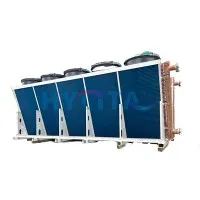
Waste heat recovery systems play a crucial role in modern industrial processes, offering a sustainable way to capture and reuse energy that would otherwise be wasted. Cooling coils are an integral part of these systems, facilitating the transfer of heat and ensuring efficient operation. As a leading cooling coils supplier, I am excited to delve into the intricacies of how cooling coils work in a waste heat recovery system.
The Basics of Waste Heat Recovery
Before we explore the function of cooling coils, it's essential to understand the concept of waste heat recovery. In industrial operations, a significant amount of heat is generated as a by - product of various processes. This waste heat can be harnessed and used for other purposes, such as pre - heating feedwater, generating steam, or powering other equipment. By recovering this heat, industries can reduce their energy consumption, lower operating costs, and minimize their environmental impact.
How Cooling Coils Fit into the Picture
Cooling coils are heat exchangers that play a dual role in waste heat recovery systems. They are responsible for both cooling the hot fluid (usually the waste heat - carrying medium) and transferring the heat to a secondary fluid. This transfer of heat is based on the fundamental principle of thermodynamics: heat always flows from a region of higher temperature to a region of lower temperature.
The Structure of Cooling Coils
Cooling coils typically consist of a series of tubes arranged in a specific pattern. These tubes can be made from different materials, each with its own set of properties and advantages. For example, Shell and Tube Coil Cooler is a popular design. In a shell - and - tube cooler, the hot fluid flows through the tubes, while the cooling fluid (usually water or a refrigerant) flows around the tubes in the shell. This design provides a large surface area for heat transfer, ensuring efficient cooling.
Another common type is the Stainless Steel Coil Cooler. Stainless steel is known for its corrosion resistance, making it suitable for use in harsh industrial environments where the cooling fluids may be corrosive. The Titanium Coil is also an excellent choice, especially when dealing with highly corrosive substances. Titanium has a high strength - to - weight ratio and excellent corrosion resistance, which allows for long - term and reliable operation.
The Heat Transfer Process
When the hot fluid enters the cooling coil, it comes into contact with the tube walls. The tube walls act as a barrier between the hot fluid and the cooling fluid. Heat is transferred from the hot fluid to the tube walls through conduction. Conduction is the transfer of heat through a solid material without the movement of the material itself.
Once the heat reaches the outer surface of the tube walls, it is transferred to the cooling fluid through convection. Convection is the transfer of heat by the movement of a fluid (either liquid or gas). The cooling fluid absorbs the heat from the tube walls and carries it away, effectively cooling the hot fluid inside the tubes.


The efficiency of this heat transfer process depends on several factors. The temperature difference between the hot and cold fluids is a critical factor. A larger temperature difference results in a higher rate of heat transfer. The surface area of the tubes also plays a significant role. A larger surface area provides more contact between the hot and cold fluids, facilitating greater heat transfer. Additionally, the thermal conductivity of the tube material affects the rate of heat transfer. Materials with high thermal conductivity, such as copper and aluminum, allow heat to pass through more easily.
The Role of Cooling Coils in a Waste Heat Recovery System
In a waste heat recovery system, cooling coils are often used in combination with other components, such as boilers, condensers, and pumps. The hot waste heat - carrying fluid first enters the cooling coil. As it passes through the coil, its temperature is reduced, and the heat is transferred to the secondary fluid.
The secondary fluid, which has now absorbed the heat, can be used for various purposes. For example, it can be used to pre - heat the feedwater in a boiler. By pre - heating the feedwater, less energy is required to convert the water into steam, resulting in energy savings. In some cases, the heated secondary fluid can be used to power other industrial processes directly.
Maintenance and Optimization of Cooling Coils
To ensure the long - term and efficient operation of cooling coils in a waste heat recovery system, proper maintenance is essential. Regular cleaning of the tubes is necessary to prevent the buildup of scale, dirt, and other contaminants. Scale buildup can reduce the thermal conductivity of the tube walls, impeding the heat transfer process.
Inspection of the tubes for leaks and corrosion is also crucial. Leaks can lead to the loss of the hot or cooling fluids, reducing the efficiency of the system. Corrosion can weaken the tube walls, eventually leading to tube failure.
Optimization of the cooling coil system involves adjusting the flow rates of the hot and cold fluids. By optimizing the flow rates, the temperature difference and the contact time between the two fluids can be controlled, maximizing the heat transfer efficiency. Additionally, monitoring the performance of the cooling coils, such as measuring the inlet and outlet temperatures of the hot and cold fluids, can help identify any issues early on and allow for timely adjustments.
Conclusion
As a cooling coils supplier, I have seen firsthand the importance of cooling coils in waste heat recovery systems. These heat exchangers are the workhorses of the system, enabling the efficient transfer of heat from the waste heat - carrying fluid to a secondary fluid. By understanding how cooling coils work, industries can make informed decisions about the selection, installation, and maintenance of these critical components.
Whether you are looking for a Shell and Tube Coil Cooler, a Stainless Steel Coil Cooler, or a Titanium Coil, we have a wide range of high - quality products to meet your specific needs. If you are interested in learning more about our cooling coils or discussing your waste heat recovery requirements, please feel free to reach out. We are ready to assist you in finding the best solutions for your industrial processes.
References
- Incropera, F. P., DeWitt, D. P., Bergman, T. L., & Lavine, A. S. (2007). Fundamentals of Heat and Mass Transfer. John Wiley & Sons.
- Holman, J. P. (2010). Heat Transfer. McGraw - Hill.
- ASHRAE Handbook: HVAC Systems and Equipment. American Society of Heating, Refrigerating and Air - Conditioning Engineers.