


Hey there! As a supplier of Titanium Coil, I often get asked about its oxidation resistance. So, let's dive right into it and explore what makes Titanium Coil so resistant to oxidation.
First off, what is oxidation? Oxidation is basically a chemical reaction where a substance loses electrons to oxygen. It's what causes things like rust on iron or the greenish - patina on copper. When it comes to metals, oxidation can weaken the material, change its appearance, and reduce its functionality over time.
Now, Titanium Coil is a real star when it comes to oxidation resistance. Titanium has a unique ability to form a thin, protective oxide layer on its surface when it's exposed to oxygen. This layer is called a passive oxide film. It's incredibly thin, just a few nanometers thick, but it's also extremely stable and adherent to the underlying titanium metal.
The passive oxide film acts as a barrier between the titanium and the surrounding environment. It prevents oxygen and other corrosive agents from reaching the metal beneath. Even if the film gets scratched or damaged, it can quickly reform in the presence of oxygen. This self - healing property is one of the main reasons why Titanium Coil is so resistant to oxidation.
Let's talk about the environments where Titanium Coil really shines. In many industrial settings, there are harsh chemicals and high temperatures that can cause other metals to oxidize rapidly. But Titanium Coil can handle these conditions like a champ. For example, in the chemical processing industry, it's often used in equipment that comes into contact with strong acids and alkalis. The oxidation - resistant nature of Titanium Coil ensures that the equipment lasts longer and operates more efficiently.
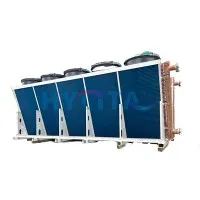
Another area where Titanium Coil is widely used is in heat exchangers. Heat exchangers are used to transfer heat between two fluids, and they need to be able to withstand high temperatures and potentially corrosive fluids. Titanium Coil is an excellent choice for this application because of its oxidation resistance. It can maintain its structural integrity even when exposed to hot, aggressive fluids, which helps to keep the heat exchanger working properly for a long time.
Compared to other materials commonly used in heat exchangers, like stainless steel, Titanium Coil has some significant advantages. Stainless steel is also fairly resistant to oxidation, but it can still be susceptible to pitting corrosion in certain environments. Pitting corrosion is a form of localized corrosion where small holes or pits form on the surface of the metal. This can lead to the failure of the material over time. Titanium Coil, on the other hand, is much more resistant to pitting corrosion, thanks to its stable passive oxide film.
If you're looking for alternatives in heat exchanger coils, you might also consider Stainless Steel Coil Cooler and Shell and Tube Coil Cooler. Stainless Steel Coil Coolers are cost - effective and suitable for many general - purpose applications. They offer good oxidation resistance in mild to moderate environments. Shell and Tube Coil Coolers, on the other hand, are known for their high heat transfer efficiency. They can be made from a variety of materials, including titanium, to suit different operating conditions.
However, when it comes to extreme environments with high levels of corrosion and oxidation potential, Titanium Coil is often the best choice. Its ability to resist oxidation means that it can provide long - term performance and reliability, which is crucial in industries where downtime can be very costly.
One of the factors that can affect the oxidation resistance of Titanium Coil is the purity of the titanium. Higher - purity titanium generally has better oxidation resistance because there are fewer impurities that could potentially react with oxygen and cause corrosion. At our company, we take great care to source high - quality titanium and use advanced manufacturing processes to ensure that our Titanium Coils have the best possible oxidation resistance.
The surface finish of the Titanium Coil also plays a role in its oxidation resistance. A smooth surface finish can help to promote the formation of a more uniform and protective passive oxide film. During the manufacturing process, we pay close attention to the surface finish of our Titanium Coils to enhance their oxidation resistance.
In addition to its excellent oxidation resistance, Titanium Coil also has other great properties. It's lightweight, which can be an advantage in applications where weight is a concern. It also has good mechanical strength, which means it can withstand high pressures and stresses without deforming.


So, if you're in the market for a material that offers superior oxidation resistance, long - term performance, and reliability, Titanium Coil is definitely worth considering. Whether you're in the chemical processing industry, the power generation industry, or any other industry that requires corrosion - resistant materials, our Titanium Coils can meet your needs.
If you're interested in learning more about our Titanium Coils or have any questions about their oxidation resistance, don't hesitate to reach out. We're here to help you find the right solution for your specific application. Contact us today to start a conversation about your requirements and how our Titanium Coils can benefit your business.
References
- Jones, D. A. (1992). Principles and Prevention of Corrosion. Macmillan Publishing Company.
- Uhlig, H. H., & Revie, R. W. (1985). Corrosion and Corrosion Control. Wiley - Interscience.