


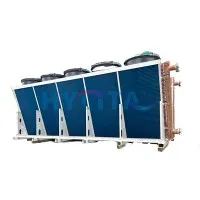
Heat exchange components play a crucial role in various industrial processes, from power generation to chemical manufacturing. Among these components, economizer tubes stand out as a vital part of heat recovery systems. As a supplier of Economizer Tube, I have witnessed firsthand the unique advantages and characteristics of economizer tubes when compared to other heat exchange components. In this blog, we will delve into a detailed comparison to understand how economizer tubes stack up against their counterparts.
1. Efficiency in Heat Transfer
One of the primary functions of any heat exchange component is to transfer heat effectively. Economizer tubes are designed to maximize heat transfer efficiency. They are typically installed in the path of hot flue gases, where they absorb heat and transfer it to the fluid (usually water) flowing inside the tubes. This pre - heating of the fluid reduces the energy required to heat it further in the boiler or other heating equipment.
In contrast, some other heat exchange components like shell - and - tube heat exchangers may have a more complex design. While they can also achieve high heat transfer rates, the configuration of economizer tubes allows for a more direct and efficient heat transfer from the hot gas to the fluid. The thin walls of economizer tubes and their large surface - area - to - volume ratio enhance the heat transfer coefficient, enabling them to extract more heat from the flue gases in a relatively short distance.
For example, in a power plant, economizer tubes can pre - heat the feedwater to a significant extent, reducing the fuel consumption of the boiler. This not only saves costs but also improves the overall energy efficiency of the power generation process. Other heat exchangers may require more complex flow arrangements and larger physical space to achieve a similar level of heat transfer efficiency.
2. Resistance to Corrosion and Erosion
Industrial environments often expose heat exchange components to harsh conditions, including high temperatures, corrosive chemicals, and abrasive particles. Economizer tubes are typically made from materials that offer excellent resistance to corrosion and erosion. Stainless steel and carbon steel are commonly used materials for economizer tubes, which can withstand the corrosive effects of flue gases containing sulfur compounds and other pollutants.
Exhaust gas heat exchangers, such as Exhaust Gas Heat Exchanger, also need to resist corrosion and erosion. However, the design of economizer tubes can provide better protection in certain applications. The smooth inner surface of economizer tubes reduces the likelihood of particle deposition, which can lead to corrosion and erosion over time. Additionally, the uniform temperature distribution along the length of the economizer tubes helps to prevent localized corrosion and thermal stress cracking.


On the other hand, some plate - type heat exchangers may be more susceptible to corrosion and erosion, especially at the edges and joints. The complex geometries of these heat exchangers can create areas where fluid flow is disrupted, leading to the accumulation of corrosive substances and increased wear.
3. Cost - Effectiveness
Cost is an important factor in any industrial decision - making process. Economizer tubes offer a cost - effective solution for heat recovery. Their relatively simple design and manufacturing process result in lower production costs compared to some other heat exchange components. Moreover, the energy savings achieved through the use of economizer tubes can quickly offset the initial investment.
For instance, when compared to SS Economiser Heat Exchanger, which may have a more elaborate design and higher material costs, economizer tubes can provide a similar level of heat recovery at a lower price. The installation and maintenance costs of economizer tubes are also relatively low. Their modular design allows for easy replacement of individual tubes in case of damage, reducing downtime and maintenance expenses.
In contrast, some high - performance heat exchangers with advanced materials and complex designs can be very expensive to purchase and maintain. The cost of spare parts and the need for specialized maintenance personnel can significantly increase the overall cost of ownership.
4. Adaptability to Different Applications
Economizer tubes are highly adaptable to a wide range of industrial applications. They can be customized in terms of size, shape, and material to meet the specific requirements of different processes. Whether it is a small - scale industrial boiler or a large - scale power plant, economizer tubes can be designed to fit the available space and operating conditions.
Other heat exchange components may have more limited adaptability. For example, some finned - tube heat exchangers are designed for specific flow rates and temperature ranges. If the operating conditions change, these heat exchangers may not perform optimally and may require significant modifications or even replacement.
Economizer tubes can also be integrated into existing heat recovery systems with relative ease. They can be installed in series or parallel configurations to increase the heat transfer capacity as needed. This flexibility makes economizer tubes a popular choice for retrofitting projects, where the goal is to improve the energy efficiency of existing equipment without major overhauls.
5. Maintenance Requirements
Maintenance is an ongoing concern in industrial operations. Economizer tubes generally have lower maintenance requirements compared to many other heat exchange components. As mentioned earlier, their simple design allows for easy inspection and replacement of individual tubes. Regular cleaning of the tubes to remove any deposits can be carried out relatively quickly and inexpensively.
In contrast, some heat exchangers with complex internal structures, such as plate - and - frame heat exchangers, may require more frequent and elaborate maintenance. Disassembly and reassembly of these heat exchangers for cleaning and inspection can be time - consuming and may require specialized tools and skills.
The relatively low maintenance requirements of economizer tubes contribute to their reliability and long service life. This reduces the risk of unexpected breakdowns and production disruptions, which is crucial for continuous industrial operations.
Conclusion
In conclusion, economizer tubes offer several advantages when compared to other heat exchange components. Their high efficiency in heat transfer, resistance to corrosion and erosion, cost - effectiveness, adaptability to different applications, and low maintenance requirements make them a valuable choice for heat recovery systems in various industries.
If you are considering upgrading your heat recovery system or are in need of reliable heat exchange components, I encourage you to explore the benefits of economizer tubes. As a trusted supplier of Economizer Tube, we are committed to providing high - quality products and excellent customer service. Whether you have specific technical requirements or need advice on the best heat exchange solution for your application, our team of experts is ready to assist you. Contact us today to start a discussion about your heat recovery needs and explore how economizer tubes can improve the efficiency and performance of your industrial processes.
References
- Incropera, F. P., & DeWitt, D. P. (2002). Fundamentals of Heat and Mass Transfer. John Wiley & Sons.
- Holman, J. P. (2002). Heat Transfer. McGraw - Hill.
- Green, D. W., & Perry, R. H. (2007). Perry's Chemical Engineers' Handbook. McGraw - Hill.