


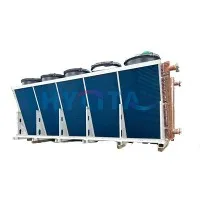
If you've ever stood near a well-insulated commercial building on a cold morning and felt warm air blowing out of a vent, or sipped a hot drink from a reusable mug that stayed warm longer than a paper one, you've witnessed heat transfer in action. For industrial operations, HVAC systems, and even large-scale manufacturing, this concept isn't just a convenience-it's a necessity. That's where a combi-heat exchanger comes in: a versatile workhorse that's designed to move heat from one fluid to another without letting them mix, all while balancing efficiency, space, and cost. As someone who's worked in the heat exchangers supply industry for over a decade, I've seen first-hand how confusion about combi-heat exchangers leads to poor system design, unnecessary energy waste, and higher long-term costs. So let's break down how these systems work, why they matter, and how they fit into the broader ecosystem of heat transfer solutions we provide.
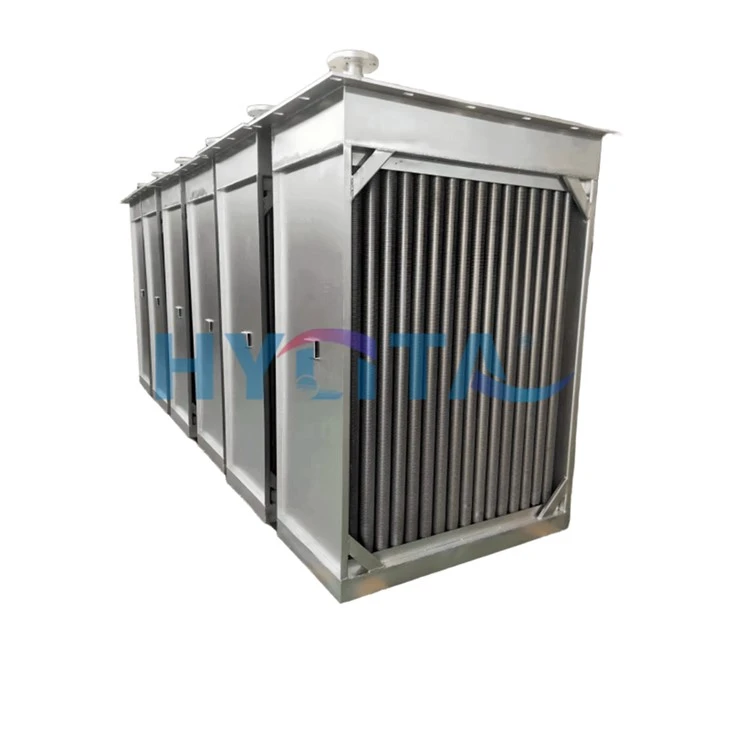
To start, let's define the basics. A combi-heat exchanger (short for "combined heat exchanger") isn't a single design-it's a category of units that integrate two or more heat transfer functions into one compact, maintenance-friendly piece of equipment. Unlike a basic single-function exchanger that only moves heat between two fluids (say, hot water and air), a combi model might handle simultaneous tasks: heating incoming ventilation air, cooling process exhaust, and even recovering waste heat to pre-heat incoming water all in one unit. This integration solves a common industry problem: older systems required multiple separate exchangers stacked together, taking up valuable floor space, costing more to install, and needing more parts to maintain. For factories, warehouses, or large commercial facilities where space is at a premium, that compactness isn't just a nice-to-have-it's a game-changer.
At the core of every combi-heat exchanger is the same science that powers all heat transfer devices: heat flows from a warmer substance to a cooler one, driven by a temperature difference between the two. The key here is separation-heat exchangers never let the two fluids directly mix, which is critical because mixing would contaminate process fluids (think: industrial chemicals, or even potable water in heating systems) and reduce overall efficiency. In a combi unit, this separation happens via a series of tubes, fins, and barriers tailored to each fluid's properties. Let's use a common industrial HVAC combi setup to walk through the process: one fluid is a closed loop of hot process water (from a manufacturing line that generates excess heat), and the other is the air that a building's ventilation system pulls in from outside.
First, the hot process water enters the combi-heat exchanger through a network of precision-welded tubes. These tubes are often made of copper, because copper has exceptional thermal conductivity-meaning it moves heat quickly from the water to the tube walls. If you're familiar with standard radiators, this is the same logic, but combi units add a twist: the tubes are paired with aluminum fins, thin, flat metal plates that extend out from the tubes to increase the surface area in contact with the air. More surface area means more space for heat to transfer, which boosts efficiency. If you want to see a specific design that uses this tube-and-fin setup, check out our Aluminum Fin Radiator, a close relative of the finned components used in most combi-heat exchangers. As the hot water flows through the copper tubes, the heat passes through the tube walls into the fins.
Next, the building's ventilation fan pushes outside air (which is colder than the hot water) across the fins. The fins capture the heat from the tube walls and transfer it to the air, warming it before it's blown into the building. But here's where the "combi" part comes in: the same unit can also handle a second, simultaneous heat transfer task. For example, in some manufacturing setups, the exhaust air leaving a production line is hot but also carries moisture or small particles. The combi-heat exchanger uses that hot exhaust air to pre-heat the cold incoming air before it ever reaches the copper tubes, cutting down the amount of hot process water needed and reducing energy waste even further. In other setups, the combi unit might also include a section that transfers heat from hot water to a glycol solution used to heat outdoor pipes in winter, preventing freeze damage-all in one compact design.
Now, you might be wondering: how does a combi-heat exchanger differ from other types of heat exchangers? The simple answer is flexibility. A basic shell-and-tube exchanger, for example, only handles two fluids and can't integrate multiple functions. A finned-tube exchanger like our Heat Air Dryer is designed for a single use (heating air for drying processes), while a Steam Exchanger is tailored specifically for steam-to-fluid transfer. Our Copper Tube Radiator is optimized for closed-loop water heating, and our H-fin Heat Exchanger uses a specialized fin design for high-pressure industrial applications. Each of these units excels at one task, but a combi-heat exchanger is built to adapt to multiple, overlapping needs. For a food processing plant, that might mean heating incoming fresh water, cooling hot exhaust from ovens, and pre-heating air for drying all in one unit, instead of buying three separate exchangers. That reduces installation costs by 20-30% in many cases, cuts maintenance time (fewer parts to service), and lowers energy use since there's less heat loss from piping between multiple units.
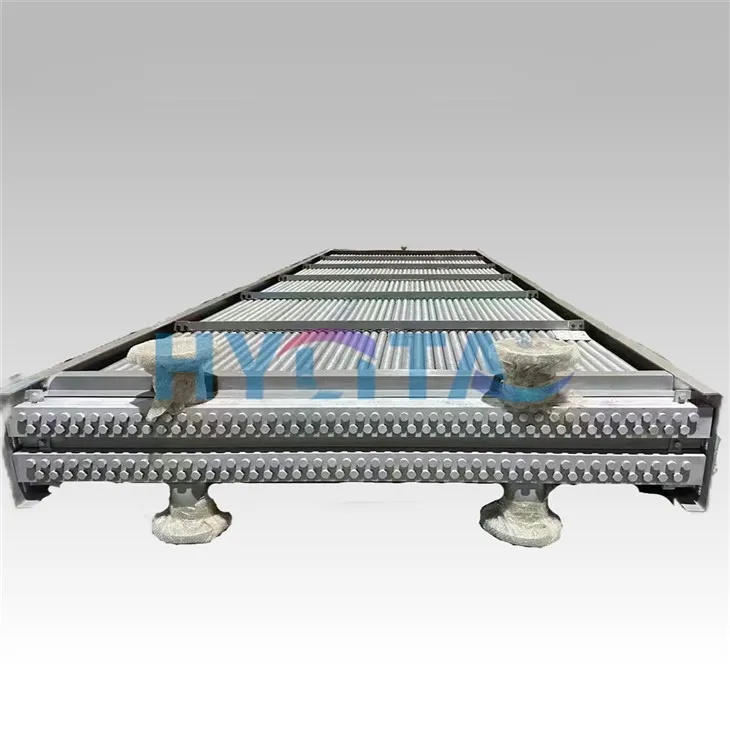
Of course, combi-heat exchangers aren't one-size-fits-all. Their design depends entirely on the specific fluids involved, the temperature ranges, and the space available in your facility. Let's talk about the key components that make a combi-heat exchanger work efficiently, so you can understand what to look for when choosing one for your operation.
First, the tube bundle. This is the core structure that separates the two (or more) fluid streams. Materials matter here: copper tubes are ideal for water-based systems because they resist corrosion and conduct heat well, while stainless steel tubes are used for chemical process fluids that might react with copper. For high-pressure applications, we often recommend our H-fin Heat Exchanger's specialized fin design paired with steel tubes, which can withstand extreme pressure without failing.
Second, the fin array. Fins are what boost the surface area for air-side heat transfer, which is often the limiting factor in combi units (air has much lower thermal conductivity than water, so more surface area is needed to move the same amount of heat). Aluminum fins are lightweight, corrosion-resistant, and perfect for air handling applications, which is why they're a staple in our Aluminum Fin Radiator line. Some combi units use offset fins, curved fins, or even permeable fins for specific gases, but the goal is always the same: maximize heat transfer between the tube and the surrounding fluid.
Third, the header and manifold system. These are the parts that distribute fluids evenly across the tube bundle. Poorly designed headers can cause uneven flow, which means some parts of the exchanger aren't being used efficiently-leading to higher energy costs and premature wear. For combi units, headers have to handle multiple fluid streams, so precision manufacturing here is key to avoiding leaks or flow imbalances. As a supplier, we spend extra time on header design because a poorly engineered combi unit can waste more energy than it saves.
Fourth, the insulation. Because combi-heat exchangers often handle temperature differences of hundreds of degrees, insulating the outer casing prevents heat loss to the surrounding environment. That might sound basic, but it's a critical part of the design-even a small gap in insulation can reduce a combi unit's efficiency by 10% or more. For outdoor installations, we also add weather-resistant coatings to protect the tubes and fins from rain, snow, and UV damage.
Now, let's address a common misconception about combi-heat exchangers: are they really more reliable than multiple single-function exchangers? It's a fair question. If one part of a combi unit fails, does the entire system shut down? The short answer is no-modern combi units are designed with modular sections, so if one heat transfer loop needs service, the others can keep operating. In fact, many of our industrial combi exchangers are built with replaceable fin sections and tube bundles, so maintenance teams can repair a small part without taking the entire unit offline. That's a big advantage for operations that can't afford downtime-like food processing plants or pharmaceutical facilities, where a shutdown can cost thousands of dollars per hour. Of course, like any heat exchanger, combi units do require regular maintenance: flushing the tubes to remove scale, cleaning the fins to remove dust or debris, and checking for leaks. But because there are fewer connections and parts than a system with multiple exchangers, maintenance is simpler and less frequent.
When to choose a combi-heat exchanger over separate units? Let's look at a few common scenarios. If you're retrofitting an old HVAC system and need to replace both the air heating section and the water pre-heating section, a combi unit will save you space and installation time. If your manufacturing process generates waste heat that you can reuse to offset other energy costs, a combi exchanger lets you capture that heat and use it for multiple tasks instead of letting it escape. And if you're working with limited floor space-say, a small factory or a commercial building with no room for multiple exchangers-a combi unit is the only practical solution. That said, there are cases where separate exchangers make more sense: if your processes use very different fluids (like one with corrosive chemicals and one with pure water) that need separate materials for maximum efficiency, or if you only need one heat transfer function and don't want to pay for extra components. In those cases, our other products-like the Steam Exchanger for high-temperature steam applications, or the Heat Air Dryer for dedicated drying processes-are better fits.
As a supplier of heat transfer solutions, we've helped hundreds of clients choose between combi-heat exchangers and other options, and the most important step is understanding your specific needs. What fluids are you working with? What temperature ranges do you need to maintain? How much space do you have? How much downtime can you afford? These questions will guide you to the right choice, and our team is here to help answer them. Whether you're looking for a compact combi unit for a small commercial space or a heavy-duty industrial model for a manufacturing plant, we have the expertise to design or source the right solution.
If you're ready to learn more about how a combi-heat exchanger can improve your system's efficiency, reduce costs, and save space, we're here to help with every step-from design and installation to ongoing maintenance support. Reach out to our team to discuss your requirements and find the perfect heat transfer solution for your operation.
References
- Heat Transfer Science and Engineering, 5th Edition, Incropera, F.P. and DeWitt, D.P.
- Industrial Heat Exchanger Design Guidelines, Heat Transfer Research Institute (HTRI)
- Finned-Tube Exchanger Performance: A Comparative Analysis, Journal of Heat Transfer Engineering, 2021
- Commercial HVAC Energy Efficiency Standards, ASHRAE Standard 90.1-2022