


In the vast landscape of renewable energy, solar power plants stand as beacons of sustainable progress. These facilities harness the sun's energy to generate electricity, contributing significantly to the global shift towards cleaner energy sources. However, the efficient operation of solar power plants relies heavily on effective cooling systems, and this is where dry coolers play a crucial role. As a dry cooler supplier, I am excited to delve into the intricacies of how dry coolers work in a solar power plant cooling system.
The Basics of Solar Power Plant Cooling
Solar power plants, whether photovoltaic (PV) or concentrated solar power (CSP), generate a substantial amount of heat during their operation. In PV plants, the solar panels can heat up as they absorb sunlight, which can reduce their efficiency. CSP plants, on the other hand, use mirrors or lenses to concentrate sunlight onto a receiver, which can reach extremely high temperatures. This heat needs to be dissipated to maintain optimal performance and prevent damage to the equipment.
Cooling systems in solar power plants are designed to remove this excess heat. There are several types of cooling systems available, including wet cooling systems and dry cooling systems. Wet cooling systems use water as a coolant, which is evaporated to remove heat. While these systems are effective, they require a large amount of water, which can be a significant limitation in arid regions. Dry cooling systems, on the other hand, use air as a coolant, eliminating the need for water. This makes them a more sustainable and cost-effective option for solar power plants in water-scarce areas.
How Dry Coolers Work
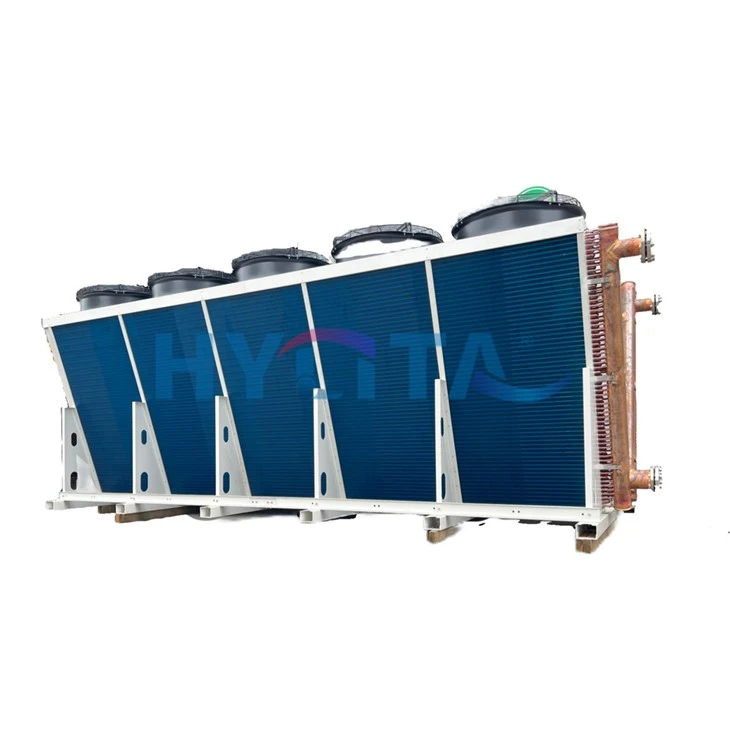
Dry coolers are a type of dry cooling system that uses finned tubes to transfer heat from a hot fluid (usually water or a water-glycol mixture) to the surrounding air. The basic components of a dry cooler include a heat exchanger, a fan, and a frame.
The heat exchanger is the heart of the dry cooler. It consists of a series of finned tubes that are arranged in a parallel or cross-flow configuration. The hot fluid flows through the tubes, while the air is forced through the fins by the fan. As the air passes over the fins, it absorbs the heat from the fluid, cooling it down.
The fan is responsible for moving the air through the heat exchanger. It can be either a forced-draft fan or an induced-draft fan. A forced-draft fan is located at the inlet of the heat exchanger and blows the air through it. An induced-draft fan is located at the outlet of the heat exchanger and sucks the air through it. The type of fan used depends on the specific application and the design of the dry cooler.
The frame provides support for the heat exchanger and the fan. It is usually made of steel or aluminum and is designed to be sturdy and durable. The frame also includes a control panel that allows the operator to monitor and adjust the operation of the dry cooler.

Working Principle in a Solar Power Plant Cooling System
In a solar power plant cooling system, the dry cooler is typically used to cool the heat transfer fluid (HTF) that is used to carry the heat from the solar collectors to the power generation system. The HTF can be water, a water-glycol mixture, or a synthetic oil, depending on the type of solar power plant and the operating conditions.
The process begins when the HTF absorbs heat from the solar collectors. The hot HTF is then pumped through the dry cooler, where it flows through the finned tubes. The fan blows the air through the fins, cooling the HTF as it passes through the tubes. The cooled HTF is then returned to the solar collectors to absorb more heat, completing the cycle.
The dry cooler can be operated in either a single-pass or a multi-pass configuration. In a single-pass configuration, the HTF flows through the dry cooler once before being returned to the solar collectors. In a multi-pass configuration, the HTF flows through the dry cooler multiple times, allowing for more efficient heat transfer.
The operation of the dry cooler is controlled by a thermostat or a temperature sensor. When the temperature of the HTF reaches a certain set point, the thermostat or sensor activates the fan, which starts to blow air through the heat exchanger. As the HTF cools down, the temperature sensor signals the fan to stop, conserving energy.
Advantages of Using Dry Coolers in Solar Power Plants
There are several advantages to using dry coolers in solar power plants:
- Water Conservation: As mentioned earlier, dry coolers do not require water for cooling, which is a significant advantage in water-scarce areas. This makes them a more sustainable option for solar power plants, especially in regions where water is a limited resource.
- Energy Efficiency: Dry coolers are designed to be energy-efficient, using less power than wet cooling systems. The fans can be controlled to operate at variable speeds, depending on the cooling demand, which helps to reduce energy consumption.
- Low Maintenance: Dry coolers have fewer moving parts than wet cooling systems, which means they require less maintenance. They are also less prone to corrosion and scaling, which can extend their lifespan and reduce operating costs.
- Environmental Friendliness: Dry coolers do not produce any wastewater or emissions, making them a more environmentally friendly option for solar power plants. They also do not require the use of chemicals for water treatment, which further reduces their environmental impact.
- Flexibility: Dry coolers can be easily installed and integrated into existing solar power plant cooling systems. They can also be customized to meet the specific requirements of the plant, such as the cooling capacity, the operating temperature, and the available space.
Types of Dry Coolers for Solar Power Plants
There are several types of dry coolers that can be used in solar power plants, each with its own advantages and disadvantages. Some of the common types include:
- Computing Center Dry Cooler: These dry coolers are designed for use in data centers and other high-heat applications. They are typically more compact and efficient than traditional dry coolers, making them a good option for solar power plants with limited space. You can learn more about Computing Center Dry Cooler.
- Glycol Dry Cooler: These dry coolers are designed to use a water-glycol mixture as the heat transfer fluid. The glycol helps to prevent freezing in cold climates and also provides corrosion protection. Glycol Dry Cooler can be a suitable choice for solar power plants in regions with cold winters.
- Liquid Immersion Cooling Dry Cooler: These dry coolers are designed for use in liquid immersion cooling systems, where the electronic components are submerged in a dielectric fluid. They are highly efficient and can provide precise temperature control. For more information on Liquid Immersion Cooling Dry Cooler, click the link.
Conclusion
Dry coolers play a vital role in the efficient operation of solar power plant cooling systems. By using air as a coolant, they eliminate the need for water, making them a more sustainable and cost-effective option for solar power plants in water-scarce areas. Their energy efficiency, low maintenance requirements, and environmental friendliness make them an attractive choice for solar power plant operators.
If you are looking for a reliable and efficient dry cooler for your solar power plant, we are here to help. As a leading dry cooler supplier, we offer a wide range of dry coolers that are designed to meet the specific needs of solar power plants. Our experienced team can work with you to design and install a cooling system that is tailored to your requirements. Contact us today to discuss your project and learn more about our products and services.
References
- Duffie, J. A., & Beckman, W. A. (2013). Solar Engineering of Thermal Processes. John Wiley & Sons.
- Kalogirou, S. A. (2009). Solar Energy Engineering: Processes and Systems. Academic Press.
- Singh, M., & Solanki, S. C. (2013). Solar Photovoltaic Systems: Design and Installation. Springer.