


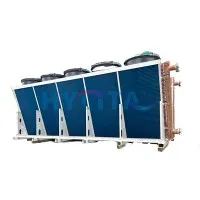
Hey there! As a heat recovery unit supplier, I often get asked about how these nifty devices work in a printing press. So, let's dig into it and break down the process in a way that's easy to understand.
The Basics of Heat Recovery in a Printing Press
First off, let's talk about why heat recovery is so important in a printing press. Printing presses generate a whole lot of heat during their operation. This heat comes from various sources, like the drying process of the ink, the friction in the moving parts, and the electrical components. If this heat isn't managed properly, it can lead to a bunch of problems. For one, it can increase the temperature inside the printing facility, making it uncomfortable for the workers. It can also cause the printing materials to warp or the ink to dry unevenly, affecting the quality of the prints.
That's where a heat recovery unit comes in. Its main job is to capture the waste heat generated by the printing press and reuse it in a useful way. This not only helps in reducing the energy consumption of the printing press but also cuts down on the overall operating costs.
How a Heat Recovery Unit Works
Now, let's get into the nitty - gritty of how a heat recovery unit actually functions in a printing press.
1. Heat Capture
The first step is to capture the waste heat. In a printing press, there are several places where heat can be captured. For example, the exhaust air from the drying section of the press is usually very hot. A heat recovery unit will have a system of ducts that are connected to these high - heat areas. The hot air is then drawn into the heat recovery unit through these ducts.
Some heat recovery units also use heat exchangers to capture heat from other sources, like the cooling water used in the press. The heat exchanger transfers the heat from the hot water to a secondary fluid, which can then be used for other purposes.
2. Heat Transfer
Once the heat is captured, it needs to be transferred to a place where it can be used. This is where the heat exchanger plays a crucial role. A heat exchanger is a device that allows the transfer of heat from one fluid to another without the two fluids coming into direct contact.
In a heat recovery unit for a printing press, the hot exhaust air or the hot water passes through one side of the heat exchanger, while a cooler fluid (like fresh air or cold water) passes through the other side. The heat from the hot fluid is transferred to the cooler fluid, raising its temperature.
3. Heat Utilization
After the heat is transferred, it can be used in several ways. One common use is to pre - heat the incoming fresh air for the printing press. By pre - heating the air, less energy is needed to heat the air to the required temperature for the drying process. This can lead to significant energy savings.
The recovered heat can also be used to heat the water used in the printing press. For example, in some printing processes, hot water is used for cleaning the printing plates or for maintaining the proper viscosity of the ink. Using the recovered heat to heat this water reduces the need for additional energy sources.
Types of Heat Recovery Units for Printing Presses
There are different types of heat recovery units that can be used in a printing press, and each has its own advantages.
Vapour Economizer in Boiler
A Vapour Economizer in Boiler is a type of heat recovery unit that is often used in printing presses. It works by recovering the heat from the flue gases of the boiler. The hot flue gases pass through the economizer, where the heat is transferred to the feedwater of the boiler. This pre - heated water requires less energy to be converted into steam, resulting in energy savings.
Air Preheater and Economiser
An Air Preheater and Economiser is another useful heat recovery unit. It pre - heats the combustion air for the boiler or the drying burners in the printing press. By pre - heating the air, the combustion process becomes more efficient, and less fuel is needed to achieve the desired temperature.
Hot Water Economiser
A Hot Water Economiser is designed to recover heat from the hot exhaust gases or other high - temperature sources in the printing press and use it to heat the water. This heated water can then be used for various processes in the press, such as plate cleaning or ink mixing.
Benefits of Using a Heat Recovery Unit in a Printing Press
The benefits of using a heat recovery unit in a printing press are numerous.
Energy Savings
As mentioned earlier, one of the biggest benefits is the energy savings. By reusing the waste heat, the printing press requires less energy from external sources, such as electricity or natural gas. This can lead to a significant reduction in the energy bills of the printing facility.
Cost Reduction
Lower energy consumption means lower operating costs. In addition to the energy savings, a heat recovery unit can also reduce the maintenance costs of the printing press. By reducing the temperature in the facility, the wear and tear on the equipment are reduced, leading to fewer breakdowns and longer equipment lifespan.
Environmental Impact
Using a heat recovery unit is also good for the environment. By reducing the energy consumption, the printing press emits fewer greenhouse gases. This helps in reducing the carbon footprint of the printing facility and contributes to a more sustainable printing process.
Choosing the Right Heat Recovery Unit
When choosing a heat recovery unit for a printing press, there are several factors to consider.
Size and Capacity
The size and capacity of the heat recovery unit should be matched to the size and heat output of the printing press. A unit that is too small will not be able to capture and utilize all the waste heat, while a unit that is too large will be more expensive and may not operate efficiently.
Efficiency
The efficiency of the heat recovery unit is another important factor. Look for a unit with a high heat transfer efficiency, which means it can transfer more heat from the waste heat source to the useful fluid.
Compatibility
The heat recovery unit should be compatible with the existing systems in the printing press. It should be able to integrate easily with the ducts, pipes, and control systems of the press.
Contact for Purchase and Consultation
If you're interested in learning more about how a heat recovery unit can work for your printing press or if you're looking to purchase a heat recovery unit, I'd love to have a chat. Heat recovery units can make a big difference in your printing operation, both in terms of cost savings and environmental impact. Don't hesitate to reach out and start the conversation about how we can customize a solution for your specific printing press needs.


References
- "Energy Efficiency in Printing Processes" - A research paper on the importance of energy management in printing.
- "Heat Recovery Systems: Principles and Applications" - A comprehensive guide on heat recovery technologies.