


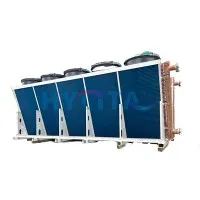
As a supplier of economizers in boilers, I've witnessed firsthand the critical role these components play in handling high - temperature flue gases. High - temperature flue gases are a by - product of the combustion process in boilers, and they carry a significant amount of thermal energy. If not properly managed, this energy is wasted, and the efficiency of the boiler system drops. In this blog, I'll explore how an economizer in a boiler effectively handles these high - temperature flue gases.
The Basics of High - Temperature Flue Gases
Before delving into how an economizer deals with high - temperature flue gases, it's essential to understand the nature of these gases. Flue gases are produced when fuel, such as coal, oil, or natural gas, is burned in a boiler. The combustion process releases heat, which is used to generate steam or hot water. However, the flue gases that exit the boiler still contain a substantial amount of heat energy. The temperature of these flue gases can range from several hundred to over a thousand degrees Celsius, depending on the type of boiler and the fuel used.
These high - temperature flue gases pose several challenges. Firstly, they represent a loss of energy. The heat carried by the flue gases could have been used to heat the water or generate more steam, but instead, it is being expelled into the atmosphere. Secondly, high - temperature flue gases can cause damage to the boiler and its associated equipment if not properly managed. The excessive heat can lead to thermal stress, corrosion, and premature wear and tear of components.
How an Economizer Works
An economizer is a heat exchanger that is installed in the path of the flue gases in a boiler system. Its primary function is to recover heat from the high - temperature flue gases and transfer it to the feedwater entering the boiler. This pre - heating of the feedwater reduces the amount of energy required to heat the water to the boiling point, thereby improving the overall efficiency of the boiler.
The economizer consists of a series of tubes or coils through which the feedwater flows. The high - temperature flue gases pass over these tubes, and through the process of heat transfer, the heat from the flue gases is transferred to the water inside the tubes. This heat transfer occurs due to the temperature difference between the flue gases and the feedwater. The flue gases, which are at a higher temperature, release heat to the cooler feedwater.
There are two main types of economizers: non - condensing and condensing. Non - condensing economizers operate above the dew point of the flue gases. They are designed to recover sensible heat from the flue gases, which is the heat that causes a change in temperature without a change in phase. Condensing economizers, on the other hand, operate below the dew point of the flue gases. They can recover both sensible heat and latent heat. Latent heat is the heat released when the water vapor in the flue gases condenses into liquid water.
Handling High - Temperature Flue Gases
When high - temperature flue gases enter the economizer, the first step is to ensure that the heat transfer process is efficient. The design of the economizer plays a crucial role in this. The tubes or coils in the economizer are carefully designed to maximize the surface area available for heat transfer. A larger surface area allows for more contact between the flue gases and the feedwater, which enhances the heat transfer rate.
The flow rate of the flue gases and the feedwater also needs to be carefully controlled. If the flow rate of the flue gases is too high, they may pass through the economizer too quickly, and not enough heat will be transferred to the feedwater. Conversely, if the flow rate is too low, the flue gases may lose too much heat, and the temperature of the gases leaving the economizer may be too low, which can cause problems such as corrosion.
In addition to heat transfer, the economizer also needs to handle the high - temperature and corrosive nature of the flue gases. The materials used in the construction of the economizer are selected based on their ability to withstand high temperatures and corrosion. For example, stainless steel is often used in the tubes of the economizer because it has good heat resistance and corrosion resistance properties.
Another important aspect of handling high - temperature flue gases is the prevention of fouling. Fouling occurs when deposits such as ash, soot, and corrosion products accumulate on the surfaces of the economizer tubes. These deposits act as insulators, reducing the efficiency of heat transfer. To prevent fouling, the economizer may be equipped with cleaning devices such as soot blowers. Soot blowers use high - pressure steam or air to remove the deposits from the tubes.
Benefits of Using an Economizer for Handling High - Temperature Flue Gases
The use of an economizer in a boiler system offers several benefits when it comes to handling high - temperature flue gases. Firstly, it improves the energy efficiency of the boiler. By recovering heat from the flue gases and using it to pre - heat the feedwater, the economizer reduces the amount of fuel required to generate steam or hot water. This leads to cost savings for the boiler operator.
Secondly, an economizer helps to reduce the environmental impact of the boiler. By recovering heat from the flue gases, less fuel is burned, which reduces the emissions of greenhouse gases such as carbon dioxide. Additionally, by reducing the temperature of the flue gases before they are released into the atmosphere, the economizer helps to minimize the thermal pollution.
Thirdly, an economizer can extend the lifespan of the boiler and its associated equipment. By reducing the thermal stress on the boiler components, the economizer helps to prevent premature wear and tear. This reduces the maintenance and replacement costs of the boiler system.
Applications and Considerations
Economizers are widely used in various industries, including power generation, chemical processing, and food processing. In power plants, economizers are used to improve the efficiency of steam boilers, which are used to generate electricity. In chemical processing plants, economizers help to recover heat from the flue gases of furnaces and reactors, reducing the energy consumption of the process.
When considering the installation of an economizer in a boiler system, several factors need to be taken into account. The size and capacity of the economizer need to be matched to the size and capacity of the boiler. The type of fuel used in the boiler also affects the choice of economizer. For example, if the fuel contains a high amount of sulfur, a condensing economizer may need to be used to handle the corrosive nature of the flue gases.


The location of the economizer in the boiler system is also important. It should be installed in a position where it can effectively capture the high - temperature flue gases. Additionally, the economizer should be easily accessible for maintenance and cleaning.
Heat Energy Recovery and Exhaust Recovery
One of the key aspects of an economizer's function is heat energy recovery. By recovering heat from the high - temperature flue gases, the economizer helps to make the boiler system more energy - efficient. For more information on heat energy recovery in an economizer, you can visit Heat Energy Recovery.
Heat exhaust recovery is another important function of the economizer. It ensures that the heat that would otherwise be wasted in the exhaust gases is put to good use. To learn more about heat exhaust recovery in an economizer, check out Heat Exhaust Recovery.
The economizer itself is a type of heat exchanger. The Economiser Heat Exchanger page provides detailed information about the design and operation of the economizer as a heat exchanger.
Conclusion
In conclusion, an economizer in a boiler is a vital component for handling high - temperature flue gases. It effectively recovers heat from these gases, improving the energy efficiency of the boiler system, reducing environmental impact, and extending the lifespan of the equipment. As a supplier of economizers, I understand the importance of providing high - quality products that can meet the specific needs of different boiler systems.
If you are interested in improving the efficiency of your boiler system and handling high - temperature flue gases more effectively, I encourage you to reach out for a procurement discussion. We can provide you with detailed information about our economizers, including their features, benefits, and installation requirements. Let's work together to make your boiler system more energy - efficient and sustainable.
References
- ASME Boiler and Pressure Vessel Code.
- Handbook of Heat Transfer.
- Steam: Its Generation and Use, Babcock & Wilcox.