


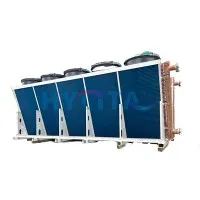
In the realm of boiler operations, the economizer stands as a crucial component, playing a pivotal role in enhancing energy efficiency and reducing operational costs. As a leading supplier of economizers for boilers, I've witnessed firsthand the challenges and intricacies associated with low - flow conditions. In this blog, we'll delve into how an economizer in a boiler handles these low - flow scenarios, exploring the underlying mechanisms, potential issues, and effective solutions.
Understanding Low - Flow Conditions in Boiler Economizers
Low - flow conditions in a boiler economizer occur when the flow rate of the fluid (usually water or steam) passing through the economizer falls below the design specifications. This can happen due to a variety of reasons, such as malfunctions in the feedwater pump, blockages in the piping system, or improper valve settings. When the flow rate drops, it can have a significant impact on the performance and longevity of the economizer.
One of the primary functions of an economizer is to transfer heat from the flue gases to the feedwater. Under normal operating conditions, a sufficient flow of feedwater ensures efficient heat transfer. However, in low - flow situations, the heat transfer process is disrupted. The reduced flow rate means that the feedwater spends more time in the economizer, leading to overheating in certain areas. This can cause thermal stress on the economizer tubes, potentially leading to tube failures over time.
How Economizers are Designed to Handle Low - Flow Conditions
Modern economizers are designed with several features to mitigate the effects of low - flow conditions. One such feature is the use of advanced materials. For example, Carbon Steel Economiser is a popular choice due to its high thermal conductivity and good resistance to corrosion. Carbon steel can withstand the elevated temperatures that may occur during low - flow situations, reducing the risk of tube damage.
Another design aspect is the configuration of the economizer tubes. Many economizers use a serpentine or helical tube design. This design increases the surface area available for heat transfer, allowing for more efficient heat exchange even at lower flow rates. The increased surface area helps to spread the heat more evenly across the tubes, reducing the likelihood of localized overheating.
In addition, some economizers are equipped with flow control devices. These devices can monitor the flow rate of the feedwater and adjust the valve settings accordingly. If the flow rate drops below a certain threshold, the flow control device can open the valves wider to increase the flow or shut down the economizer temporarily to prevent damage.
Potential Issues in Low - Flow Conditions
Despite the design features, low - flow conditions can still pose several challenges. One of the most significant issues is the formation of scale and deposits on the economizer tubes. When the flow rate is low, the water in the tubes moves more slowly, allowing dissolved minerals and impurities to settle on the tube surfaces. Over time, these deposits can build up, reducing the heat transfer efficiency of the economizer. This not only increases energy consumption but also puts additional stress on the tubes, increasing the risk of corrosion and tube failure.
Another problem is the potential for steam generation within the economizer. In low - flow conditions, the feedwater may reach its boiling point within the economizer tubes. The formation of steam can cause vapor lock, which disrupts the flow of water through the tubes. Vapor lock can lead to uneven heating and thermal stress, further damaging the economizer.
Solutions to Low - Flow Problems
To address the issues associated with low - flow conditions, regular maintenance is essential. This includes cleaning the economizer tubes to remove scale and deposits. Chemical cleaning methods can be used to dissolve the deposits, while mechanical cleaning techniques such as brushing or high - pressure water jetting can be employed for more stubborn deposits.
Monitoring the water quality is also crucial. By ensuring that the feedwater has the appropriate chemical composition, the formation of scale and deposits can be minimized. Water treatment systems can be installed to remove impurities and adjust the pH level of the feedwater.
In addition, proper training of the boiler operators is necessary. Operators should be aware of the signs of low - flow conditions, such as increased temperature differentials across the economizer or abnormal pressure readings. They should also know how to respond to these situations, such as adjusting the flow control devices or shutting down the boiler if necessary.
The Role of Economiser Heat Exchanger in Low - Flow Conditions
The economizer heat exchanger is an integral part of the economizer system, especially in handling low - flow conditions. It is responsible for transferring heat from the hot flue gases to the feedwater. In low - flow situations, the heat exchanger needs to work more efficiently to ensure that the feedwater is heated to the desired temperature.
Some economizer heat exchangers are designed with enhanced heat transfer surfaces. These surfaces can increase the contact area between the flue gases and the feedwater, improving the heat transfer rate even at lower flow rates. Additionally, the heat exchanger may be equipped with baffles or fins to direct the flow of the flue gases and the feedwater, optimizing the heat transfer process.
Heat Exhaust Recovery and Low - Flow Conditions
Heat exhaust recovery is another important aspect of boiler economizer operation, particularly in low - flow conditions. The economizer helps to recover the heat from the flue gases that would otherwise be wasted. In low - flow situations, the heat exhaust recovery process becomes even more critical.
By recovering the heat from the flue gases, the economizer can pre - heat the feedwater, reducing the amount of energy required to heat the water to the boiling point in the boiler. This not only saves energy but also reduces the load on the boiler. However, in low - flow conditions, the heat recovery efficiency may be affected. The reduced flow rate of the feedwater means that less heat can be transferred from the flue gases, leading to a decrease in the overall heat recovery rate.
To address this issue, some heat exhaust recovery systems are designed with variable speed fans. These fans can adjust the flow rate of the flue gases based on the flow rate of the feedwater. If the feedwater flow rate is low, the fans can slow down, reducing the amount of heat being carried away by the flue gases and increasing the heat available for transfer to the feedwater.
Conclusion
In conclusion, low - flow conditions in a boiler economizer can present significant challenges, but with proper design, maintenance, and monitoring, these challenges can be effectively managed. As a supplier of boiler economizers, we understand the importance of providing high - quality products that can handle low - flow situations. Our Carbon Steel Economiser, Economiser Heat Exchanger, and Heat Exhaust Recovery systems are designed with the latest technologies to ensure optimal performance even in difficult operating conditions.


If you're facing issues with low - flow conditions in your boiler economizer or are looking to upgrade your existing system, we're here to help. Our team of experts can provide customized solutions based on your specific needs. Contact us today to start a procurement discussion and take your boiler efficiency to the next level.
References
- "Boiler Economizer Handbook", Industrial Press Inc.
- "Heat Transfer in Economizers", Journal of Thermal Engineering
- "Flow Control in Boiler Systems", ASME Transactions