


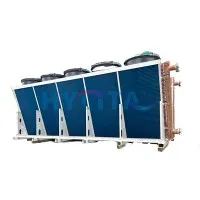
Yo, folks! As a supplier of Heat Exhaust Recovery systems, I've seen firsthand how this tech stacks up against other energy - saving methods. Let's dive right in and break it down.
First off, what's Heat Exhaust Recovery? Well, it's a process that captures the heat from exhaust gases and reuses it. You can learn more about it here: Heat Exhaust Recovery. Instead of letting that valuable heat go to waste up the chimney, we can use it for other purposes like pre - heating water or air in a building or an industrial process.
Now, let's compare it to some other popular energy - saving methods.
Insulation
Insulation is a classic energy - saving technique. It's all about keeping the heat inside during winter and outside during summer. You put insulation in your walls, roofs, and floors, and it acts as a barrier to heat transfer. It's a no - brainer for homes and buildings.
But here's the deal. Insulation is mainly about reducing heat loss through the building envelope. It doesn't actually generate energy. Heat Exhaust Recovery, on the other hand, takes wasted heat and turns it into something useful. For example, in an industrial setting, a factory might have a lot of hot exhaust from its machinery. Insulation won't do much for that heat, but a Heat Exhaust Recovery system can capture it and use it to pre - heat the incoming fresh air or water for a manufacturing process.
Solar Panels
Solar panels are super popular these days, and for good reason. They convert sunlight into electricity, which is a clean and renewable energy source. You can put them on your roof, and they'll start generating power as long as the sun is shining.
However, solar panels are dependent on sunlight. They don't work at night, and their efficiency can be affected by cloudy days. Heat Exhaust Recovery, though, can work 24/7. As long as there's exhaust heat being produced, the system can capture and reuse it. In an industrial plant that runs around the clock, a Heat Exhaust Recovery system can provide a consistent source of recovered energy, complementing the intermittent power from solar panels.
Energy - Efficient Appliances
Using energy - efficient appliances is another great way to save energy. Things like LED light bulbs, energy - star rated refrigerators, and high - efficiency HVAC systems use less power than their traditional counterparts.
But these appliances are focused on reducing the energy they consume. Heat Exhaust Recovery is about making the most of the energy that's already being used. For instance, in a commercial kitchen, the exhaust from the stoves and ovens is full of heat. Energy - efficient appliances in the kitchen will use less energy to operate, but a Heat Exhaust Recovery system can take the heat from that exhaust and use it to pre - heat the water for dishwashing or to warm up the kitchen in cold weather.
Carbon Steel Economiser and Economiser Heat Exchanger
Two key components in many Heat Exhaust Recovery systems are the Carbon Steel Economiser and the Economiser Heat Exchanger. You can find out more about them here: Carbon Steel Economiser and Economiser Heat Exchanger.
A Carbon Steel Economiser is designed to recover heat from the flue gases in a boiler. It pre - heats the feedwater going into the boiler, which reduces the amount of fuel needed to heat the water to the required temperature. This not only saves energy but also reduces the operating costs of the boiler.
The Economiser Heat Exchanger, on the other hand, transfers the heat from the exhaust gases to another fluid, such as water or air. This allows the recovered heat to be used in other parts of the system. These components are crucial for the efficient operation of a Heat Exhaust Recovery system.


Advantages of Heat Exhaust Recovery
One of the biggest advantages of Heat Exhaust Recovery is its high efficiency. It can recover a significant amount of the heat that would otherwise be wasted. In some industrial applications, it can recover up to 70 - 80% of the exhaust heat. This means a direct reduction in energy consumption and cost savings.
Another advantage is its environmental impact. By reusing the wasted heat, we're reducing the demand for fossil fuels. This leads to a decrease in greenhouse gas emissions, which is great for the planet. It's a win - win situation for both the environment and your bottom line.
Heat Exhaust Recovery systems are also relatively easy to integrate into existing systems. Whether it's a small commercial building or a large industrial plant, these systems can be customized to fit the specific needs and requirements. You don't have to tear down your entire setup to install a Heat Exhaust Recovery system.
Considerations and Challenges
Of course, like any technology, Heat Exhaust Recovery isn't without its challenges. One of the main considerations is the initial cost. Installing a Heat Exhaust Recovery system can be expensive, especially for large - scale industrial applications. However, the long - term savings in energy costs usually outweigh the initial investment.
Maintenance is also an important factor. The system needs to be regularly inspected and maintained to ensure it's operating at peak efficiency. This includes cleaning the heat exchangers, checking for leaks, and replacing any worn - out parts.
There's also the issue of compatibility. The Heat Exhaust Recovery system needs to be compatible with the existing exhaust system and the overall process. It's important to work with a professional who can design and install a system that fits your specific needs.
Conclusion
So, how does Heat Exhaust Recovery compare to other energy - saving methods? Well, it's not a replacement for these other methods. Instead, it's a complementary technology that can work alongside them to maximize energy savings.
Whether you're looking to reduce your energy costs, lower your environmental impact, or improve the efficiency of your operations, Heat Exhaust Recovery is definitely worth considering. If you're interested in learning more about how a Heat Exhaust Recovery system can benefit your business, don't hesitate to reach out. We can have a chat about your specific needs and see how we can help you make the most of your wasted heat.
References
- ASHRAE Handbook of HVAC Systems and Equipment.
- Industrial Energy Efficiency Guidelines, Department of Energy.
- Heat Exchanger Design Handbook, CRC Press.