


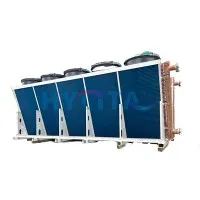
Hey there! As a finned tube supplier, I've been in the heat exchange game for quite a while. One question that often pops up is how the fin material's thermal conductivity impacts the performance of a finned tube. Well, let's dive right in and break it down.
First off, what exactly is thermal conductivity? In simple terms, it's a measure of how well a material can conduct heat. The higher the thermal conductivity, the better the material is at transferring heat. When it comes to finned tubes, this property plays a crucial role in determining how efficiently they can transfer heat between fluids.
Let's start by looking at how finned tubes work. Finned tubes are basically tubes with extended surfaces in the form of fins. These fins increase the surface area available for heat transfer, which in turn enhances the overall heat transfer rate. The fin material's thermal conductivity affects how quickly heat can be transferred from the tube to the fins and then to the surrounding fluid.
Imagine you have two finned tubes with the same design and dimensions, but one has fins made of a material with high thermal conductivity, like copper, and the other has fins made of a material with low thermal conductivity, like stainless steel. The tube with copper fins will be able to transfer heat much more efficiently than the one with stainless steel fins. This is because copper can conduct heat better, allowing it to quickly carry heat from the tube to the outer surface of the fins, where it can be dissipated into the surrounding fluid.
Now, let's talk about the impact of thermal conductivity on different aspects of finned tube performance.
Heat Transfer Efficiency
The most obvious impact of the fin material's thermal conductivity is on heat transfer efficiency. A finned tube with high thermal conductivity fins can transfer more heat in a given amount of time compared to a tube with low thermal conductivity fins. This means that for a specific heat transfer requirement, you can use a smaller finned tube with high thermal conductivity fins, which can save space and reduce costs.
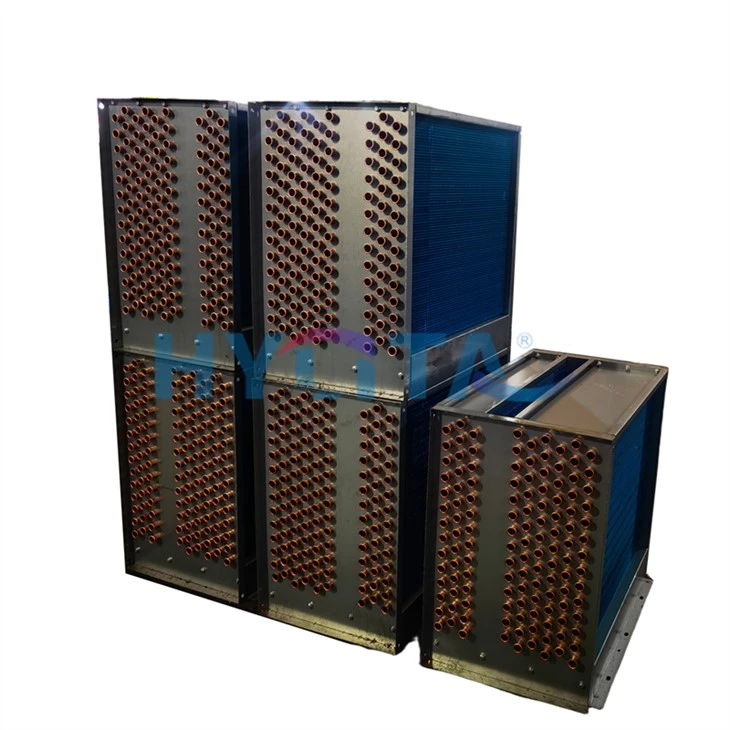
For example, in a Copper Fin Radiator, the high thermal conductivity of copper allows for rapid heat dissipation. This makes copper fin radiators ideal for applications where efficient heat transfer is crucial, such as in automotive engines and industrial cooling systems.
Temperature Distribution
The thermal conductivity of the fin material also affects the temperature distribution along the fins. In a finned tube with high thermal conductivity fins, the temperature is more evenly distributed across the fin surface. This is because heat can quickly spread through the fin material, preventing hot spots from forming.
On the other hand, in a finned tube with low thermal conductivity fins, heat tends to accumulate in certain areas, leading to uneven temperature distribution. This can reduce the overall effectiveness of the finned tube, as some parts of the fins may not be contributing as much to heat transfer as others.
Pressure Drop
Another important factor to consider is the pressure drop across the finned tube. The pressure drop is the difference in pressure between the inlet and outlet of the tube, and it is affected by the flow resistance of the fluid passing through the fins.
Fins with high thermal conductivity can often be designed with a more compact structure, which can reduce the flow resistance and therefore the pressure drop. This is because high thermal conductivity materials allow for more efficient heat transfer, so fewer fins may be needed to achieve the same heat transfer rate.
In contrast, fins with low thermal conductivity may require a larger number of fins or a more complex fin design to achieve the same level of heat transfer. This can increase the flow resistance and result in a higher pressure drop.
Cost and Durability
Of course, thermal conductivity isn't the only factor to consider when choosing a fin material. Cost and durability also play important roles. Materials with high thermal conductivity, like copper, are generally more expensive than materials with low thermal conductivity, like aluminum or stainless steel.
However, in applications where high heat transfer efficiency is essential, the additional cost of using a high thermal conductivity material may be justified. Additionally, some high thermal conductivity materials, like copper, are also relatively durable and resistant to corrosion, which can further enhance their value over the long term.
For example, Copper Fin Tube Radiators may cost more upfront, but their superior heat transfer performance and durability can result in lower operating costs and longer service life.
Applications and Considerations
The choice of fin material based on thermal conductivity depends on the specific application. Here are some common applications and the considerations for fin material selection:
HVAC Systems
In heating, ventilation, and air conditioning (HVAC) systems, finned tubes are used for both heating and cooling. For applications where energy efficiency is a top priority, materials with high thermal conductivity, like copper, are often preferred. However, cost and corrosion resistance may also be important factors, especially in outdoor or humid environments.
Power Generation
In power generation plants, finned tubes are used in boilers, condensers, and heat exchangers. High thermal conductivity materials are crucial in these applications to ensure efficient heat transfer and maximize power output. However, the operating conditions in power plants can be harsh, so durability and resistance to high temperatures and corrosion are also key considerations.
Chemical Processing
In chemical processing plants, finned tubes are used for various heat transfer applications, such as heating and cooling reactants. The choice of fin material depends on the chemical compatibility of the material with the process fluids, as well as its thermal conductivity and cost.
As a finned tube supplier, I understand that choosing the right fin material is a crucial decision for our customers. That's why we offer a wide range of finned tubes with different fin materials, including copper, aluminum, and stainless steel, to meet the diverse needs of our clients.
If you're in the market for Fin Radiator or other finned tube products, and you're not sure which fin material is best for your application, don't hesitate to reach out to us. Our team of experts is here to help you make an informed decision based on your specific requirements. We can provide you with detailed information about the thermal conductivity, cost, and performance of different fin materials, as well as offer customized solutions to meet your exact needs.
In conclusion, the fin material's thermal conductivity has a significant impact on the performance of a finned tube. It affects heat transfer efficiency, temperature distribution, pressure drop, and cost. By understanding these factors and choosing the right fin material for your application, you can ensure optimal performance and cost-effectiveness. So, if you have any questions or need assistance with your finned tube selection, feel free to contact us. We're here to help you get the most out of your heat exchange systems.

References
- Incropera, F. P., & DeWitt, D. P. (2002). Fundamentals of Heat and Mass Transfer. John Wiley & Sons.
- Holman, J. P. (2010). Heat Transfer. McGraw-Hill.
- Bergman, T. L., Lavine, A. S., Incropera, F. P., & DeWitt, D. P. (2011). Introduction to Heat Transfer. John Wiley & Sons.