


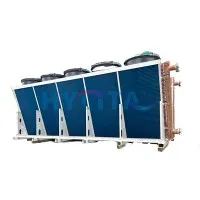
In the realm of thermal management, finned tube radiators stand as a cornerstone technology, offering efficient heat transfer solutions across a multitude of industries. As a leading finned tube radiator supplier, I've witnessed firsthand the pivotal role that fin pitch plays in determining the performance of these essential devices. In this blog post, I'll delve into the intricate relationship between fin pitch and radiator performance, exploring how this seemingly minor design parameter can have a profound impact on heat transfer efficiency, pressure drop, and overall system effectiveness.
Understanding Fin Pitch
Before we dive into the effects of fin pitch on radiator performance, let's first define what fin pitch is. Fin pitch refers to the distance between adjacent fins on a finned tube radiator. It is typically measured in millimeters or inches and represents a critical design parameter that influences the surface area available for heat transfer, the flow of air or fluid across the fins, and the overall compactness of the radiator.
Impact on Heat Transfer Efficiency
One of the primary functions of a finned tube radiator is to transfer heat from a hot fluid (such as water, steam, or a refrigerant) to a cooler fluid (usually air). The efficiency of this heat transfer process is directly related to the surface area available for heat exchange. A smaller fin pitch results in a greater number of fins per unit length, increasing the total surface area of the radiator and enhancing heat transfer efficiency.
When the fin pitch is reduced, the fins are closer together, creating a larger surface area for the hot fluid to transfer heat to the surrounding air. This increased surface area allows for more efficient heat transfer, as there are more contact points between the hot fluid and the air. As a result, the radiator can dissipate heat more effectively, reducing the temperature of the hot fluid and increasing the temperature of the cooler fluid.

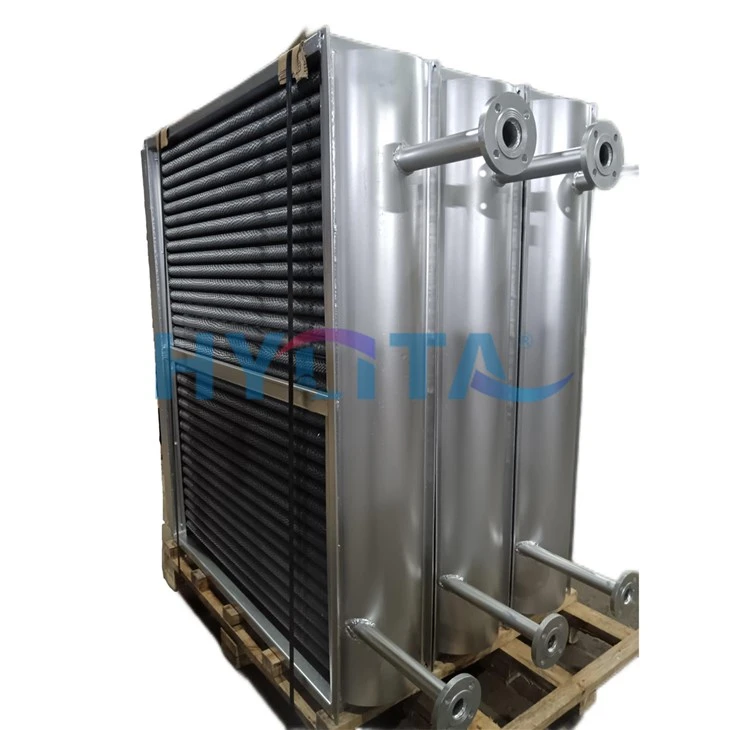
However, it's important to note that there is a limit to how small the fin pitch can be. If the fins are too close together, the air flow between the fins can become restricted, leading to a decrease in heat transfer efficiency. This is because the restricted air flow reduces the amount of fresh air that can come into contact with the fins, limiting the rate of heat transfer. Therefore, finding the optimal fin pitch is crucial for maximizing heat transfer efficiency.
Influence on Pressure Drop
In addition to its impact on heat transfer efficiency, fin pitch also affects the pressure drop across the radiator. Pressure drop refers to the decrease in pressure that occurs as a fluid (such as air or a liquid) flows through the radiator. A smaller fin pitch generally results in a higher pressure drop, as the closer spacing between the fins creates more resistance to the flow of the fluid.
When the fin pitch is reduced, the air or fluid has to navigate through a more narrow and complex passage between the fins, which increases the friction and turbulence in the flow. This increased friction and turbulence result in a higher pressure drop, which requires more energy to overcome. As a result, a radiator with a smaller fin pitch may require a more powerful fan or pump to maintain the desired flow rate, increasing the energy consumption of the system.
On the other hand, a larger fin pitch results in a lower pressure drop, as the wider spacing between the fins allows for a more unrestricted flow of the fluid. This can be beneficial in applications where energy efficiency is a primary concern, as it reduces the power requirements of the fan or pump. However, a larger fin pitch also reduces the surface area available for heat transfer, which can decrease the overall heat transfer efficiency of the radiator.
Considerations for Different Applications
The optimal fin pitch for a finned tube radiator depends on a variety of factors, including the specific application, the type of fluid being used, the flow rate, and the desired heat transfer rate. In general, applications that require high heat transfer efficiency, such as in industrial processes or HVAC systems, may benefit from a smaller fin pitch. This is because the increased surface area provided by the smaller fin pitch allows for more efficient heat transfer, even at the expense of a higher pressure drop.
On the other hand, applications that are more sensitive to pressure drop, such as in automotive cooling systems or aerospace applications, may require a larger fin pitch. In these applications, minimizing the pressure drop is crucial to ensure that the system operates efficiently and reliably. A larger fin pitch allows for a more unrestricted flow of the fluid, reducing the energy consumption of the fan or pump and improving the overall performance of the system.
Our Products and Solutions
As a finned tube radiator supplier, we offer a wide range of products with different fin pitches to meet the diverse needs of our customers. Whether you're looking for a Hot Water Radiator for a residential heating system, an Air To Air Heat Exchanger for an industrial ventilation system, or a Vapour Radiator for a power generation application, we have the expertise and experience to provide you with the right solution.
Our team of engineers and technicians can work with you to understand your specific requirements and recommend the optimal fin pitch for your application. We use advanced design and manufacturing techniques to ensure that our radiators are of the highest quality and performance, and we offer a comprehensive range of customization options to meet your unique needs.
Conclusion
In conclusion, fin pitch is a critical design parameter that has a significant impact on the performance of a finned tube radiator. By understanding the relationship between fin pitch, heat transfer efficiency, and pressure drop, you can make informed decisions when selecting a radiator for your application. Whether you're looking for maximum heat transfer efficiency or minimum pressure drop, our team of experts can help you find the right solution.
If you're interested in learning more about our finned tube radiators or would like to discuss your specific requirements, please don't hesitate to contact us. We look forward to working with you to provide you with the best possible thermal management solution for your needs.
References
- Incropera, F. P., & DeWitt, D. P. (2002). Fundamentals of Heat and Mass Transfer. John Wiley & Sons.
- Kays, W. M., & London, A. L. (1998). Compact Heat Exchangers. McGraw-Hill.
- Shah, R. K., & Sekulic, D. P. (2003). Fundamentals of Heat Exchanger Design. John Wiley & Sons.