


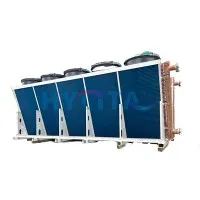
Hey there! As a supplier of heat recovery units, I'm super stoked to dig deep into how these nifty devices handle exhaust air. Heat recovery units are like the unsung heroes of energy - efficient systems, quietly doing their job to save energy and money. So, let's get right into it.
The Basics of Exhaust Air and Why It Matters
First off, what's exhaust air? Well, it's the air that gets expelled from a building or a process. This air often carries a significant amount of heat, especially in industrial settings or in buildings with heating systems. If we just let this hot air go to waste, it's like throwing money out the window. That's where heat recovery units come in.
The main goal of a heat recovery unit is to capture the heat from the exhaust air and transfer it to the incoming fresh air. This way, we can use that otherwise wasted heat to warm up the building or pre - heat the air for a process, reducing the energy needed to heat the space from scratch.
How a Heat Recovery Unit Works
There are a few different types of heat recovery units, but most of them work on the same basic principle: heat exchange.
Plate Heat Exchangers
One common type is the plate heat exchanger. In this setup, the exhaust air and the fresh air flow through separate channels in a series of thin metal plates. The metal plates are great conductors of heat, so the heat from the exhaust air passes through the plates and warms up the fresh air. It's like a silent handshake between the two air streams, where the exhaust air gives its heat to the fresh air.
The advantage of plate heat exchangers is that they're relatively simple and efficient. They can transfer a large amount of heat in a compact space. And since the two air streams don't mix, there's no risk of cross - contamination.
Rotary Heat Exchangers
Another type is the rotary heat exchanger. This one has a large rotating wheel made of a heat - absorbing material. The exhaust air passes through one side of the wheel, heating it up. As the wheel rotates, the heated part moves into the path of the fresh air. The fresh air then picks up the heat from the wheel.


Rotary heat exchangers are really good at handling large volumes of air. They can also achieve a high level of heat recovery, sometimes up to 90%. However, they do require a bit more maintenance because of the moving parts.
Handling Moisture in Exhaust Air
Exhaust air often contains moisture, especially in buildings with kitchens, bathrooms, or industrial processes that involve water. Moisture can be a tricky thing to handle because if it condenses in the heat recovery unit, it can cause corrosion and reduce the unit's efficiency.
Most heat recovery units have built - in moisture management systems. For example, some units use a desiccant material to absorb the moisture from the exhaust air. The desiccant can then be regenerated by using a small amount of the heat from the exhaust air itself.
Another approach is to use a condensate drain. When the moisture in the exhaust air condenses on the heat exchanger surfaces, the condensate is collected and drained away. This helps to keep the unit dry and functioning properly.
Applications of Heat Recovery Units
Heat recovery units are used in a wide range of applications. In commercial buildings like offices, hotels, and shopping malls, they help to reduce the heating and cooling costs. By pre - heating the incoming fresh air, the building's HVAC system doesn't have to work as hard, saving energy and money.
In industrial settings, heat recovery units are even more crucial. For example, in a manufacturing plant that uses a lot of hot air in its processes, a heat recovery unit can capture the heat from the exhaust air and use it to pre - heat the air for other parts of the process. This can lead to significant energy savings and a more sustainable operation.
Related Products and Their Benefits
If you're interested in heat recovery, you might also want to check out some related products. For instance, an Air Preheater and Economiser can further enhance the efficiency of your heat recovery system. It pre - heats the combustion air in a boiler, which improves the combustion process and reduces fuel consumption.
A Vapour Economizer in Boiler is another great option. It recovers the heat from the steam or vapour in a boiler system, using it to pre - heat the feedwater. This not only saves energy but also extends the life of the boiler.
And don't forget about the Hot Water Economiser. It captures the heat from the exhaust gases in a hot water system and uses it to heat the water, making the system more efficient.
Why Choose Our Heat Recovery Units
As a supplier, we take pride in offering high - quality heat recovery units. Our units are designed with the latest technology to ensure maximum efficiency and reliability. We use only the best materials, so you can be sure that your heat recovery unit will last for a long time.
We also provide excellent customer service. Our team of experts is always ready to help you choose the right heat recovery unit for your specific needs. Whether you're a small business or a large industrial facility, we have a solution for you.
Let's Talk!
If you're interested in learning more about how our heat recovery units can handle your exhaust air and save you money, don't hesitate to reach out. We're here to answer all your questions and help you make the best decision for your energy - efficiency needs. Whether it's a simple inquiry or you're ready to start a project, we're just a message away.
References
- ASHRAE Handbook of HVAC Systems and Equipment.
- Heat Exchanger Design Handbook, by Kakac, Shah, and Aung.