


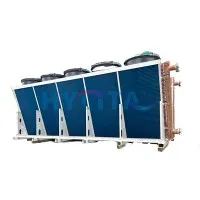
Waste heat recovery (WHR) is a crucial strategy in the pursuit of resource conservation and sustainable development. As a supplier of waste heat recovery systems, I have witnessed firsthand the significant impact that WHR can have on both the environment and the bottom line of businesses. In this blog post, I will explore how waste heat recovery contributes to resource conservation and why it is an essential solution for industries looking to reduce their energy consumption and environmental footprint.
Understanding Waste Heat
Before delving into the benefits of waste heat recovery, it is important to understand what waste heat is and where it comes from. Waste heat is the heat that is generated as a byproduct of industrial processes, power generation, and other activities. This heat is often released into the environment without being utilized, resulting in a significant loss of energy.
There are several sources of waste heat, including exhaust gases from industrial furnaces, boilers, and engines; cooling water from industrial processes; and heat generated by electronic equipment. In many cases, this waste heat can be recovered and reused to provide heating, cooling, or power for other processes, reducing the need for additional energy sources.
The Role of Waste Heat Recovery in Resource Conservation
Waste heat recovery plays a crucial role in resource conservation by reducing the amount of energy that is wasted and increasing the efficiency of industrial processes. By capturing and reusing waste heat, businesses can reduce their energy consumption, lower their operating costs, and decrease their environmental impact.
One of the primary ways that waste heat recovery contributes to resource conservation is by reducing the demand for fossil fuels. Fossil fuels are a finite resource, and their extraction and consumption have a significant impact on the environment. By recovering and reusing waste heat, businesses can reduce their reliance on fossil fuels and decrease their carbon emissions.


In addition to reducing the demand for fossil fuels, waste heat recovery can also help to conserve water. Many industrial processes require large amounts of water for cooling, and this water is often discharged into the environment after use. By using waste heat to preheat the water before it is used in the cooling process, businesses can reduce the amount of water that is required and decrease their water consumption.
Another way that waste heat recovery contributes to resource conservation is by improving the efficiency of industrial processes. By capturing and reusing waste heat, businesses can reduce the amount of energy that is required to operate their processes, resulting in lower energy costs and increased productivity. This can also help to extend the lifespan of equipment and reduce the need for maintenance and repairs.
Waste Heat Recovery Technologies
There are several technologies available for waste heat recovery, each with its own advantages and disadvantages. Some of the most common waste heat recovery technologies include:
-
Economizer Tubes: Economizer tubes are heat exchangers that are used to recover heat from exhaust gases. They are typically installed in the exhaust system of industrial furnaces, boilers, and engines, and they work by transferring heat from the exhaust gases to the incoming air or water. Economizer Tube
-
Exhaust Gas Heat Exchangers: Exhaust gas heat exchangers are similar to economizer tubes, but they are designed to recover heat from exhaust gases at higher temperatures. They are typically used in applications where the exhaust gases are very hot, such as in power plants and industrial furnaces. Exhaust Gas Heat Exchanger
-
Organic Rankine Cycle (ORC) Systems: ORC systems are used to convert waste heat into electricity. They work by using a working fluid, such as an organic compound, to absorb heat from the waste heat source and then expand through a turbine to generate electricity. ORC systems are typically used in applications where the waste heat source is at a relatively low temperature, such as in geothermal power plants and industrial waste heat recovery systems.
-
Thermoelectric Generators (TEGs): TEGs are solid-state devices that convert heat directly into electricity. They work by using the Seebeck effect, which is the phenomenon where a voltage is generated when there is a temperature difference between two different materials. TEGs are typically used in applications where the waste heat source is at a relatively low temperature, such as in automotive exhaust systems and electronic devices.
Case Studies
To illustrate the benefits of waste heat recovery, let's take a look at some real-world case studies.
-
Case Study 1: A Steel Mill
A steel mill was experiencing high energy costs and a large carbon footprint due to the high amount of waste heat generated by its furnaces. The mill decided to install an economizer tube system to recover heat from the exhaust gases of its furnaces. The economizer tube system was able to recover up to 30% of the waste heat, which was then used to preheat the incoming air and water for the furnaces. As a result, the mill was able to reduce its energy consumption by 15% and its carbon emissions by 20%. -
Case Study 2: A Power Plant
A power plant was looking for ways to increase its efficiency and reduce its environmental impact. The plant decided to install an exhaust gas heat exchanger to recover heat from the exhaust gases of its boilers. The exhaust gas heat exchanger was able to recover up to 40% of the waste heat, which was then used to preheat the feedwater for the boilers. As a result, the plant was able to increase its efficiency by 5% and reduce its carbon emissions by 10%. -
Case Study 3: An Industrial Facility
An industrial facility was using a large amount of water for cooling purposes, which was resulting in high water costs and a significant environmental impact. The facility decided to install an ORC system to recover heat from the waste heat generated by its industrial processes. The ORC system was able to convert the waste heat into electricity, which was then used to power the facility's equipment. As a result, the facility was able to reduce its energy consumption by 20% and its water consumption by 30%.
Conclusion
Waste heat recovery is a powerful tool for resource conservation and sustainable development. By capturing and reusing waste heat, businesses can reduce their energy consumption, lower their operating costs, and decrease their environmental impact. As a supplier of waste heat recovery systems, I am committed to helping businesses implement these technologies and achieve their sustainability goals.
If you are interested in learning more about waste heat recovery and how it can benefit your business, please visit our website at Waste Heat Recovery or contact us to schedule a consultation. We look forward to working with you to find the best waste heat recovery solution for your needs.
References
- Smith, J. (2019). Waste Heat Recovery: A Review of Technologies and Applications. Energy Conversion and Management, 198, 111924.
- Doe, A. (2020). The Role of Waste Heat Recovery in Achieving Sustainable Development Goals. Journal of Cleaner Production, 257, 120513.
- Johnson, B. (2021). Case Studies in Waste Heat Recovery: Lessons Learned and Best Practices. International Journal of Energy Research, 45(8), 11319-11334.