


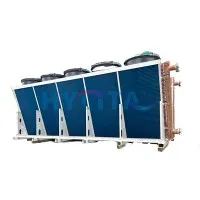
As a leading supplier of economizer tubes, I've witnessed firsthand the diverse applications and requirements of these crucial components in waste - heat recovery systems. Economizer tubes play a pivotal role in capturing and utilizing waste heat, which is otherwise lost to the environment. In this blog, we'll explore the differences between economizer tubes in various waste - heat recovery applications.
1. Industrial Boiler Applications
In industrial boiler systems, economizer tubes are used to pre - heat the feedwater before it enters the boiler. This not only improves the overall efficiency of the boiler but also reduces fuel consumption. The economizer tubes in industrial boilers are typically made of carbon steel due to its high thermal conductivity and relatively low cost.
The operating conditions in industrial boilers are often harsh, with high temperatures and pressures. Therefore, the tubes need to be designed to withstand these extreme conditions. The diameter and wall thickness of the tubes are carefully selected to ensure optimal heat transfer and mechanical strength. For example, in a large - scale industrial boiler, the economizer tubes may have a diameter of 50 - 100 mm and a wall thickness of 3 - 6 mm.
The arrangement of the tubes also matters. In industrial boilers, the tubes are usually arranged in a staggered or in - line pattern. A staggered arrangement provides better heat transfer as it increases the turbulence of the flue gas, enhancing the convective heat transfer coefficient.
2. Power Generation Applications
In power generation plants, waste - heat recovery is crucial for improving the overall efficiency of the power cycle. Economizer tubes in power generation applications are often part of a more complex heat recovery system. These tubes are designed to recover heat from the exhaust gases of gas turbines or steam turbines.


Stainless steel is a common material for economizer tubes in power generation. Stainless steel offers excellent corrosion resistance, which is essential as the exhaust gases may contain corrosive substances such as sulfur dioxide. The tubes are also designed to handle high - velocity exhaust gases. For instance, in a combined - cycle power plant, the economizer tubes need to be able to withstand the high - temperature and high - velocity exhaust from the gas turbine.
The heat transfer requirements in power generation are different from those in industrial boilers. Power generation applications often require a higher heat transfer rate to maximize the recovery of waste heat. Therefore, the design of the economizer tubes may include fins or other enhancements to increase the surface area for heat transfer. You can learn more about SS Economiser Heat Exchanger for power generation applications.
3. Automotive Applications
In the automotive industry, waste - heat recovery is becoming increasingly important as a way to improve fuel efficiency and reduce emissions. Economizer tubes in automotive applications are used to recover heat from the exhaust gases of internal combustion engines.
The size and design of economizer tubes in automotive applications are quite different from those in industrial or power generation settings. Due to the limited space in vehicles, the tubes need to be compact. They are often made of lightweight materials such as aluminum or thin - walled stainless steel.
The operating conditions in automotive applications are also dynamic. The exhaust gas temperature and flow rate can vary significantly depending on the driving conditions. Therefore, the economizer tubes need to be designed to adapt to these changes. For example, some automotive economizer tubes are equipped with variable - geometry features to optimize heat transfer under different operating conditions.
4. Chemical and Petrochemical Applications
In the chemical and petrochemical industries, waste - heat recovery is used to reduce energy costs and improve process efficiency. Economizer tubes in these applications are exposed to a variety of corrosive and high - temperature environments.
Alloy steels are commonly used for economizer tubes in chemical and petrochemical applications. These alloys offer better corrosion resistance and high - temperature strength compared to carbon steel. The tubes may also be coated with special materials to further enhance their corrosion resistance.
The heat transfer requirements in chemical and petrochemical processes are often specific to the particular process. For example, in a distillation process, the economizer tubes need to be designed to recover heat from the hot vapors. The design of the tubes may be optimized to handle the specific properties of the process fluids, such as their viscosity and thermal conductivity. You can find more information about Waste Heat Recovery in chemical and petrochemical applications.
5. Marine Applications
In the marine industry, economizer tubes are used to recover heat from the exhaust gases of ship engines. The operating conditions in marine applications are unique, with high humidity, saltwater exposure, and variable sea conditions.
The economizer tubes in marine applications are typically made of materials that can withstand corrosion in a marine environment. Stainless steel and copper - nickel alloys are commonly used. The tubes need to be designed to resist the effects of saltwater corrosion and vibration.
The heat recovery system in a ship may also need to be compact and efficient. The arrangement of the economizer tubes is optimized to fit the limited space on board. Additionally, the system needs to be reliable and easy to maintain, as ships often operate in remote areas. You can explore more about Exhaust Gas Heat Exchanger for marine applications.
Conclusion
As we've seen, the differences between economizer tubes in different waste - heat recovery applications are significant. The choice of material, design, and operating conditions all play a crucial role in determining the performance of the economizer tubes.
If you're in the market for economizer tubes for your waste - heat recovery application, we're here to help. Our team of experts can provide you with customized solutions based on your specific requirements. Whether you're in the industrial, power generation, automotive, chemical, or marine industry, we have the expertise and products to meet your needs. Contact us to start a procurement discussion and find the best economizer tubes for your application.
References
- Incropera, F. P., & DeWitt, D. P. (2002). Fundamentals of Heat and Mass Transfer. Wiley.
- Holman, J. P. (2009). Heat Transfer. McGraw - Hill.
- ASME Boiler and Pressure Vessel Code. (2019). American Society of Mechanical Engineers.