


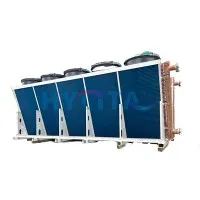
Waste heat recovery (WHR) has emerged as a pivotal strategy for companies aiming to enhance their operational efficiency and bottom line. As a supplier of waste heat recovery solutions, I've witnessed firsthand how this technology can transform a company's financial landscape. In this blog, I'll delve into the various ways waste heat recovery impacts a company's bottom line and why it's a smart investment for businesses across industries.
Cost Savings on Energy Consumption
One of the most significant ways waste heat recovery impacts a company's bottom line is through substantial cost savings on energy consumption. Many industrial processes generate a significant amount of waste heat that is often released into the environment. By implementing waste heat recovery systems, companies can capture this otherwise wasted energy and reuse it for various purposes, such as pre - heating feedwater, generating steam, or providing space heating.
For instance, in a manufacturing plant, a large amount of heat is lost through exhaust gases from furnaces or boilers. By installing an Exhaust Gas Heat Exchanger, the company can transfer the heat from the exhaust gases to a working fluid, which can then be used to pre - heat the incoming air or water. This reduces the amount of energy required to heat these fluids to the desired temperature, resulting in lower energy bills.
Similarly, an Economizer Tube can be used to recover heat from flue gases in a boiler system. The economizer tube absorbs heat from the flue gases and transfers it to the feedwater, increasing the feedwater temperature before it enters the boiler. As a result, the boiler needs to use less fuel to heat the water to steam, leading to significant fuel savings.
The cost savings on energy consumption can be quite substantial over time. According to industry reports, companies that implement waste heat recovery systems can reduce their energy costs by up to 20 - 30%. These savings directly impact the company's bottom line by reducing operating expenses and increasing profit margins.
Reduced Environmental Compliance Costs
In today's regulatory environment, companies are increasingly facing strict environmental regulations regarding emissions and energy efficiency. Failure to comply with these regulations can result in hefty fines and penalties, which can have a significant negative impact on the company's bottom line.
Waste heat recovery systems can help companies reduce their environmental footprint by reducing energy consumption and greenhouse gas emissions. By capturing and reusing waste heat, companies can lower their reliance on fossil fuels, which in turn reduces the amount of carbon dioxide and other pollutants released into the atmosphere.
For example, a company that uses a SS Economiser Heat Exchanger to recover waste heat from its industrial processes can reduce its carbon emissions. This not only helps the company meet environmental regulations but also positions it as a more environmentally responsible business, which can enhance its reputation in the market.
Moreover, some governments offer incentives and subsidies for companies that implement energy - efficient technologies such as waste heat recovery systems. These incentives can further offset the initial investment cost of the system and provide additional financial benefits to the company.
Increased Productivity and Process Efficiency
Waste heat recovery systems can also improve a company's productivity and process efficiency. By providing a more stable and consistent source of heat, these systems can help optimize industrial processes and reduce downtime.
For example, in a chemical plant, waste heat recovery can be used to maintain a constant temperature in reaction vessels, which is crucial for the success of chemical reactions. By using waste heat to pre - heat reactants or to provide heat during the reaction process, the company can ensure that the reactions occur at the optimal temperature, leading to higher yields and better product quality.
In addition, waste heat recovery systems can reduce the load on existing heating equipment, such as boilers and furnaces. This reduces the wear and tear on these equipment, extends their lifespan, and reduces the frequency of maintenance and repairs. As a result, the company can avoid costly production interruptions and improve overall productivity.
Enhanced Competitiveness
In a highly competitive business environment, companies are constantly looking for ways to differentiate themselves from their competitors. Implementing waste heat recovery systems can give a company a competitive edge by reducing costs, improving environmental performance, and enhancing productivity.
Customers are increasingly becoming more environmentally conscious and are more likely to do business with companies that demonstrate a commitment to sustainability. By investing in waste heat recovery, a company can position itself as a leader in environmental stewardship, which can attract more customers and increase market share.
Furthermore, the cost savings achieved through waste heat recovery can be passed on to customers in the form of lower prices, making the company's products or services more attractive in the market. This can help the company gain a larger customer base and increase its revenue, ultimately improving the bottom line.
Return on Investment (ROI)
The initial investment in a waste heat recovery system can be significant, but the long - term benefits far outweigh the costs. The return on investment for waste heat recovery systems is typically quite high, with payback periods ranging from 1 to 3 years, depending on the type of system and the specific application.
The high ROI is mainly due to the substantial cost savings on energy consumption, reduced environmental compliance costs, and increased productivity. Once the system has paid for itself, the company can continue to enjoy the financial benefits for the remainder of the system's lifespan, which can be up to 15 - 20 years.
Conclusion
Waste heat recovery has a profound impact on a company's bottom line. It offers numerous financial benefits, including cost savings on energy consumption, reduced environmental compliance costs, increased productivity, enhanced competitiveness, and a high return on investment. As a waste heat recovery supplier, I encourage companies to explore the potential of waste heat recovery and consider implementing these systems to improve their financial performance and sustainability.


If you're interested in learning more about our waste heat recovery solutions or would like to discuss a potential project, I invite you to reach out to us. Our team of experts can provide you with detailed information, conduct a feasibility study, and help you design a customized waste heat recovery system that meets your specific needs and budget. Let's work together to turn your waste heat into a valuable asset and improve your company's bottom line.
References
- Energy Efficiency and Renewable Energy, U.S. Department of Energy.
- Industrial Energy Efficiency, International Energy Agency.
- Journal of Energy Management and Environmental Protection.