


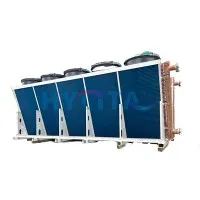
Hey there! As a finned tube supplier, I've seen firsthand how crucial it is to control the heat transfer rate of finned tubes. Whether you're in the HVAC industry, power generation, or any other field that relies on efficient heat exchange, getting this right can make a huge difference in your system's performance. So, let's dive into some practical ways to control the heat transfer rate of finned tubes.
Understanding the Basics of Heat Transfer in Finned Tubes
Before we start talking about control methods, let's quickly go over how heat transfer works in finned tubes. Finned tubes are designed to increase the surface area available for heat transfer between a fluid inside the tube and another fluid outside the tube. This increased surface area allows for more efficient heat exchange compared to plain tubes.
There are three main modes of heat transfer: conduction, convection, and radiation. In finned tubes, conduction occurs within the tube and fins, transferring heat from the hot fluid to the tube wall and then through the fins. Convection happens when the fluids (either gas or liquid) flow over the tube and fins, carrying the heat away. Radiation plays a relatively minor role in most finned tube applications, but it can still contribute to the overall heat transfer, especially at high temperatures.
Factors Affecting Heat Transfer Rate
1. Material Selection
The choice of materials for the tube and fins has a significant impact on the heat transfer rate. Metals like copper and aluminum are commonly used because they have high thermal conductivity, which means they can transfer heat quickly. For example, copper has excellent thermal properties and is often used in applications where high heat transfer efficiency is required. Check out our Copper Fin Radiator for a great example of how copper can enhance heat transfer.
2. Fin Geometry
The shape, size, and spacing of the fins also affect the heat transfer rate. Fins with a larger surface area will generally transfer more heat, but they also increase the pressure drop of the fluid flowing over them. So, it's a balance between maximizing heat transfer and minimizing pressure drop. Common fin geometries include straight fins, helical fins, and serrated fins. Each type has its own advantages and disadvantages, and the choice depends on the specific application.


3. Fluid Properties
The properties of the fluids involved, such as their thermal conductivity, specific heat, and viscosity, play a crucial role in heat transfer. For example, a fluid with a high thermal conductivity will transfer heat more efficiently. Additionally, the flow rate of the fluids can also affect the heat transfer rate. A higher flow rate generally leads to better heat transfer, but it also increases the power required to pump the fluid.
4. Temperature Difference
The greater the temperature difference between the two fluids, the higher the heat transfer rate. However, in practical applications, there are limits to how much temperature difference can be maintained. For example, in HVAC systems, the temperature difference between the indoor and outdoor air is usually limited by the ambient conditions.
Controlling the Heat Transfer Rate
1. Adjusting the Fin Density
One way to control the heat transfer rate is to adjust the fin density. Increasing the number of fins per unit length will increase the surface area available for heat transfer, which in turn increases the heat transfer rate. However, as mentioned earlier, this also increases the pressure drop. So, you need to find the right balance based on your specific requirements. For applications where pressure drop is not a major concern, you can go for a higher fin density. On the other hand, if pressure drop is critical, a lower fin density may be more suitable.
2. Changing the Fluid Flow Rate
As I mentioned earlier, the flow rate of the fluids affects the heat transfer rate. By adjusting the flow rate, you can control the amount of heat transferred. Increasing the flow rate will increase the heat transfer rate, but it also requires more power to pump the fluid. You can use flow control valves to adjust the flow rate as needed. This is a simple and effective way to control the heat transfer rate in real-time.
3. Using Variable Frequency Drives (VFDs)
VFDs can be used to control the speed of the pumps or fans used to circulate the fluids. By adjusting the speed, you can control the flow rate and therefore the heat transfer rate. VFDs offer a high level of control and can save energy by reducing the power consumption when the full flow rate is not required.
4. Modifying the Fin Material or Coating
Changing the fin material or applying a special coating can also affect the heat transfer rate. For example, a fin with a higher thermal conductivity material will transfer heat more efficiently. Additionally, some coatings can improve the heat transfer coefficient by reducing the surface resistance. This can be a cost-effective way to enhance the heat transfer performance of existing finned tubes.
5. Optimizing the Tube Layout
The way the tubes are arranged in a heat exchanger can also have an impact on the heat transfer rate. For example, a staggered tube layout can increase the turbulence of the fluid flow, which in turn improves the heat transfer. By optimizing the tube layout, you can achieve better heat transfer efficiency without increasing the size or cost of the heat exchanger.
Practical Applications and Case Studies
Let's take a look at some practical applications where controlling the heat transfer rate of finned tubes is crucial. In an HVAC system, for example, the heat transfer rate of the finned tube heat exchangers determines the cooling or heating capacity of the system. By controlling the heat transfer rate, you can ensure that the system operates efficiently and provides the desired temperature control.
In a power generation plant, finned tubes are used in condensers and boilers to transfer heat between the steam and the cooling water or the combustion gases. Controlling the heat transfer rate in these applications is essential for maximizing the efficiency of the power generation process and reducing energy consumption.
One of our customers, a chemical processing plant, was facing issues with the heat transfer efficiency of their existing finned tube heat exchangers. They were experiencing a high temperature difference between the inlet and outlet of the fluids, which indicated poor heat transfer. We recommended increasing the fin density and adjusting the fluid flow rate. After implementing these changes, they saw a significant improvement in the heat transfer rate, which led to increased production efficiency and reduced energy costs.
Why Choose Our Finned Tubes?
At our company, we offer a wide range of finned tubes, including Copper Fin Tube Radiators and Fin Radiator. Our finned tubes are made from high-quality materials and are designed to provide excellent heat transfer performance. We also offer customized solutions to meet your specific requirements.
Our team of experts can help you select the right finned tubes for your application and provide you with advice on how to control the heat transfer rate. We understand that every application is unique, and we're committed to providing you with the best possible solution.
Contact Us for Procurement
If you're interested in our finned tubes or need more information on how to control the heat transfer rate, please don't hesitate to reach out. We're here to answer any questions you may have and to help you find the right solution for your needs. Whether you're a small business or a large corporation, we're ready to work with you to ensure your heat exchange systems operate at peak efficiency.
References
- Incropera, F. P., & DeWitt, D. P. (2002). Introduction to Heat Transfer. Wiley.
- Bergman, T. L., Lavine, A. S., Incropera, F. P., & DeWitt, D. P. (2011). Fundamentals of Heat and Mass Transfer. Wiley.
- Kakaç, S., & Pramuanjaroenkij, A. (2005). Heat Exchanger Design Handbook. Taylor & Francis.