


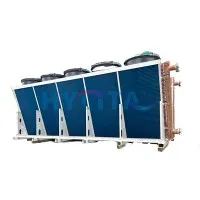
Hey there! As a supplier of Economizer Tubes, I've seen firsthand how crucial the layout of these tubes in a heat exchanger can be. It's not just about slapping them in there; it's about optimizing that layout to get the most out of your heat exchanger. In this blog, I'll share some tips and tricks on how to do just that.
First off, let's talk about why optimizing the economizer tube layout matters. A well - optimized layout can significantly improve the heat transfer efficiency of the heat exchanger. This means you can get more heat out of the same amount of energy, which translates to cost savings in the long run. Plus, it can also extend the lifespan of your heat exchanger by reducing wear and tear on the components.
One of the key factors to consider when laying out economizer tubes is the flow pattern of the fluids. There are two main types of flow patterns: parallel flow and counter - flow. In parallel flow, the hot and cold fluids move in the same direction. This can be a simple setup, but it's not always the most efficient. On the other hand, counter - flow has the hot and cold fluids moving in opposite directions. This creates a larger temperature difference along the length of the tubes, which generally leads to better heat transfer. So, if possible, aim for a counter - flow layout in your heat exchanger. You can check out our Exhaust Gas Heat Exchanger for more information on how different flow patterns work in real - world applications.
Another important aspect is the tube spacing. If the tubes are too close together, it can restrict the flow of fluids, leading to increased pressure drop and reduced heat transfer efficiency. On the flip side, if the tubes are too far apart, you're not making the most of the available space in the heat exchanger. A good rule of thumb is to keep a consistent and appropriate spacing between the tubes. This will ensure smooth fluid flow and efficient heat transfer. Our Economizer Tube products come in various sizes and can be arranged with the right spacing to suit your specific heat exchanger needs.
The arrangement of the tubes also plays a big role. There are two common arrangements: in - line and staggered. In an in - line arrangement, the tubes are lined up in rows. This is a straightforward layout that's easy to manufacture and clean. However, it may not provide the best heat transfer performance. A staggered arrangement, where the tubes in one row are offset from the tubes in the adjacent row, can increase the turbulence of the fluid flow. This turbulence helps to break up the boundary layer around the tubes, allowing for better heat transfer. So, depending on your heat exchanger's requirements, you might want to consider a staggered tube arrangement.
Material selection for the economizer tubes is also closely related to the layout optimization. Different materials have different thermal conductivities, corrosion resistances, and mechanical properties. For example, stainless steel is a popular choice for its good corrosion resistance and relatively high thermal conductivity. Our SS Economiser Heat Exchanger uses high - quality stainless steel tubes that are designed to work well in various heat exchanger layouts. When choosing the material for your tubes, make sure it's compatible with the fluids in your heat exchanger and can withstand the operating conditions.
Now, let's talk about some practical steps to optimize the layout. First, you need to understand your heat exchanger's operating conditions. This includes the temperature, pressure, and flow rates of the hot and cold fluids. You can use this information to calculate the heat transfer requirements and determine the appropriate number and size of the economizer tubes. There are also some software tools available that can help you model different tube layouts and predict their performance. These tools can save you a lot of time and effort in the design process.
Once you have a preliminary layout in mind, it's a good idea to do some testing. You can build a small - scale model of your heat exchanger and test different tube arrangements and spacings. This will allow you to see how the changes affect the heat transfer efficiency and pressure drop. Based on the test results, you can make adjustments to the layout until you achieve the optimal performance.
It's also important to consider the maintenance aspect when optimizing the layout. A well - designed layout should make it easy to access and clean the tubes. This will help to prevent fouling, which can reduce the heat transfer efficiency over time. Make sure there's enough space around the tubes for maintenance workers to move and use cleaning equipment.


In addition to all these technical considerations, cost is also a factor. You want to optimize the layout in a way that balances performance and cost. Sometimes, a slightly less efficient layout may be more cost - effective, especially if you're on a tight budget. But remember, in the long run, a more efficient layout can save you money on energy costs.
As a supplier of Economizer Tubes, I'm here to help you with all your heat exchanger needs. Whether you're designing a new heat exchanger or looking to improve an existing one, we have the products and expertise to support you. Our team of experts can work with you to determine the best tube layout for your specific application. We can provide you with high - quality Economizer Tubes that are designed to perform well in optimized layouts.
If you're interested in learning more about our products or discussing your heat exchanger project, don't hesitate to reach out. We're always happy to have a chat and see how we can help you optimize your heat exchanger's performance. Whether you're in the industrial, commercial, or residential sector, we have solutions that can meet your requirements.
In conclusion, optimizing the layout of economizer tubes in a heat exchanger is a multi - faceted process that involves considering fluid flow patterns, tube spacing, arrangement, material selection, maintenance, and cost. By taking the time to carefully plan and test your layout, you can achieve significant improvements in heat transfer efficiency and cost savings. And as your trusted Economizer Tube supplier, we're here to be your partner in this process. So, get in touch with us today and let's start optimizing your heat exchanger together!
References
- Incropera, F. P., & DeWitt, D. P. (2002). Fundamentals of Heat and Mass Transfer. Wiley.
- Kreith, F., & Manglik, R. M. (2011). Principles of Heat Transfer. Cengage Learning.