


Hey there! As an oil cooler supplier, I've seen firsthand how crucial it is to pick the right oil cooler based on your engine oil volume. It's not just about slapping on any old cooler and hoping for the best. In this blog, I'm gonna walk you through the ins and outs of selecting the perfect oil cooler for your engine's oil volume.
Why Engine Oil Volume Matters
First off, let's talk about why engine oil volume is such a big deal. Engine oil plays a bunch of key roles in your engine. It lubricates the moving parts, reducing friction and wear. It also helps to clean the engine by carrying away dirt and debris. And one of its most important jobs is to cool the engine. As the oil circulates through the engine, it absorbs heat and then dissipates it.
The volume of oil in your engine affects how much heat it can absorb. A larger volume of oil can absorb more heat, but it also takes longer to cool down. On the other hand, a smaller volume of oil heats up faster but cools down more quickly. So, you need to find an oil cooler that can handle the specific heat load based on your engine's oil volume.
Types of Oil Coolers
There are a few different types of oil coolers out there, and each has its own pros and cons. Let's take a quick look at the main types:
- Finned Oil Cooler: These coolers use fins to increase the surface area for heat transfer. The more surface area, the more heat can be dissipated. They're a popular choice because they're relatively simple and cost - effective. You can check out our Finned Oil Cooler for more details.
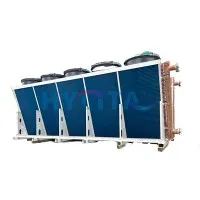
- Air - cooled Industrial Cooler: As the name suggests, these coolers use air to cool the oil. They're great for applications where water isn't readily available or where you want to keep things simple. You can learn more about our Air - cooled Industrial Cooler.
- Water - cooled Industrial Cooler: These coolers use water to cool the oil. Water is a much better heat conductor than air, so they can be more efficient at cooling large volumes of oil. If you're dealing with a high - performance engine or an engine with a large oil volume, a water - cooled cooler might be the way to go. Check out our Water - cooled Industrial Cooler.
Calculating Heat Load
Before you can select the right oil cooler, you need to calculate the heat load of your engine. This is basically the amount of heat that the oil needs to dissipate. Here's a simple way to estimate it:
-
Determine the engine's power output: You can usually find this in the engine's specifications. Let's say your engine has a power output of P horsepower.
-
Estimate the heat generated: A general rule of thumb is that about 25 - 30% of the engine's power output is converted into heat that needs to be dissipated by the oil. So, the heat generated (Q) in BTU per hour can be estimated as (Q = P\times 2545\times 0.25) (using the lower end of the range). The factor 2545 is the number of BTU per horsepower - hour.
-
Consider the oil volume: The larger the oil volume, the more heat it can absorb, but you still need to make sure the cooler can handle the heat load. If you have a large oil volume, you might need a more powerful cooler.
Selecting the Right Oil Cooler Based on Oil Volume
Now that you've calculated the heat load, it's time to select the right oil cooler. Here are some guidelines based on different oil volumes:


- Small Oil Volumes (less than 5 quarts): If your engine has a small oil volume, you can usually get away with a finned oil cooler. These coolers are relatively small and can handle the lower heat load. They're also easy to install and don't require a lot of maintenance.
- Medium Oil Volumes (5 - 15 quarts): For medium oil volumes, an air - cooled industrial cooler might be a good choice. They can provide more cooling capacity than a finned cooler and are still relatively simple to install. However, if you're dealing with a high - performance engine or an engine that runs at high temperatures, you might want to consider a water - cooled cooler.
- Large Oil Volumes (more than 15 quarts): When you have a large oil volume, a water - cooled industrial cooler is often the best option. They can handle the high heat load and keep the oil at a stable temperature. They're more complex to install and require a water source, but they're worth it for large engines.
Other Factors to Consider
Oil volume isn't the only thing you need to think about when selecting an oil cooler. Here are some other factors:
- Operating Temperature: The temperature at which your engine operates can affect the performance of the oil cooler. If your engine runs at very high temperatures, you'll need a cooler with a higher cooling capacity.
- Installation Space: Make sure you have enough space to install the oil cooler. Some coolers are larger than others, so you need to measure the available space in your engine compartment.
- Maintenance Requirements: Different types of oil coolers have different maintenance requirements. Finned coolers are relatively easy to clean, while water - cooled coolers might require more maintenance to prevent corrosion and scale buildup.
Conclusion
Selecting the right oil cooler based on your engine's oil volume is crucial for the performance and longevity of your engine. By understanding the heat load, considering the different types of oil coolers, and factoring in other variables like operating temperature and installation space, you can make an informed decision.
If you're still not sure which oil cooler is right for you, don't hesitate to reach out. We're here to help you find the perfect solution for your engine. Whether you need a finned oil cooler, an air - cooled industrial cooler, or a water - cooled industrial cooler, we've got you covered. Contact us to start the procurement discussion and get your engine running at its best.
References
- Automotive Engineering Handbook, various editions
- Heat Transfer textbooks for basic heat load calculations