


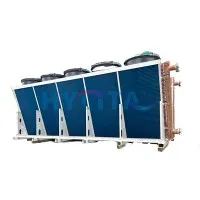
Industrial Waste Heat Recovery: Striking a Balance Between High Efficiency and System Brittleness
Preface
Within today's industrial energy‑saving sector, heat recovery is far more than simply "installing a heat exchanger". As process integration grows increasingly sophisticated, waste heat recovery systems have evolved from peripheral auxiliary facilities into integral parts of core production processes. This means even minor system faults can exert direct impacts on main production lines. As equipment suppliers, we have learned more from real‑world failures than from successful projects over the years.
1. Hidden Threats at Physical Level: More Than Just Fitting Locks
Safety discussions frequently focus on preventing unauthorised operations. Nevertheless, under real‑world operating conditions, genuine physical‑safety hazards stem from stress fatigue and fluctuating working conditions.
Targeted Material Selection: Many customers opt for ordinary carbon steel to cut initial capital costs. Yet when handling coal‑fired or high‑sulphur flue gas, failure to account for acid dew‑point corrosion may cause pitting perforation of economisers within half a year. In our current solutions, ND steel (09CrCuSb) is mandatorily specified for low‑temperature sections.
Practical Value of Physical Interlocks: We have witnessed numerous on‑site over‑temperature accidents triggered by malfunctioning bypass dampers. Genuine physical safety requires mechanical limit stops and gravity‑driven pressure‑relief devices to be incorporated at the design phase, rather than relying solely on control‑room on‑screen alarms.
2. Operational Logic: Reject Blind Pursuit of Maximum Temperature Difference
Many clients aim to lower flue‑gas exhaust temperature to the absolute minimum, which in turn becomes a source of operational risks.
Ash Fouling and Dynamic Pressure Drop: Waste heat recovery systems are highly vulnerable to blockages. Ash deposition on tube bundles not only reduces heat‑transfer efficiency; resultant fluctuations in flue‑gas backpressure can deteriorate boiler combustion performance. Our recommended practice is to deploy dynamic pressure‑drop monitoring. Pressure‑differential variations are used to predict ash‑cleaning cycles, instead of rigid fixed‑interval soot‑blowing routines.
Human Factor: Operators tend to adopt the "shut‑down for safety" mindset. Training must clarify the thermal coupling between waste‑heat systems and main processes. For instance, how to avoid tube‑sheet weld cracking induced by thermal shock during emergency shutdowns - this stands as a core practical consideration.
3. Vulnerabilities in the Digital Era: Overlooked PLC Security
Nearly all modern systems support network connectivity, yet vulnerabilities within Industrial Control Systems (ICS) are frequently underestimated.
Boundaries for Remote Monitoring: Our remote monitoring systems strictly follow the one‑way data transmission principle. Users may view real‑time efficiency data via cloud platforms; however, all operations including PID parameter adjustment and valve switching remain physically restricted to local operator panels or isolated intranet‑based PLC units.
Redundancy Design: Digital‑security measures target not only cyber‑attacks but also network outages. Our control logic ensures that upon communication loss, the system automatically switches to a safe bypass mode driven by physical feedback from local sensors.
4. Supply Chain: Traceable Material Certificates and Invisible Service Life
Many manufacturers can provide complete material test reports, whereas the service life of waste heat recovery systems often hinges on invisible details.
Welding Quality and Non‑Destructive Testing: Particularly for carbon‑steel economisers and high‑pressure heat exchangers, tube‑to‑tubesheet welding procedures (e.g. strength welding plus expansion jointing) determine resistance to repeated start‑stop thermal shocks.
Proven Brands for Core Components: For critical actuators and safety relief valves, we only select brands proven by over ten years of field service. This is not blind brand preference. It guarantees absolutely reliable 0.5‑second response times under sudden over‑pressure scenarios.
Reflections
Waste heat recovery is never merely a cost‑saving tool. It adds a complex energy loop to primary production lines. Reliable safety cannot be achieved through written administrative rules alone. It is built on rigorous material‑science benchmarks, well‑engineered system redundancy, and full respect for harsh industrial operating conditions.
If you are confronted with waste‑heat‑recovery challenges under high‑dust and high‑corrosion conditions, or harbour concerns regarding the reliability of existing installations, we can discuss practical engineering approaches to circumvent common pitfalls.