


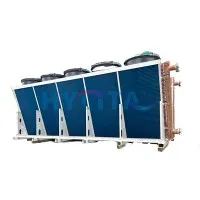
Oil coolers are essential components in various industries and applications, playing a crucial role in maintaining optimal operating temperatures. As an oil cooler supplier, I've seen firsthand how these devices are used in a wide range of scenarios. So, let's dive into what oil coolers are used for.
Automotive Applications
In the automotive world, oil coolers are super important. Engines generate a ton of heat when they're running. The oil in the engine lubricates the moving parts, reducing friction and wear. But as the oil does its job, it absorbs heat. If the oil gets too hot, it loses its lubricating properties, and that can lead to serious engine damage.
That's where oil coolers come in. They help keep the oil at a reasonable temperature. For high - performance cars, like sports cars or race cars, oil coolers are a must. These vehicles put a lot of stress on their engines, and the extra cooling provided by an oil cooler ensures that the engine oil stays in good condition. This, in turn, improves the engine's performance and longevity.
Even in regular passenger cars, especially those used for towing or in hot climates, an oil cooler can be a great addition. It helps prevent the oil from overheating during heavy use, making the engine more reliable.
Industrial Machinery
Industrial machinery is another big area where oil coolers are widely used. In manufacturing plants, there are all sorts of machines like hydraulic presses, injection molding machines, and gearboxes. These machines rely on oil for lubrication and to transfer power.
Just like in an engine, the oil in industrial machinery can get really hot. If the oil temperature rises too high, it can cause the machinery to malfunction. For example, in a hydraulic system, hot oil can lead to increased viscosity changes, which affects the system's efficiency and accuracy.
Oil coolers for industrial applications come in different types. There are Oil - cooled Industrial Cooler and Air - cooled Industrial Cooler. Oil - cooled industrial coolers use another fluid, usually water, to cool the oil. They're great for applications where there's a lot of heat to dissipate. Air - cooled industrial coolers, on the other hand, use air to cool the oil. They're more suitable for smaller machines or where water isn't readily available.
Marine Applications
Boats and ships also rely on oil coolers. In marine engines, which are often running for long periods at high loads, the oil can get extremely hot. Just like in automotive engines, overheated oil can cause engine problems.
Marine oil coolers help maintain the proper oil temperature, ensuring that the engine runs smoothly. They're designed to withstand the harsh marine environment, including saltwater corrosion. Whether it's a small fishing boat or a large cargo ship, oil coolers are an important part of the engine system.
Power Generation
In power plants, whether they're fossil - fuel - based, nuclear, or renewable energy plants, oil coolers are used in various equipment. For example, in generators, the bearings and other moving parts are lubricated with oil. As the generator runs, the oil heats up. Oil coolers are used to keep the oil temperature within the acceptable range, preventing damage to the generator components.
In wind turbines, which are a type of renewable energy equipment, oil coolers are used in the gearbox. The gearbox in a wind turbine experiences high loads and speeds, and the oil in it needs to be cooled to ensure efficient operation.
Aviation
In the aviation industry, oil coolers are used in aircraft engines. Aircraft engines operate under extreme conditions, with high altitudes, low temperatures, and high speeds. The oil in the engine needs to be kept at the right temperature to ensure proper lubrication and engine performance.
Oil coolers in aircraft are designed to be lightweight and efficient. They need to work well in the thin air at high altitudes and be able to handle rapid changes in temperature.
Types of Oil Coolers
There are several types of oil coolers available, each with its own advantages. One common type is the Finned Oil Cooler. Finned oil coolers have fins on the outside that increase the surface area for heat transfer. This allows the oil to cool more efficiently. They're often used in applications where space is limited, as they can provide a good amount of cooling in a relatively small package.
Another type is the tube - and - shell oil cooler. In this type, the oil flows through tubes, and a cooling fluid (either water or air) flows around the tubes. Tube - and - shell oil coolers are known for their high heat transfer efficiency and are used in large - scale industrial applications.
Why Choose Our Oil Coolers
As an oil cooler supplier, we offer a wide range of high - quality oil coolers. Our products are designed to meet the specific needs of different industries and applications. We use the latest technology and high - quality materials to ensure that our oil coolers are efficient, reliable, and durable.
Our team of experts can help you choose the right oil cooler for your needs. Whether you're in the automotive, industrial, marine, power generation, or aviation industry, we have a solution for you. We also provide excellent customer service, including installation support and after - sales maintenance.
If you're looking for an oil cooler for your application, don't hesitate to contact us. We're here to help you find the best cooling solution for your needs. Whether you need a small finned oil cooler for a car or a large industrial oil cooler for a manufacturing plant, we've got you covered. Let's work together to keep your equipment running smoothly and efficiently.
Conclusion
Oil coolers are used in a wide variety of industries and applications to maintain the proper temperature of oil. From automotive engines to industrial machinery, marine vessels, power plants, and aircraft, they play a vital role in ensuring the reliable operation of equipment. As an oil cooler supplier, we're committed to providing high - quality products and excellent service to our customers. If you're in the market for an oil cooler, reach out to us for more information and to discuss your specific requirements.


References
- "Thermal Engineering Handbook" by Richard M. Christie
- "Automotive Engine Design" by David Crolla
- "Industrial Machinery Lubrication" by Michael Rudnick