


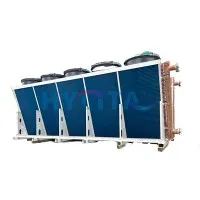
Yo, what's up! As a supplier of evaporator coils, I often get asked this question: "Can an evaporator coil be insulated?" Well, let's dig into this topic and find out.
First off, let's understand what an evaporator coil is. An evaporator coil is a key component in refrigeration and air - conditioning systems. It's where the refrigerant absorbs heat from the surrounding air, causing the refrigerant to evaporate from a liquid to a gas. This heat - absorption process is what cools the air in your home or office.
Now, the big question: can it be insulated? The short answer is yes, an evaporator coil can be insulated. There are actually several good reasons for doing so.
One of the main benefits of insulating an evaporator coil is energy efficiency. When an evaporator coil is exposed, it can lose some of the cold energy it's supposed to transfer to the air. Insulation acts as a barrier, preventing this loss of cold. This means that the system doesn't have to work as hard to maintain the desired temperature, which in turn can lead to lower energy bills. For example, in a commercial refrigeration unit, proper insulation of the evaporator coil can save a significant amount of electricity over time.
Another reason is to prevent condensation issues. When warm, moist air comes into contact with a cold evaporator coil, condensation forms. This is normal, but excessive condensation can lead to problems like water damage, mold growth, and corrosion of the coil. Insulating the coil can reduce the temperature difference between the coil and the surrounding air, minimizing condensation. It's like putting a jacket on the coil to keep it from "sweating" too much.
But how do you insulate an evaporator coil? There are a few different methods. One common way is to use foam insulation. Foam insulation comes in various forms, such as sheets or spray - on types. Sheets of foam can be carefully cut and wrapped around the coil, making sure to cover all the exposed surfaces. Spray - on foam can be a bit more convenient in some cases, as it can fill in all the nooks and crannies around the coil.
Another option is to use reflective insulation. Reflective insulation works by reflecting radiant heat away from the coil. It's often made of a material with a shiny surface, like aluminum foil. This type of insulation can be especially effective in areas where there is a lot of radiant heat, such as near a sunny window or in a hot mechanical room.
However, there are also some things to keep in mind when insulating an evaporator coil. First of all, you need to make sure that the insulation doesn't interfere with the coil's performance. The coil needs to be able to exchange heat with the air properly, so the insulation should be installed in a way that allows for adequate air circulation. If the insulation is too thick or is installed incorrectly, it can block the airflow and reduce the efficiency of the system.
Also, the insulation material needs to be compatible with the coil. Some materials might react with the refrigerant or the metal of the coil, causing damage over time. So, it's important to choose the right type of insulation and follow the manufacturer's recommendations.
Now, if you're thinking about replacing your old evaporator coil, we've got you covered. Check out our Evaporator Coil Replacement page for more information. We offer high - quality replacement coils that are designed to work efficiently and last a long time.
We also have a great selection of Stainless Steel Evap Coil. Stainless steel coils are known for their durability and resistance to corrosion. They're a great choice for applications where the coil might be exposed to harsh environments, like in a food processing plant or a marine setting.
And for those looking for a more traditional option, our Refrigeration Copper Coil is a top - notch choice. Copper is an excellent conductor of heat, which means that it can transfer heat more effectively, making your refrigeration or air - conditioning system more efficient.


In conclusion, insulating an evaporator coil is definitely a viable option with many benefits. It can improve energy efficiency, prevent condensation problems, and extend the lifespan of the coil. But it's important to do it right. If you have any questions about evaporator coil insulation or if you're interested in purchasing a new coil, don't hesitate to reach out. We're here to help you make the best choice for your needs. Whether it's for a small residential air - conditioning unit or a large commercial refrigeration system, we've got the expertise and the products to get the job done.
So, if you're in the market for an evaporator coil or need advice on insulation, just drop us a line. We'll be happy to have a chat and discuss your requirements. Looking forward to working with you!
References
ASHRAE Handbook - Refrigeration. American Society of Heating, Refrigerating and Air - Conditioning Engineers.
"Refrigeration and Air - Conditioning Technology" by William C. Whitman, William M. Johnson, and John Tomczyk.