


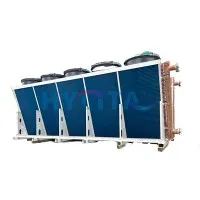
Hey there! I'm a supplier in the economizer recovery business, and let me tell you, implementing economizer recovery in small - scale industries isn't a walk in the park. There are quite a few challenges that these industries face, and I'm going to break them down for you.
Financial Constraints
One of the biggest hurdles for small - scale industries when it comes to economizer recovery is the money issue. Economizer recovery systems, like Exhaust Gas Heat Exchanger, Waste Heat Recovery, and Economizer Tube, require a significant upfront investment. Small - scale industries usually operate on tight budgets. They're constantly trying to keep their costs down to stay competitive in the market.
For them, spending a large sum on an economizer recovery system can seem like a luxury. The cost includes not only the purchase of the equipment but also the installation and commissioning. And let's not forget about the cost of training the staff to operate and maintain these systems. Many small - scale industries are hesitant to take the plunge because they're not sure if they'll be able to recoup their investment in a reasonable amount of time.
The payback period for economizer recovery systems can be a bit of a mystery. It depends on a lot of factors, like the type of industry, the amount of waste heat generated, and the efficiency of the system. Some small - scale industries might be worried that the payback period will be too long, and they can't afford to tie up their capital for that long.
Technical Know - How
Another challenge is the lack of technical knowledge. Small - scale industries often don't have in - house experts who can understand and implement economizer recovery systems. These systems are complex, and they need to be designed and installed correctly to work efficiently.
For example, choosing the right Economizer Tube for a particular application requires knowledge about the heat transfer characteristics, the type of fluid being used, and the operating conditions. If the wrong tube is selected, it can lead to poor performance and even system failure.


Moreover, small - scale industries may not have the resources to conduct detailed energy audits. An energy audit is essential to determine the potential for waste heat recovery and to design an appropriate economizer recovery system. Without a proper audit, it's like shooting in the dark. They might end up investing in a system that doesn't meet their needs or isn't cost - effective.
Space Limitations
Space is often a luxury in small - scale industries. These industries are usually located in small factories or workshops, where every square foot counts. Economizer recovery systems, especially larger ones, can take up a significant amount of space.
The Exhaust Gas Heat Exchanger and Waste Heat Recovery units need to be installed in areas where they can access the waste heat source easily. But finding such a space without disrupting the existing production processes can be quite difficult.
Sometimes, small - scale industries have to modify their existing layout to accommodate the economizer recovery system. This can be time - consuming and costly. And even after the modification, there may still be limitations in terms of the size and capacity of the system that can be installed.
Regulatory and Compliance Issues
Small - scale industries also have to deal with regulatory and compliance issues. Different regions have different rules and regulations regarding energy efficiency and waste heat recovery. These regulations can be quite complex and difficult to understand, especially for small - scale industries that don't have a dedicated legal or compliance department.
For example, there may be requirements regarding the emissions standards of the economizer recovery system, or the safety protocols that need to be followed during installation and operation. Non - compliance can result in fines and legal trouble, which is the last thing a small - scale industry needs.
Keeping up with the changing regulations is also a challenge. As governments become more focused on energy conservation and environmental protection, the regulations are likely to become stricter. Small - scale industries may find it difficult to adapt to these changes quickly.
Maintenance and Upkeep
Once the economizer recovery system is installed, maintenance and upkeep are crucial for its proper functioning. But small - scale industries often struggle with this aspect. They may not have the resources to hire a dedicated maintenance team or to purchase the necessary spare parts.
The Economizer Tube and other components of the system need to be regularly inspected and cleaned to prevent fouling and corrosion. If not properly maintained, the efficiency of the system can drop significantly, and it may even lead to breakdowns.
Moreover, small - scale industries may not have access to timely technical support. In case of a problem, they may have to wait for a long time to get the system repaired, which can disrupt their production processes.
Overcoming the Challenges
Despite these challenges, implementing economizer recovery in small - scale industries is definitely possible. One way to address the financial constraints is through government incentives and subsidies. Many governments around the world are offering financial assistance to encourage small - scale industries to adopt energy - efficient technologies.
To tackle the technical know - how issue, small - scale industries can partner with external experts or consultancies. These experts can conduct energy audits, design the appropriate economizer recovery system, and provide training to the staff.
For space limitations, suppliers can offer compact and modular economizer recovery systems. These systems are designed to take up less space and can be easily integrated into existing production setups.
Regarding regulatory and compliance issues, suppliers can provide guidance and support to help small - scale industries understand and meet the requirements. They can also keep the industries updated on any changes in the regulations.
And for maintenance and upkeep, suppliers can offer maintenance contracts. These contracts can include regular inspections, cleaning, and replacement of spare parts, ensuring that the system operates at its best.
Conclusion
So, as you can see, there are several challenges in implementing economizer recovery in small - scale industries. But with the right approach and support, these challenges can be overcome. The benefits of economizer recovery, such as energy savings, cost reduction, and environmental protection, are well worth the effort.
If you're a small - scale industry looking to implement economizer recovery, don't hesitate to reach out. As a supplier, I have the expertise and the solutions to help you navigate through these challenges and get the most out of your economizer recovery system. Let's start a conversation and see how we can work together to make your industry more energy - efficient.
References
- Energy Management in Small and Medium Enterprises: Challenges and Opportunities. International Energy Agency.
- Waste Heat Recovery Technologies and Applications. American Society of Mechanical Engineers.