


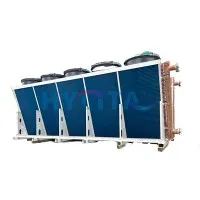
As a trusted cooling coils supplier, I've witnessed firsthand the critical role that coil header designs play in the overall performance and efficiency of cooling systems. In this blog post, I'll delve into the various coil header designs for cooling coils, exploring their features, advantages, and applications.
Understanding Coil Headers
Coil headers are essential components of cooling coils that distribute the refrigerant evenly across the coil tubes. They act as a junction between the refrigerant supply and the individual tubes, ensuring that each tube receives an adequate amount of refrigerant for efficient heat transfer. The design of the coil header can significantly impact the performance, reliability, and maintenance requirements of the cooling coil.


Types of Coil Header Designs
1. Manifold Headers
Manifold headers are one of the most common types of coil header designs. They consist of a single pipe or chamber that distributes the refrigerant to multiple tubes. Manifold headers can be either straight or branched, depending on the layout and requirements of the cooling coil.
- Straight Manifold Headers: Straight manifold headers are simple and cost-effective designs that are suitable for small to medium-sized cooling coils. They feature a single straight pipe with multiple outlets that connect to the individual tubes. Straight manifold headers provide a uniform distribution of refrigerant across the tubes, ensuring efficient heat transfer.
- Branched Manifold Headers: Branched manifold headers are more complex designs that are used in larger cooling coils or applications where a more precise distribution of refrigerant is required. They feature a main pipe with multiple branches that connect to the individual tubes. Branched manifold headers allow for better control of the refrigerant flow, reducing the risk of uneven distribution and improving the overall performance of the cooling coil.
2. Header Tanks
Header tanks are another popular type of coil header design. They consist of a large tank or chamber that stores the refrigerant and distributes it to the individual tubes. Header tanks can be either horizontal or vertical, depending on the layout and requirements of the cooling coil.
- Horizontal Header Tanks: Horizontal header tanks are commonly used in large cooling coils or applications where a large volume of refrigerant needs to be stored. They feature a horizontal tank with multiple outlets that connect to the individual tubes. Horizontal header tanks provide a stable and uniform distribution of refrigerant across the tubes, ensuring efficient heat transfer.
- Vertical Header Tanks: Vertical header tanks are used in applications where space is limited or where a more compact design is required. They feature a vertical tank with multiple outlets that connect to the individual tubes. Vertical header tanks provide a similar distribution of refrigerant as horizontal header tanks but require less floor space.
3. Distributor Tubes
Distributor tubes are a specialized type of coil header design that is used in applications where a precise distribution of refrigerant is required. They consist of a series of small tubes that are connected to the refrigerant supply and distribute the refrigerant to the individual tubes. Distributor tubes are typically used in high-performance cooling coils or applications where the refrigerant needs to be evenly distributed across a large number of tubes.
Advantages of Different Coil Header Designs
1. Manifold Headers
- Simple and Cost-Effective: Manifold headers are relatively simple designs that are easy to manufacture and install. They are also cost-effective, making them a popular choice for small to medium-sized cooling coils.
- Uniform Distribution of Refrigerant: Manifold headers provide a uniform distribution of refrigerant across the tubes, ensuring efficient heat transfer. This helps to improve the overall performance and efficiency of the cooling coil.
- Easy to Maintain: Manifold headers are easy to access and maintain, making them a convenient choice for applications where regular maintenance is required.
2. Header Tanks
- Large Storage Capacity: Header tanks can store a large volume of refrigerant, making them suitable for applications where a large amount of refrigerant needs to be stored. This helps to ensure a continuous supply of refrigerant to the cooling coil, improving its reliability and performance.
- Stable and Uniform Distribution of Refrigerant: Header tanks provide a stable and uniform distribution of refrigerant across the tubes, ensuring efficient heat transfer. This helps to reduce the risk of uneven distribution and improve the overall performance of the cooling coil.
- Flexible Design: Header tanks can be designed to fit a variety of applications and layouts, making them a versatile choice for cooling coils.
3. Distributor Tubes
- Precise Distribution of Refrigerant: Distributor tubes provide a precise distribution of refrigerant across the tubes, ensuring efficient heat transfer. This helps to improve the overall performance and efficiency of the cooling coil, especially in high-performance applications.
- Improved Performance in High-Temperature Applications: Distributor tubes are designed to handle high temperatures and pressures, making them suitable for applications where the cooling coil needs to operate in extreme conditions.
- Reduced Risk of Refrigerant Leakage: Distributor tubes are typically made of high-quality materials and are designed to minimize the risk of refrigerant leakage. This helps to improve the safety and reliability of the cooling coil.
Applications of Different Coil Header Designs
1. Manifold Headers
- HVAC Systems: Manifold headers are commonly used in HVAC systems, such as air conditioners and heat pumps. They are suitable for small to medium-sized systems where a uniform distribution of refrigerant is required.
- Refrigeration Systems: Manifold headers are also used in refrigeration systems, such as commercial refrigerators and freezers. They are suitable for applications where a cost-effective and reliable solution is required.
- Industrial Cooling Systems: Manifold headers can be used in industrial cooling systems, such as process cooling and chillers. They are suitable for applications where a simple and easy-to-maintain design is required.
2. Header Tanks
- Large HVAC Systems: Header tanks are commonly used in large HVAC systems, such as those used in commercial buildings and industrial facilities. They are suitable for applications where a large volume of refrigerant needs to be stored and distributed.
- Power Generation: Header tanks are also used in power generation applications, such as steam turbines and generators. They are suitable for applications where a stable and uniform distribution of refrigerant is required to ensure efficient operation.
- Marine Applications: Header tanks can be used in marine applications, such as shipboard air conditioning and refrigeration systems. They are suitable for applications where a compact and reliable design is required.
3. Distributor Tubes
- High-Performance HVAC Systems: Distributor tubes are commonly used in high-performance HVAC systems, such as those used in data centers and clean rooms. They are suitable for applications where a precise distribution of refrigerant is required to ensure efficient operation.
- Automotive Cooling Systems: Distributor tubes are also used in automotive cooling systems, such as radiators and condensers. They are suitable for applications where a compact and lightweight design is required.
- Aerospace Applications: Distributor tubes can be used in aerospace applications, such as aircraft air conditioning and refrigeration systems. They are suitable for applications where a high level of reliability and performance is required.
Choosing the Right Coil Header Design
When choosing a coil header design for your cooling coil, it's important to consider several factors, including the size and capacity of the cooling coil, the type of refrigerant used, the operating conditions, and the specific requirements of your application. Here are some tips to help you choose the right coil header design:
- Consider the Size and Capacity of the Cooling Coil: The size and capacity of the cooling coil will determine the type and size of the coil header design that is required. For small to medium-sized cooling coils, manifold headers may be a suitable choice, while larger cooling coils may require header tanks or distributor tubes.
- Choose the Right Type of Refrigerant: Different types of refrigerants have different properties and requirements, which can affect the performance and efficiency of the cooling coil. It's important to choose a coil header design that is compatible with the type of refrigerant used in your application.
- Consider the Operating Conditions: The operating conditions of the cooling coil, such as the temperature, pressure, and humidity, can also affect the performance and efficiency of the coil header design. It's important to choose a coil header design that is suitable for the specific operating conditions of your application.
- Consult with a Professional: If you're unsure which coil header design is right for your application, it's always a good idea to consult with a professional cooling coils supplier or engineer. They can help you evaluate your requirements and choose the right coil header design for your specific application.
Conclusion
Coil header designs play a critical role in the performance and efficiency of cooling coils. By understanding the different types of coil header designs, their advantages, and applications, you can choose the right coil header design for your specific application. Whether you're looking for a simple and cost-effective solution or a high-performance design, there is a coil header design that is right for you.
If you're interested in learning more about our cooling coils or coil header designs, please visit our website at Stainless Steel Coil Cooler, Shell and Tube Coil Cooler, or Titanium Coil. Our team of experts is always available to answer your questions and help you choose the right cooling coils for your application. Contact us today to start the procurement negotiation process and take your cooling system to the next level.
References
- ASHRAE Handbook of Refrigeration. American Society of Heating, Refrigerating and Air-Conditioning Engineers.
- Incropera, F. P., & DeWitt, D. P. (2002). Fundamentals of Heat and Mass Transfer. John Wiley & Sons.
- Schmidt, E. (1929). Die Warmeübertragung in Rohren. VDI - Zeitschrift, 73(24), 939 - 944.