


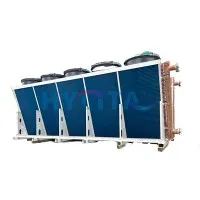
Titanium coil is a remarkable material widely used in various industries, especially in heat exchanger applications. As a supplier of titanium coils, I am often asked about the cold - working properties of this material. In this blog, I will delve into the details of the cold - working properties of titanium coil, exploring its advantages, challenges, and applications.
Cold - Working Basics
Cold working refers to the process of deforming a metal at temperatures below its recrystallization temperature. For titanium, this typically means working the metal at room temperature or slightly elevated temperatures. During cold working, the metal's internal structure is altered, which can lead to changes in its mechanical properties such as strength, hardness, and ductility.
One of the primary benefits of cold working titanium coil is the increase in strength. When a titanium coil is cold - worked, dislocations within the metal's crystal structure are generated and interact with each other. These interactions impede the movement of additional dislocations, making it more difficult for the metal to deform further. As a result, the yield strength and ultimate tensile strength of the titanium coil increase.
Advantages of Cold - Working Titanium Coil
High Strength
As mentioned earlier, cold working significantly enhances the strength of titanium coil. This high - strength characteristic makes it suitable for applications where the material needs to withstand high pressures and stresses. For example, in heat exchanger applications, titanium coils can be used in Shell and Tube Coil Cooler, where they are exposed to high - pressure fluids. The increased strength allows the coils to maintain their structural integrity under these harsh conditions, reducing the risk of failure.
Improved Surface Finish
Cold working also improves the surface finish of titanium coil. During the cold - working process, the surface of the coil becomes smoother and more uniform. This smooth surface finish is beneficial in many applications, especially those where cleanliness and low friction are required. In heat exchangers, a smooth surface reduces the resistance to fluid flow, improving the overall efficiency of the system. Additionally, a smooth surface is less likely to accumulate contaminants, which can improve the longevity of the coil.
Dimensional Accuracy
Cold working allows for precise control of the dimensions of the titanium coil. By carefully controlling the amount of deformation during the cold - working process, we can achieve tight tolerances in the coil's diameter, thickness, and length. This dimensional accuracy is crucial in applications where the coil needs to fit precisely into a specific space or interact with other components. For instance, in Stainless Steel Coil Cooler systems, the titanium coil must have accurate dimensions to ensure proper heat transfer and compatibility with the rest of the system.
Challenges in Cold - Working Titanium Coil
Limited Ductility
One of the main challenges in cold - working titanium coil is its limited ductility. As the titanium coil is cold - worked, its ductility decreases due to the increased dislocation density and work hardening. This means that the coil becomes more brittle and is more likely to crack or fracture during further deformation. To overcome this challenge, intermediate annealing steps may be required during the cold - working process. Annealing is a heat - treatment process that restores the ductility of the titanium coil by allowing the dislocations to rearrange and reduce the internal stresses.
Springback
Another challenge is springback, which is the tendency of the titanium coil to return to its original shape after being cold - worked. Springback occurs because the internal stresses generated during cold working are not completely relieved when the deforming force is removed. To compensate for springback, the cold - working process must be carefully designed to over - deform the coil slightly so that it springs back to the desired shape. This requires a high level of expertise and experience in cold - working titanium materials.
Applications of Cold - Worked Titanium Coil
Heat Exchangers
Cold - worked titanium coil is widely used in heat exchanger applications. Its high strength, good corrosion resistance, and excellent heat transfer properties make it an ideal material for Titanium Coil heat exchangers. In chemical processing plants, for example, titanium coils can be used to transfer heat between corrosive fluids without being damaged by the chemicals. The cold - worked titanium coil can withstand the high pressures and temperatures associated with these processes, ensuring reliable and efficient heat transfer.
Aerospace Industry
The aerospace industry also benefits from the cold - working properties of titanium coil. Titanium is known for its high strength - to - weight ratio, which is essential in aerospace applications where weight reduction is crucial. Cold - worked titanium coils can be used in aircraft hydraulic systems, where they need to withstand high pressures and vibrations. The improved strength and dimensional accuracy of cold - worked titanium coils make them suitable for these demanding applications.
Marine Applications
In marine applications, cold - worked titanium coil is highly valued for its corrosion resistance. The harsh marine environment, with its high salt content and humidity, can cause significant corrosion to many metals. Titanium, however, forms a passive oxide layer on its surface that protects it from corrosion. Cold - worked titanium coils can be used in shipboard heat exchangers, desalination plants, and other marine equipment, providing long - lasting performance in corrosive seawater.
Conclusion
The cold - working properties of titanium coil offer numerous advantages, including high strength, improved surface finish, and dimensional accuracy. However, there are also challenges such as limited ductility and springback that need to be addressed during the cold - working process. Despite these challenges, cold - worked titanium coil finds wide applications in heat exchangers, aerospace, and marine industries.
If you are interested in purchasing high - quality titanium coils with excellent cold - working properties, we are here to provide you with the best solutions. Our team of experts has extensive experience in cold - working titanium materials and can ensure that the coils meet your specific requirements. Contact us to start a procurement negotiation and discover how our titanium coils can enhance your applications.


References
- ASM Handbook Volume 8: Mechanical Testing and Evaluation, ASM International
- Titanium: A Technical Guide, Second Edition, John R. Cunningham