


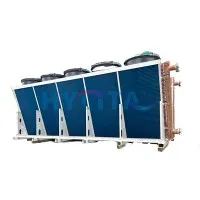
Cost - effectiveness analysis is a crucial process for businesses, especially when it comes to economizer tubes. As an economizer tube supplier, I understand the importance of helping customers make informed decisions based on the cost - effectiveness of these products. In this blog, I will explore various cost - effectiveness analysis methods for economizer tubes.
1. Life - Cycle Cost Analysis (LCCA)
Life - cycle cost analysis is a comprehensive approach that takes into account all costs associated with an economizer tube over its entire life span. This includes the initial purchase cost, installation cost, operating cost, maintenance cost, and end - of - life disposal cost.
Initial Purchase Cost
The initial purchase cost is the upfront expense of buying the economizer tubes. Different types of economizer tubes, such as those made of carbon steel, stainless steel, or other alloys, have different price points. For example, stainless steel economizer tubes are generally more expensive than carbon steel ones due to their better corrosion resistance and durability. However, the higher initial cost may be offset by lower long - term costs.
Installation Cost
Installation cost includes labor, equipment, and any additional materials required to install the economizer tubes. The complexity of the installation process can vary depending on the design of the heat exchanger system. For instance, if the economizer tubes need to be integrated into an existing complex industrial setup, the installation cost may be relatively high.
Operating Cost
Operating cost is mainly related to energy consumption. Economizer tubes are designed to recover waste heat from exhaust gases, which can significantly reduce the energy required to heat water or generate steam. The efficiency of the economizer tubes in heat recovery directly affects the operating cost. A more efficient economizer tube will recover more heat, resulting in lower energy bills. For example, an Exhaust Gas Heat Exchanger with high - performance economizer tubes can achieve better heat transfer and thus reduce the overall operating cost.
Maintenance Cost
Maintenance cost includes regular inspections, cleaning, and replacement of parts. Some economizer tubes may be more prone to fouling or corrosion, which requires more frequent maintenance. For example, in a high - sulfur environment, carbon steel economizer tubes may corrode faster, leading to higher maintenance costs. On the other hand, SS Economiser Heat Exchanger made of stainless steel may have lower maintenance requirements due to its corrosion - resistant properties.
End - of - Life Disposal Cost
At the end of their useful life, economizer tubes need to be disposed of properly. The disposal cost depends on the type of material and local environmental regulations. For example, some materials may require special handling or recycling processes, which can add to the overall cost.
By considering all these costs in a life - cycle cost analysis, customers can get a more accurate picture of the total cost of owning and operating economizer tubes.


2. Payback Period Analysis
The payback period is the time it takes for the savings generated by the economizer tubes to equal the initial investment. This method is relatively simple and easy to understand.
The formula for calculating the payback period is:
Payback Period = Initial Investment / Annual Savings
The initial investment includes the purchase and installation cost of the economizer tubes. The annual savings are mainly from the reduction in energy consumption. For example, if a set of economizer tubes costs $10,000 to purchase and install, and it saves $2,000 per year in energy costs, the payback period is 5 years ($10,000 / $2,000).
A shorter payback period indicates a more cost - effective investment. However, this method has some limitations. It does not consider the time value of money and the cash flows beyond the payback period.
3. Net Present Value (NPV) Analysis
Net present value analysis takes into account the time value of money. It calculates the present value of all future cash flows (savings) generated by the economizer tubes and subtracts the initial investment.
The formula for calculating NPV is:
[NPV=\sum_{t = 1}^{n}\frac{CF_t}{(1 + r)^t}-I]
where (CF_t) is the cash flow (savings) in year (t), (r) is the discount rate, (n) is the number of years, and (I) is the initial investment.
The discount rate represents the opportunity cost of capital. A positive NPV indicates that the investment in economizer tubes is profitable, while a negative NPV means the investment may not be worthwhile. For example, if the initial investment in economizer tubes is $20,000, and the present value of all future savings is $25,000, the NPV is $5,000 ($25,000 - $20,000), suggesting that the investment is a good one.
4. Benefit - Cost Ratio (BCR) Analysis
The benefit - cost ratio is calculated by dividing the present value of all benefits (savings) by the present value of all costs.
The formula for BCR is:
[BCR=\frac{\sum_{t = 1}^{n}\frac{CF_t}{(1 + r)^t}}{I}]
A BCR greater than 1 indicates that the benefits outweigh the costs, and the investment in economizer tubes is cost - effective. For example, if the present value of benefits is $30,000 and the present value of costs is $20,000, the BCR is 1.5 ($30,000 / $20,000), which means that for every dollar invested, there is a return of $1.5.
5. Sensitivity Analysis
Sensitivity analysis is used to assess how changes in key variables, such as energy prices, maintenance costs, and discount rates, affect the cost - effectiveness of economizer tubes.
For example, if energy prices increase, the savings from using economizer tubes will also increase, which will improve the payback period, NPV, and BCR. On the other hand, if the maintenance cost is higher than expected, it may reduce the overall cost - effectiveness of the investment.
By conducting sensitivity analysis, customers can understand the risks associated with the investment in economizer tubes and make more informed decisions.
Importance of Cost - Effectiveness Analysis for Economizer Tubes
Cost - effectiveness analysis is essential for several reasons. Firstly, it helps customers choose the most suitable economizer tubes for their specific needs. Different industries and applications have different requirements in terms of heat recovery efficiency, durability, and cost. By using these analysis methods, customers can compare different options and select the one that offers the best balance between cost and performance.
Secondly, it allows businesses to justify the investment in economizer tubes. In many cases, companies need to obtain approval from management or investors before making a significant investment. A well - conducted cost - effectiveness analysis can provide solid evidence to support the investment decision.
Finally, cost - effectiveness analysis promotes energy efficiency and sustainable development. By using economizer tubes to recover waste heat, businesses can reduce their energy consumption and carbon emissions. This not only benefits the environment but also helps companies comply with environmental regulations.
As an economizer tube supplier, I am committed to helping my customers make the most cost - effective decisions. I can provide detailed information about the cost and performance of different types of economizer tubes and assist in conducting cost - effectiveness analysis. If you are interested in Waste Heat Recovery solutions using economizer tubes or have any questions about cost - effectiveness analysis, please feel free to contact me for further discussion and procurement negotiation.
References
- Thumann, R. (2019). Heat Exchanger Design Handbook. McGraw - Hill.
- ASHRAE Handbook - HVAC Systems and Equipment. American Society of Heating, Refrigerating and Air - Conditioning Engineers.