


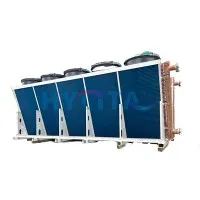
In the realm of industrial heat transfer systems, economizer tubes play a pivotal role in enhancing energy efficiency and reducing operational costs. As a trusted supplier of economizer tubes, I've witnessed firsthand the significance of understanding how various factors, particularly tube surface roughness, can impact heat transfer performance. In this blog, I'll delve into the effects of tube surface roughness on heat transfer in economizer tubes, shedding light on its implications for industrial applications.
Understanding Heat Transfer in Economizer Tubes
Before we explore the influence of tube surface roughness, it's essential to grasp the fundamentals of heat transfer in economizer tubes. Economizers are heat exchangers designed to recover waste heat from exhaust gases and transfer it to a working fluid, typically water or steam. This process pre - heats the fluid before it enters the boiler, thereby reducing the energy required to generate steam and improving overall system efficiency.


The heat transfer in economizer tubes occurs through three primary mechanisms: conduction, convection, and radiation. Conduction involves the transfer of heat through the tube wall, convection is the transfer of heat between the fluid and the tube surface, and radiation accounts for the transfer of heat through electromagnetic waves. The efficiency of these processes is affected by several factors, including fluid properties, flow velocity, tube material, and surface characteristics.
The Role of Tube Surface Roughness
Tube surface roughness refers to the irregularities present on the inner and outer surfaces of the economizer tubes. These irregularities can range from microscopic asperities to macroscopic bumps and grooves, and they can have a profound impact on heat transfer performance.
Enhanced Turbulence and Convective Heat Transfer
One of the most significant effects of tube surface roughness is the promotion of turbulence in the fluid flow. When a fluid flows over a rough surface, the irregularities disrupt the smooth laminar flow, causing the fluid to mix more vigorously. This increased turbulence enhances the convective heat transfer coefficient, which is a measure of the rate of heat transfer between the fluid and the tube surface.
In laminar flow, the fluid near the tube surface forms a thin boundary layer where heat transfer is primarily by conduction. However, in turbulent flow, the mixing action breaks up this boundary layer, allowing for more efficient heat transfer. As a result, the rough - surfaced tubes can achieve higher convective heat transfer rates compared to smooth - surfaced tubes under the same operating conditions.
Increased Surface Area for Heat Transfer
Another advantage of tube surface roughness is the increase in the effective surface area available for heat transfer. The irregularities on the tube surface create additional nooks and crannies, effectively increasing the contact area between the fluid and the tube. This larger surface area provides more opportunities for heat to be transferred from the fluid to the tube wall, thereby improving the overall heat transfer efficiency.
Fouling and Deposition
While tube surface roughness can enhance heat transfer, it can also have some negative effects. Rough surfaces are more prone to fouling and deposition, which occur when impurities in the fluid accumulate on the tube surface. These deposits can act as an insulating layer, reducing the heat transfer coefficient and increasing the thermal resistance of the tube.
Fouling can also cause blockages in the tubes, leading to reduced flow rates and increased pressure drops. Over time, fouling can significantly degrade the performance of the economizer and increase maintenance costs. Therefore, it's crucial to carefully balance the benefits of enhanced heat transfer with the potential risks of fouling when considering tube surface roughness.
Impact on Industrial Applications
The effects of tube surface roughness on heat transfer in economizer tubes have significant implications for various industrial applications.
Power Generation
In power plants, economizers are used to recover waste heat from the flue gases of boilers. By improving the heat transfer efficiency of economizer tubes, power plants can reduce their fuel consumption and greenhouse gas emissions. Rough - surfaced tubes can help achieve these goals by enhancing the convective heat transfer and increasing the overall heat recovery rate.
However, in power generation applications, fouling can be a major concern due to the presence of ash, sulfur compounds, and other impurities in the flue gases. Therefore, power plant operators need to implement effective fouling mitigation strategies, such as regular cleaning and the use of anti - fouling coatings, when using rough - surfaced economizer tubes.
Chemical and Petrochemical Industries
In the chemical and petrochemical industries, economizers are used to recover heat from process streams and reduce energy consumption. The enhanced heat transfer provided by rough - surfaced tubes can lead to significant cost savings by reducing the amount of energy required to heat or cool the process fluids.
Similar to power generation, fouling can also be a problem in these industries, especially when dealing with corrosive or viscous fluids. Proper material selection and surface treatment are essential to minimize fouling and ensure the long - term performance of the economizer tubes.
Our Offerings as an Economizer Tube Supplier
As an experienced economizer tube supplier, we understand the importance of tube surface roughness in heat transfer applications. We offer a wide range of economizer tubes with different surface roughness characteristics to meet the specific needs of our customers.
Our tubes are manufactured using high - quality materials, such as stainless steel and carbon steel, to ensure excellent corrosion resistance and mechanical properties. We also provide custom - made solutions, allowing our customers to choose the optimal surface roughness for their applications.
In addition to supplying high - quality tubes, we also offer technical support and advice on heat transfer optimization. Our team of experts can help you select the right tube surface roughness, design the most efficient economizer system, and implement effective fouling mitigation strategies.
Conclusion
Tube surface roughness has a significant impact on heat transfer in economizer tubes. While it can enhance convective heat transfer and increase the surface area for heat transfer, it can also lead to fouling and deposition problems. Therefore, it's crucial to carefully consider the trade - offs between the benefits and drawbacks of tube surface roughness when designing and operating economizer systems.
As an economizer tube supplier, we are committed to providing our customers with the highest quality products and services. Whether you're looking to improve the energy efficiency of your power plant, chemical process, or any other industrial application, we can help you find the right economizer tubes with the optimal surface roughness. If you're interested in learning more about our products or discussing your specific requirements, please don't hesitate to contact us for a procurement discussion. We look forward to working with you to achieve your heat transfer goals.
References
- Incropera, F. P., & DeWitt, D. P. (2002). Fundamentals of Heat and Mass Transfer. John Wiley & Sons.
- Kakac, S., & Liu, H. (2002). Heat Exchangers: Selection, Rating, and Thermal Design. CRC Press.
- Shah, R. K., & Sekulic, D. P. (2003). Fundamentals of Heat Exchanger Design. John Wiley & Sons.