


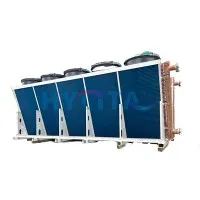
Scale formation in an economizer of a boiler is a common yet critical issue that can significantly impact the performance, efficiency, and longevity of the entire boiler system. As a leading supplier of economizers for boilers, we have witnessed firsthand the diverse effects of scale formation and understand the importance of addressing this problem promptly.
Impact on Heat Transfer Efficiency
One of the most immediate and noticeable effects of scale formation in an economizer is the reduction in heat transfer efficiency. The economizer plays a crucial role in pre - heating the feedwater using the waste heat from the flue gases. When scale builds up on the heat transfer surfaces of the economizer tubes, it acts as an insulating layer. This layer has a much lower thermal conductivity compared to the metal of the tubes themselves.
For example, a thin layer of scale, say calcium carbonate scale, can reduce the heat transfer coefficient by a significant amount. This means that less heat is transferred from the hot flue gases to the feedwater. As a result, the feedwater may not reach the desired pre - heating temperature. To compensate for this loss in heat transfer, the boiler has to burn more fuel to generate the same amount of steam. This leads to an increase in fuel consumption and operating costs. According to industry studies, a 1 - millimeter thick layer of scale can increase fuel consumption by up to 5 - 8%.
The reduction in heat transfer efficiency also affects the overall performance of the boiler. The boiler may not be able to produce steam at the required rate or pressure, which can disrupt industrial processes that rely on a consistent supply of steam. In some cases, it can even lead to production downtime, causing significant financial losses for the end - users.
Corrosion and Material Degradation
Scale formation can also accelerate corrosion and material degradation in the economizer. The scale layer can create a localized environment that is conducive to corrosion. For instance, the scale can trap moisture and chemicals, creating a corrosive micro - environment. In the presence of oxygen and certain impurities in the water, this can lead to the formation of rust and other corrosion products on the surface of the economizer tubes.
The corrosion process weakens the structural integrity of the tubes. Over time, the tubes may develop cracks or holes, which can result in leaks. A leak in the economizer can be extremely dangerous as it can lead to the loss of feedwater and the potential for a boiler explosion. Moreover, the replacement of corroded tubes is a costly and time - consuming process, further adding to the maintenance and operating costs of the boiler system.
Pressure Drop and Flow Restriction
Another significant effect of scale formation is the increase in pressure drop across the economizer. As scale accumulates on the inner surfaces of the tubes, it reduces the cross - sectional area available for the flow of feedwater. This causes an increase in the flow resistance, resulting in a higher pressure drop.
A higher pressure drop means that the feedwater pump has to work harder to maintain the required flow rate. This not only increases the energy consumption of the pump but also puts additional stress on the pump components, leading to a higher risk of pump failure. In addition, the flow restriction can cause uneven flow distribution within the economizer, which can further reduce the heat transfer efficiency. Some tubes may receive less flow, leading to overheating and potential damage to those tubes.


Impact on System Reliability and Maintenance
Scale formation in the economizer can have a profound impact on the reliability and maintenance requirements of the boiler system. As mentioned earlier, the reduction in heat transfer efficiency, corrosion, and pressure drop can all lead to system failures. These failures can cause unplanned shutdowns, which are costly for industrial operations.
To prevent these issues, regular maintenance and cleaning of the economizer are required. However, cleaning the scale from the tubes is a complex and labor - intensive process. It may involve chemical cleaning, mechanical cleaning, or a combination of both. Chemical cleaning agents need to be carefully selected to avoid damaging the tubes. Mechanical cleaning methods, such as using brushes or high - pressure water jets, can also be time - consuming and may not be effective in removing stubborn scale.
Our Solutions as an Economizer Supplier
As a supplier of economizers for boilers, we offer a range of solutions to mitigate the effects of scale formation. Our Carbon Steel Economiser is designed with high - quality materials that are more resistant to scale formation and corrosion. The smooth inner surfaces of our economizer tubes reduce the likelihood of scale adhesion.
We also provide Heat Exhaust Recovery systems that are optimized for efficient heat transfer. These systems are equipped with advanced monitoring and control features to detect early signs of scale formation and take preventive measures.
In addition, our Economiser Heat Exchanger is designed for easy maintenance. The modular design allows for quick and efficient cleaning of the tubes, reducing the downtime associated with maintenance.
Conclusion
Scale formation in an economizer of a boiler has far - reaching effects on the performance, efficiency, reliability, and maintenance of the boiler system. It can lead to increased fuel consumption, corrosion, pressure drop, and system failures. However, with the right solutions and preventive measures, these effects can be minimized.
As a trusted supplier of economizers for boilers, we are committed to providing high - quality products and services to our customers. If you are facing issues with scale formation in your economizer or are looking for a reliable economizer solution, we invite you to contact us for a detailed discussion. Our team of experts will work with you to understand your specific requirements and provide the best possible solution.
References
- Smith, J. (2018). "The Impact of Scale Formation on Boiler Efficiency". Journal of Boiler Technology, 25(3), 45 - 52.
- Johnson, A. (2019). "Corrosion Prevention in Economizers". International Journal of Boiler Maintenance, 12(2), 67 - 74.
- Brown, C. (2020). "Pressure Drop Analysis in Scaled Economizers". Proceedings of the Boiler Engineering Conference, 32 - 38.