


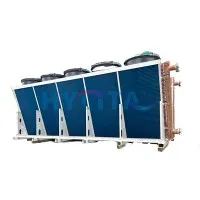
Hey there! As a supplier of economisers in boilers, I've seen firsthand how crucial water quality is for these systems. In this blog, I'll break down the requirements for water quality in an economiser and why they matter.
Why Water Quality Matters in an Economiser
Let's start with the basics. An economiser is a heat exchanger that recovers heat from the flue gas of a boiler and transfers it to the feedwater. This process helps to improve the overall efficiency of the boiler by pre - heating the water before it enters the boiler. But for the economiser to work effectively, the water flowing through it needs to meet certain standards.


Poor water quality can lead to a bunch of problems. For instance, scale formation is a major issue. When water contains high levels of dissolved minerals like calcium and magnesium, these minerals can precipitate out of the water as it is heated. This forms a hard, crusty layer on the inside of the economiser tubes. Scale acts as an insulator, reducing the heat transfer efficiency of the economiser. As a result, the boiler has to work harder to achieve the desired temperature, which increases fuel consumption and operating costs.
Corrosion is another significant concern. If the water is too acidic or contains high levels of oxygen, it can corrode the metal surfaces of the economiser. Corrosion weakens the tubes, leading to leaks and potential system failures. This not only disrupts the operation of the boiler but also requires costly repairs and replacements.
Key Water Quality Parameters
1. Total Dissolved Solids (TDS)
TDS refers to the amount of inorganic and organic substances dissolved in the water. In an economiser, high TDS levels can contribute to scale formation. The recommended TDS level for economiser feedwater typically ranges from 100 to 500 ppm (parts per million). To keep TDS in check, water treatment methods such as reverse osmosis or ion exchange can be used. These processes remove dissolved solids from the water, ensuring that the water entering the economiser is relatively pure.
2. pH Level
The pH level of the water indicates its acidity or alkalinity. A pH of 7 is considered neutral, values below 7 are acidic, and values above 7 are alkaline. For an economiser, the ideal pH range is between 8.5 and 9.5. Water with a pH within this range helps to prevent corrosion. If the pH is too low, the water is acidic and can corrode the metal. On the other hand, if the pH is too high, it can lead to the formation of alkaline scale. Chemical additives can be used to adjust the pH of the water and maintain it within the appropriate range.
3. Hardness
Hardness is mainly caused by the presence of calcium and magnesium ions in the water. High - hardness water is more likely to form scale. The hardness of the feedwater for an economiser should be kept as low as possible, preferably below 10 ppm. Water softening techniques, such as using a water softener that exchanges calcium and magnesium ions for sodium ions, can effectively reduce water hardness.
4. Oxygen Content
Oxygen in water can cause corrosion in the economiser. Dissolved oxygen reacts with the metal surfaces, leading to the formation of rust. To prevent this, the oxygen content in the feedwater should be minimized. Deaeration is a common method used to remove oxygen from the water. A deaerator heats the water and allows the oxygen to escape as a gas. Additionally, chemical oxygen scavengers can be added to the water to react with any remaining oxygen and prevent corrosion.
5. Iron and Copper Content
Iron and copper can also contribute to corrosion and fouling in the economiser. High levels of these metals can form deposits on the tube surfaces, reducing heat transfer efficiency. The iron content should be less than 0.1 ppm, and the copper content should be less than 0.05 ppm. Water treatment processes can be used to remove these metals from the water before it enters the economiser.
Water Treatment Solutions
To meet the water quality requirements for an economiser, various water treatment solutions are available. One of the most common methods is pre - treatment of the raw water. This can involve filtration to remove suspended solids, followed by softening to reduce hardness. Reverse osmosis is another effective pre - treatment method that can remove a wide range of dissolved solids, including salts, metals, and organic compounds.
Chemical treatment is also essential. Chemical additives such as pH adjusters, scale inhibitors, and oxygen scavengers are used to maintain the water quality within the desired parameters. These chemicals are carefully dosed based on the water analysis results to ensure optimal performance.
Regular monitoring of the water quality is crucial. Water samples should be taken at regular intervals and analyzed for TDS, pH, hardness, oxygen content, and other parameters. Based on the analysis, adjustments can be made to the water treatment processes and chemical dosing.
Our Role as an Economiser Supplier
As a supplier of economisers in boilers, we understand the importance of water quality for the performance and longevity of our products. We work closely with our customers to provide them with the necessary information and support regarding water quality requirements.
We offer high - quality economisers, such as the Carbon Steel Economiser, which are designed to withstand the rigors of different water conditions. Our economisers are equipped with advanced heat transfer technology, like the Economiser Heat Exchanger, to ensure efficient heat recovery even in less - than - ideal water quality situations.
We also provide guidance on water treatment solutions. Our team of experts can help customers design a water treatment plan that meets the specific requirements of their boiler and economiser system. We believe that by working together with our customers to maintain proper water quality, we can maximize the Heat Energy Recovery of their boilers and reduce operating costs.
Contact Us for Your Economiser Needs
If you're in the market for an economiser for your boiler or need advice on water quality management, don't hesitate to reach out. We're here to help you make the best choice for your system. Whether you're looking to improve the efficiency of your existing boiler or install a new one, our team has the expertise and products to meet your needs.
References
- Boiler Operator's Handbook, various editions
- Water Treatment for Industrial Boilers, industry - specific publications
- Technical papers on heat exchangers and economisers in boiler systems