


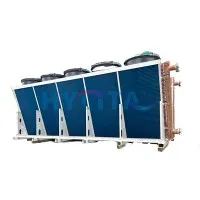
Hey there! As an Economizer Tube supplier, I've seen firsthand the importance of tube orientation in heat transfer within economizer tubes. Let's dig into what effects tube orientation actually has and why it matters in the grand scheme of things.
The Basics of Economizer Tubes
First off, let's quickly run through what economizer tubes are. Economizer tubes, like the ones you can check out here, are a key part of waste heat recovery systems. They're designed to capture and use heat from hot gases, like exhaust gases, that would otherwise go to waste. This is a crucial step in making industrial processes more energy - efficient and cost - effective.
In an Exhaust Gas Heat Exchanger, economizer tubes play a central role. The hot exhaust gases flow past these tubes, and the heat is transferred from the gases to a fluid inside the tubes, usually water or a heat transfer fluid. This heated fluid can then be used for other processes, like pre - heating boiler feedwater or generating steam.
How Tube Orientation Affects Heat Transfer
Horizontal Tube Orientation
When economizer tubes are placed horizontally, there are some distinct characteristics in terms of heat transfer. One of the biggest advantages of horizontal tube orientation is that it allows for a more uniform distribution of the fluid inside the tube. The fluid can flow smoothly along the tube, and the heating process is relatively even.
In a horizontal setup, the hot gases flowing over the tubes create a thin boundary layer on the tube surface. This boundary layer affects how well heat is transferred. If the flow of the hot gases is laminar, the heat transfer rate can be limited because the laminar boundary layer acts as an insulator. However, in most industrial applications, the gas flow is often turbulent, which helps to break up the boundary layer and increase the heat transfer rate.
Another aspect to consider with horizontal tubes is the issue of condensate drainage. In some cases, when the exhaust gases contain water vapor, condensation can occur on the tube surface as the gases cool down. Horizontal tubes are generally better at draining this condensate, which helps prevent corrosion and maintains the overall efficiency of the heat transfer process.
Vertical Tube Orientation
Vertical tube orientation has its own set of pros and cons when it comes to heat transfer. One of the main benefits of vertical tubes is that they can take advantage of natural convection. As the fluid inside the tube heats up, it becomes less dense and rises, creating a natural circulation pattern. This natural circulation can enhance the heat transfer rate, especially in systems where the fluid flow rate is relatively low.
However, vertical tubes also face some challenges. For example, the distribution of the fluid inside the tube can be less uniform compared to horizontal tubes. If the tube diameter is too large or the fluid velocity is too low, there can be a risk of uneven heating and the formation of hot spots. These hot spots can lead to material degradation and a decrease in the overall lifespan of the tubes.
In terms of gas flow, vertical tubes can experience different flow patterns compared to horizontal tubes. The upward or downward flow of the hot gases can create complex flow dynamics around the tubes, which can either enhance or hinder heat transfer depending on the specific conditions.
Impact on Overall System Performance
The choice of tube orientation can have a significant impact on the overall performance of a Waste Heat Recovery system. If the tube orientation isn't optimized for the specific operating conditions, the system may not be able to achieve its maximum heat recovery potential.
For instance, if a system requires a high heat transfer rate and the tube orientation is not conducive to efficient heat transfer, the temperature difference between the hot gases and the fluid inside the tubes may not be fully utilized. This can result in wasted energy and higher operating costs.
On the other hand, a well - chosen tube orientation can lead to increased system efficiency, reduced energy consumption, and lower maintenance requirements. By understanding the effects of tube orientation on heat transfer, engineers and operators can design and operate waste heat recovery systems more effectively.


Factors to Consider When Choosing Tube Orientation
When deciding on the tube orientation for an economizer tube system, several factors need to be taken into account.
Gas Flow Characteristics
The velocity, temperature, and composition of the hot gases are crucial. If the gas flow is highly turbulent, horizontal tubes may be a better choice as they can handle the turbulent flow more effectively. If the gas flow is relatively slow, vertical tubes may be able to take advantage of natural convection to enhance heat transfer.
Fluid Properties
The type of fluid inside the tubes, its viscosity, and its specific heat capacity also play a role. For fluids with high viscosity, horizontal tubes may provide a more consistent flow, while for fluids that are prone to vaporization, vertical tubes may be better at handling the two - phase flow.
Space Constraints
In some industrial settings, space may be limited. Horizontal tubes may require more floor space, while vertical tubes can be stacked vertically, which can save valuable floor area.
Conclusion
In conclusion, tube orientation has a huge impact on heat transfer in economizer tubes. Whether you choose horizontal or vertical tubes depends on a variety of factors, including gas flow characteristics, fluid properties, and space constraints. As an Economizer Tube supplier, I understand the importance of making the right choice to ensure optimal system performance.
If you're in the market for high - quality economizer tubes or have questions about how tube orientation can affect your waste heat recovery system, don't hesitate to reach out. We're here to help you make the best decisions for your specific needs and get the most out of your energy - saving investments.
References
Smith, J. (2019). Heat Transfer in Industrial Heat Exchangers. London: Industrial Press.
Brown, M. (2021). Optimizing Waste Heat Recovery Systems. New York: Energy Solutions Publishing.