


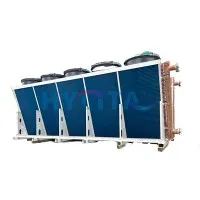
As a reliable provider of Titanium Coil, I understand the significance of ensuring product quality through comprehensive inspections. This blog post aims to explore the various inspection items for Titanium Coil, which are crucial not only for maintaining our high - end product standards but also for meeting the diverse needs of our customers.
1. Appearance Inspection
The first step in the inspection process of Titanium Coil is a thorough appearance check. This includes examining the coil's surface for any visible defects such as scratches, dents, pits, or cracks. Even minor scratches can potentially affect the coil's corrosion resistance in some harsh environments. For example, in chemical processing industries where the Titanium Coil is exposed to corrosive substances, a scratch can act as a initiation point for corrosion, reducing the coil's lifespan significantly.
We also look at the overall uniformity of the surface finish. A consistent surface finish indicates a well - controlled manufacturing process. Uneven or rough surfaces may lead to issues in heat transfer efficiency, as they can cause turbulence in the fluid flow within the coil. During the appearance inspection, we also measure the coil's dimensions, including its outer diameter, inner diameter, and length. Any deviation from the specified dimensions can lead to assembly problems, especially when the Titanium Coil needs to be integrated with other components in a Shell and Tube Coil Cooler or other heat exchanger systems.
2. Material Composition Analysis
The chemical composition of Titanium Coil is of paramount importance. Titanium alloys are carefully designed to have specific properties, such as high strength, excellent corrosion resistance, and good heat transfer characteristics. We use advanced analytical techniques like X - ray fluorescence (XRF) and optical emission spectrometry (OES) to determine the exact composition of the Titanium Coil.
These methods can precisely measure the percentages of different elements in the titanium alloy, including titanium itself and other alloying elements like aluminum, vanadium, or molybdenum. Deviations in the elemental composition can significantly affect the coil's performance. For instance, if the content of aluminum in a titanium - aluminum alloy coil is lower than the specified range, the coil may have reduced strength. On the other hand, excessive amounts of impurities such as iron or silicon can degrade the corrosion resistance of the Titanium Coil, which is a critical property, especially in applications where the coil comes into contact with seawater or other corrosive fluids.


3. Mechanical Property Testing
Mechanical property testing is another vital inspection item for Titanium Coil. This includes tests for tensile strength, yield strength, and elongation. Tensile strength measures the maximum stress that the coil can withstand before failure under tension. Yield strength, on the other hand, indicates the stress at which the coil begins to deform plastically.
To conduct these tests, we take samples from the Titanium Coil according to relevant standards. These samples are then subjected to a pulling force using a universal testing machine. The results of these tests ensure that the coil can handle the mechanical stresses it may encounter during installation, operation, and transportation. For example, in a high - pressure heat exchanger system, a Titanium Coil with insufficient tensile strength may burst or leak, leading to system failure and potential safety hazards.
Elongation testing also provides valuable information about the coil's ductility. Ductility is important as it allows the coil to be bent and formed into different shapes during manufacturing or installation processes without cracking. A Titanium Coil with poor ductility may break during bending operations, resulting in production delays and additional costs.
4. Non - destructive Testing
Non - destructive testing (NDT) methods play a crucial role in inspecting Titanium Coil. Ultrasonic testing (UT) is commonly used to detect internal defects such as porosity, inclusions, or internal cracks. UT works by sending high - frequency sound waves into the coil material. When these waves encounter a defect, they reflect back in a characteristic pattern, which can be detected and analyzed by a trained operator.
Another important NDT method is radiographic testing (RT), which uses X - rays or gamma rays to create an image of the internal structure of the Titanium Coil. RT can detect hidden defects that may not be visible on the surface or detectable by other methods. For example, in a complex - shaped Titanium Coil used in a Titanium Coil - based heat exchanger, RT can reveal internal voids or improper welds that could compromise the coil's performance.
Magnetic particle testing (MT) can also be used for Titanium Coils that have ferromagnetic inclusions or surface - breaking defects. These inclusions can cause magnetic field disturbances, which can be detected by applying magnetic particles to the surface. This method is particularly useful for detecting surface cracks that may be difficult to spot during a visual inspection.
5. Corrosion Resistance Testing
Since one of the primary advantages of Titanium Coil is its excellent corrosion resistance, this property must be thoroughly tested. There are several testing methods available, including immersion tests and electrochemical tests.
In immersion tests, samples of the Titanium Coil are immersed in a specific corrosive medium for a predetermined period. The medium can be chosen based on the intended application of the coil. For example, if the coil is to be used in a marine environment, the sample may be immersed in a saltwater solution. After the immersion period, the samples are examined for signs of corrosion, such as pitting, crevice corrosion, or general surface corrosion. The weight loss of the sample can also be measured to quantify the corrosion rate.
Electrochemical tests, such as potentiodynamic polarization, can provide more detailed information about the coil's corrosion behavior. These tests measure the electrical potential and current of the coil in a corrosive environment. By analyzing the data obtained from these tests, we can determine the coil's corrosion potential, the passivation range, and the susceptibility to various forms of corrosion. This information is crucial for ensuring that the Titanium Coil can withstand the corrosive conditions in its intended application.
6. Heat Transfer Performance Testing
For applications where the Titanium Coil is used in heat exchanger systems, heat transfer performance testing is essential. This testing involves measuring the coil's ability to transfer heat between two fluids. We use specialized test rigs to simulate the actual operating conditions of the heat exchanger.
During the test, two fluids with different temperatures flow on either side of the Titanium Coil. The heat transfer rate, the temperature difference between the inlet and outlet of the fluids, and the pressure drop across the coil are measured. These parameters are used to calculate the heat transfer coefficient, which is a key indicator of the coil's heat transfer performance. A high heat transfer coefficient means that the coil can transfer heat more efficiently, resulting in better energy efficiency for the entire system.
If the heat transfer performance of the Titanium Coil does not meet the specified requirements, it may be necessary to adjust the manufacturing process, such as improving the surface finish or optimizing the coil's geometry. In some cases, comparing with a Stainless Steel Coil Cooler can provide valuable insights into the relative performance of different materials in heat transfer applications.
Contact for Purchasing Consultation
If you are interested in our high - quality Titanium Coil products or have any questions regarding the inspection items and the overall quality of our coils, we welcome you to get in touch with us for further discussion. We are committed to providing you with the best - suited products according to your specific needs.
References
- ASM Handbook Volume 2: Properties and Selection: Nonferrous Alloys and Special - Purpose Materials.
- ASTM Standard Specification for Titanium and Titanium Alloy Seamless Tubes.
- Nondestructive Testing Handbook, Volume 1: Ultrasonic Testing.