


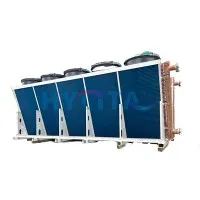
Hey there! As a supplier of dry coolers, I often get asked about the installation requirements for putting a dry cooler on a rooftop. So, I thought I'd share some insights on this topic.
First things first, let's talk about what a dry cooler is. A dry cooler is a heat exchanger that uses ambient air to cool a fluid, usually water or a water-glycol mixture. It's a great alternative to traditional cooling towers, especially in areas where water is scarce or where there are strict environmental regulations.
Now, let's get into the installation requirements for a rooftop dry cooler.
Location and Space
The first thing you need to consider is the location of the rooftop. You want to choose a spot that's easily accessible for maintenance and repair. It should also be away from any sources of heat or pollution, such as exhaust vents or chimneys.
In terms of space, you need to make sure there's enough room for the dry cooler to fit comfortably. You'll also need to leave some clearance around the unit for air circulation. As a general rule, you should leave at least 3 feet of clearance on all sides of the dry cooler.
Structural Integrity
Before you install a dry cooler on a rooftop, you need to make sure the roof can support the weight of the unit. Dry coolers can be quite heavy, especially when they're filled with fluid. You'll need to have a structural engineer assess the roof to determine its load-bearing capacity.
If the roof isn't strong enough to support the dry cooler, you may need to reinforce it. This could involve adding additional beams or columns to the roof structure.
Electrical Requirements
Dry coolers require electricity to operate. You'll need to make sure there's a power source nearby that can provide the necessary voltage and amperage. You'll also need to install a dedicated circuit breaker for the dry cooler.
In addition to the power source, you'll need to run electrical wiring from the power source to the dry cooler. This wiring should be installed by a licensed electrician to ensure it's done safely and correctly.
Piping and Plumbing
Dry coolers are connected to a piping system that circulates the fluid to be cooled. You'll need to make sure there's a piping system in place that can handle the flow rate and pressure of the dry cooler.
The piping system should be made of a material that's compatible with the fluid being cooled. For example, if you're using a water-glycol mixture, you'll need to use a piping material that's resistant to corrosion.
You'll also need to install valves and fittings in the piping system to control the flow of the fluid. These valves and fittings should be installed by a licensed plumber to ensure they're done safely and correctly.
Ventilation
Dry coolers rely on ambient air to cool the fluid. You'll need to make sure there's adequate ventilation on the rooftop to allow for proper air circulation. This could involve installing vents or fans on the roof.
The ventilation system should be designed to prevent hot air from recirculating back into the dry cooler. This could cause the dry cooler to overheat and reduce its efficiency.
Noise and Vibration
Dry coolers can produce noise and vibration during operation. You'll need to make sure the dry cooler is installed in a location that won't cause a nuisance to nearby residents or businesses.
You can reduce the noise and vibration of the dry cooler by installing vibration isolators and noise barriers. These devices can help to absorb the vibration and reduce the noise level.
Maintenance and Accessibility
Finally, you need to consider the maintenance and accessibility of the dry cooler. You'll need to have easy access to the unit for routine maintenance and repair.


This could involve installing a ladder or platform on the rooftop to allow for easy access to the dry cooler. You'll also need to make sure there's enough space around the unit to allow for maintenance and repair work.
Types of Dry Coolers
We offer a variety of dry coolers to meet different needs. For example, our Container Dry Cooler is a great option for applications where space is limited. It's pre-fabricated and can be easily transported and installed on a rooftop.
Our V Dry Cooler is designed for high-capacity applications. It has a unique V-shaped design that allows for maximum heat transfer and efficiency.
And if you're looking for a dry cooler for liquid immersion cooling, our Liquid Immersion Cooling Dry Cooler is the perfect choice. It's specifically designed to cool the fluid used in liquid immersion cooling systems.
Conclusion
Installing a dry cooler on a rooftop requires careful planning and consideration. You need to make sure the location, structural integrity, electrical requirements, piping and plumbing, ventilation, noise and vibration, and maintenance and accessibility are all taken into account.
As a dry cooler supplier, we have the expertise and experience to help you choose the right dry cooler for your application and ensure it's installed correctly. If you're interested in learning more about our dry coolers or have any questions about the installation process, please don't hesitate to contact us. We'd be happy to help you with your procurement and answer any questions you may have.
References
- ASHRAE Handbook - HVAC Systems and Equipment
- International Building Code
- National Electrical Code