


Hey there! As a supplier of Heat Energy Recovery solutions, I'm super stoked to dive into how heat energy recovery works in solar thermal systems. It's a topic that's not only fascinating but also crucial for our journey towards a more sustainable future.
Let's start with the basics. Solar thermal systems are all about capturing the sun's energy and converting it into heat. This heat can then be used for various purposes, like heating water for your home or powering industrial processes. But here's the thing: not all of the heat generated in these systems is used efficiently. That's where heat energy recovery comes in.
So, how does it actually work? Well, in a solar thermal system, there are usually several components involved. First, you've got the solar collectors. These are the panels that absorb sunlight and convert it into heat. The heat is then transferred to a fluid, usually water or a special heat - transfer fluid. This heated fluid can be used directly, but often, there's still some heat left over that would otherwise go to waste.
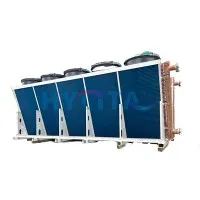
One of the key ways to recover this wasted heat is through a heat exchanger. A heat exchanger is a device that allows heat to be transferred from one fluid to another without the two fluids mixing. In the context of solar thermal systems, a heat exchanger can take the hot fluid from the solar collectors and transfer its heat to a cooler fluid that's going to be used for a different purpose.
For example, let's say you have a solar thermal system heating water for your home's hot water supply. After the water has been used and is on its way back to be reheated, a heat exchanger can transfer some of the heat from the hot water leaving the system to the cold water coming in. This pre - heats the cold water, reducing the amount of energy needed to heat it up to the desired temperature.
Another important aspect of heat energy recovery in solar thermal systems is the use of an economiser heat exchanger. An Economiser Heat Exchanger is specifically designed to recover heat from exhaust gases or other waste heat sources. In a solar thermal system, it can be used to extract heat from the exhaust of a backup heating system (if there is one) or from other parts of the system where heat is being lost.
Let's talk about the different types of heat energy recovery systems that can be used in solar thermal setups. One common type is the direct heat recovery system. In this system, the heat is transferred directly from the hot source to the cold sink. It's a simple and efficient way to recover heat, especially when the temperature difference between the two fluids is large.
On the other hand, there's the indirect heat recovery system. This system uses an intermediate fluid to transfer the heat between the hot and cold sources. The intermediate fluid circulates between the two heat exchangers, picking up heat from the hot source and releasing it to the cold sink. Indirect systems are often used when the two fluids can't come into direct contact, for example, if one of the fluids is corrosive.
Now, let's get into the real - world applications of heat energy recovery in solar thermal systems. In residential settings, heat energy recovery can significantly reduce energy bills. By pre - heating the water or air in your home, you're using less energy from your main heating system. This not only saves you money but also reduces your carbon footprint.
In industrial applications, the benefits are even more substantial. Industries often have high - energy demands, and solar thermal systems with heat energy recovery can help them meet these demands more sustainably. For example, in a food processing plant, the heat recovered from the solar thermal system can be used to pre - heat water for cleaning or cooking processes. This reduces the reliance on fossil fuels and cuts down on operating costs.
But it's not all smooth sailing. There are some challenges associated with heat energy recovery in solar thermal systems. One of the main challenges is the initial cost. Installing a heat energy recovery system can be expensive, especially for large - scale industrial applications. However, it's important to look at the long - term savings. Over time, the reduced energy consumption will more than make up for the initial investment.
Another challenge is the efficiency of the heat recovery process. The efficiency of a heat exchanger depends on several factors, such as the temperature difference between the two fluids, the flow rate of the fluids, and the design of the heat exchanger itself. To ensure maximum efficiency, it's crucial to choose the right heat exchanger for your specific application.
As a Heat Energy Recovery supplier, we understand these challenges and are committed to providing solutions that are both cost - effective and efficient. We offer a wide range of heat recovery products, including Heat Exhaust Recovery systems and economiser heat exchangers. Our team of experts can help you design and install a heat energy recovery system that's tailored to your specific needs.
Whether you're a homeowner looking to reduce your energy bills or an industrial operator aiming to improve your sustainability, heat energy recovery in solar thermal systems is a game - changer. It's a technology that not only helps us make the most of the sun's energy but also contributes to a greener planet.
If you're interested in learning more about our Heat Energy Recovery solutions or want to discuss a potential project, don't hesitate to reach out. We're here to help you take the next step towards a more energy - efficient future. You can visit our website Heat Energy Recovery for more information and to start the conversation. Let's work together to make heat energy recovery a reality in your solar thermal system!
References


- Duffie, John A., and William A. Beckman. Solar Engineering of Thermal Processes. John Wiley & Sons, 2013.
- Kreith, Frank, and Donald K. Black. Principles of Heat Transfer. Cengage Learning, 2011.