


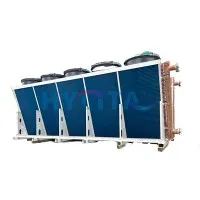
Hey there! As a supplier of Heat Energy Recovery solutions, I've been deeply involved in this field for quite some time. Today, I want to chat about the intellectual property aspects of heat energy recovery technologies.
First off, let's understand what heat energy recovery is all about. Heat energy recovery is the process of capturing and reusing waste heat that would otherwise be lost. This not only helps in reducing energy consumption but also cuts down on costs and environmental impact. There are various technologies involved in heat energy recovery, like Heat Exhaust Recovery and Economiser Heat Exchanger. These technologies play a crucial role in making industrial processes more efficient.
Now, let's dive into the intellectual property side of things. Intellectual property (IP) in heat energy recovery technologies can take several forms, including patents, trademarks, and copyrights.
Patents
Patents are a big deal in the heat energy recovery industry. A patent gives an inventor the exclusive right to make, use, and sell their invention for a certain period, usually 20 years. For us as a heat energy recovery supplier, patents are like our secret sauce. They protect our innovative technologies and give us a competitive edge in the market.
For example, if we've developed a new type of heat exchanger that's more efficient than the existing ones, we can patent it. This means that no one else can use, make, or sell that particular design without our permission. Patents not only protect our investment in research and development but also encourage further innovation. It's like a reward for all the hard work and resources we've put into creating something new.
However, getting a patent isn't easy. It requires a lot of paperwork and a detailed description of the invention. You have to prove that your invention is new, useful, and non - obvious. And once you get the patent, you need to enforce it. If someone infringes on your patent, you have to take legal action, which can be time - consuming and costly.
Trademarks
Trademarks are another important aspect of intellectual property. A trademark is a symbol, word, or phrase that identifies and distinguishes a company's products or services from those of others. In the heat energy recovery business, having a strong trademark can help build brand recognition and trust.
Our company's trademark is like our brand's face. It's what customers see and remember. When they think of high - quality heat energy recovery solutions, they think of our brand. A well - known trademark can also help us expand into new markets. For instance, if we want to enter a new region, our trademark can give us an advantage over local competitors.
Copyrights
Copyrights are mainly related to the creative works associated with heat energy recovery technologies. This can include technical manuals, software, and marketing materials. Copyright protection ensures that our written and visual content is not copied or used without our permission.
For example, the software we use to control our heat energy recovery systems is protected by copyright. This software is the result of a lot of programming and development work. If someone were to copy it, it would not only be unethical but also a violation of our rights.
Now, let's talk about the challenges we face in protecting our intellectual property. One of the biggest challenges is the global nature of the heat energy recovery market. With the internet and international trade, it's easier for others to copy our technologies and sell them at a lower price. This can be a real headache for us as a supplier.
Another challenge is the fast - paced nature of technological innovation. New heat energy recovery technologies are being developed all the time. This means that we have to constantly innovate and protect our new inventions. If we don't, we risk losing our competitive edge.
But it's not all doom and gloom. There are also some benefits to having strong intellectual property protection. For one, it can attract investors. Investors are more likely to put their money into a company that has a solid IP portfolio. It shows that the company is innovative and has the potential for long - term success.
Also, having IP protection can lead to licensing opportunities. We can license our patented technologies to other companies, which can generate additional revenue for us. This is a win - win situation as it allows other companies to use our technology while we get paid for it.


In conclusion, intellectual property is a crucial part of the heat energy recovery industry. As a Heat Energy Recovery supplier, we need to protect our patents, trademarks, and copyrights to stay competitive. If you're in the market for heat energy recovery solutions, we'd love to have a chat with you. Whether you're looking for a more efficient Heat Exhaust Recovery system or a high - performance Economiser Heat Exchanger, we've got you covered. Reach out to us to discuss your specific needs and let's see how we can work together to make your operations more energy - efficient.
References:
- General knowledge of heat energy recovery technologies and intellectual property laws.